

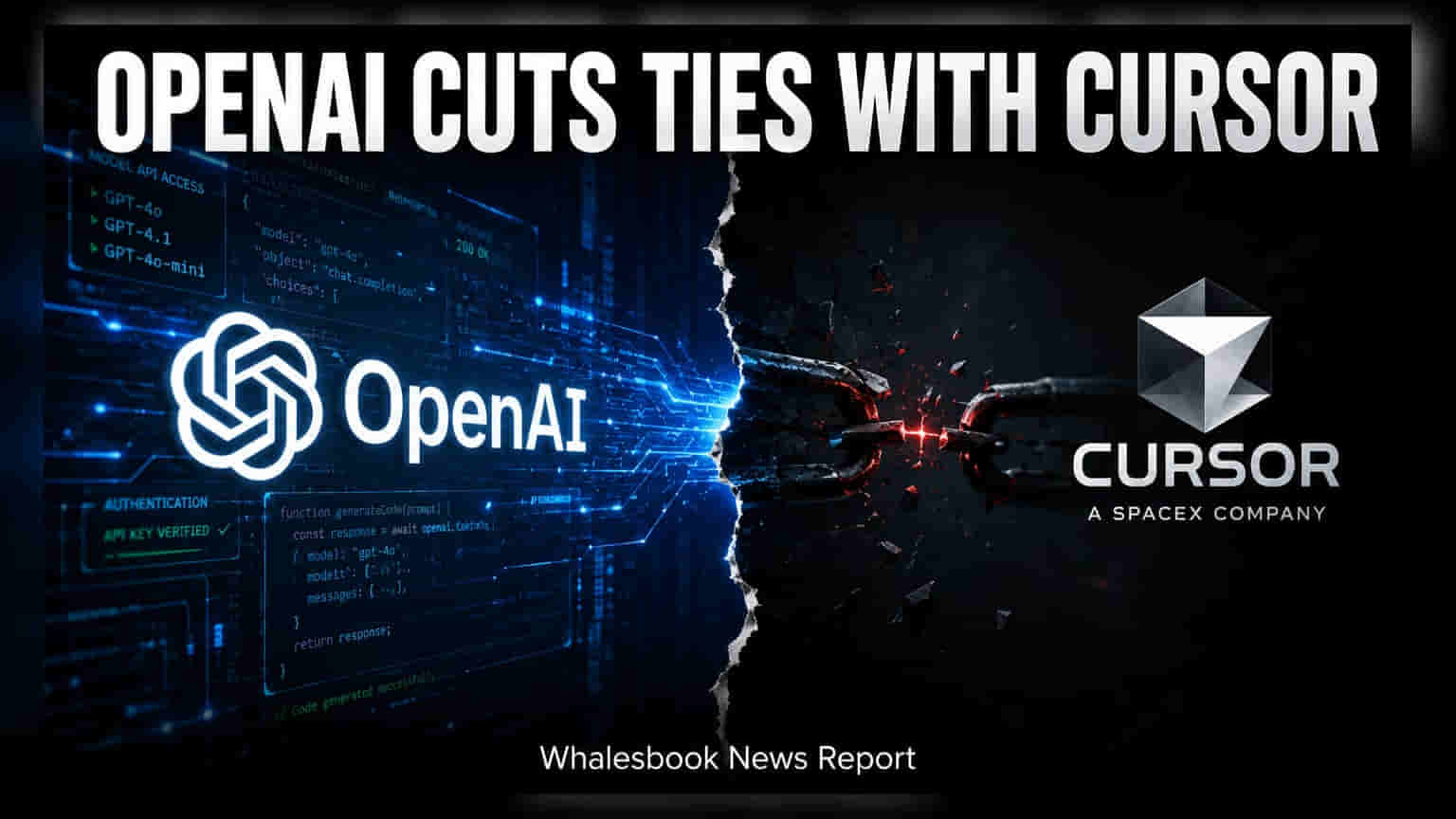
OpenAI will stop providing its AI technology to the coding tool Cursor, following its $60 billion acquisition by SpaceX. The partnership termination, effective November 12, 2026, follows concerns regarding compliance with service terms. This shift highlights a major trend in the tech industry where firms are increasingly focusing on controlling their own AI models rather than relying on external partners.
OpenAI has officially announced that it will cease providing its artificial intelligence models to the coding assistant tool Cursor. The decision marks a major split between the AI developer and the coding platform, which was recently acquired by SpaceX. This separation is scheduled to take full effect on November 12, 2026.
The friction follows the acquisition of Anysphere, the developer behind Cursor, by SpaceX in an all-stock deal valued at $60 billion, which was completed on August 14, 2026. Since the acquisition, Cursor has become a subsidiary of SpaceXAI, with its leadership now reporting directly to Elon Musk.
OpenAI cited a lack of confidence that SpaceX would adhere to its existing terms of service as the primary driver for the decision. The AI developer pointed to its previous experiences with other companies led by Elon Musk, such as X and xAI, where it alleged that contractual agreements were not fully met. By cutting off access to its models, OpenAI is ensuring that its technology is not integrated into a platform that it believes may not comply with its usage policies.
This development is significant for the software engineering sector, which has increasingly relied on AI-powered tools like Cursor to write, debug, and optimize computer code. For companies and professional developers who use Cursor in their daily workflows, this transition creates uncertainty. As Cursor loses access to OpenAI's widely used language models, it will need to transition to alternative technology, which could affect the tool's performance and capabilities for its current user base.
The move reflects a broader trend of vertical integration in the artificial intelligence industry. Major tech companies are moving away from licensing models from others and instead focusing on owning the entire technology stack, from the underlying computing infrastructure to the AI models themselves. This strategy is intended to give companies more control over their data and product development, but it also creates a fragmented ecosystem where once-interconnected services are being severed.
For investors and observers of the technology space, this event illustrates the growing challenges in AI partnerships. As AI models become more valuable and integrated into core software products, disagreements over data privacy, model usage, and control are likely to continue. The key monitorable for the immediate future is how Cursor will manage this transition and which AI models it will select as replacements to maintain its utility for engineers. Users will be watching to see if this change results in any interruption to the service or features they currently rely on for their work.