

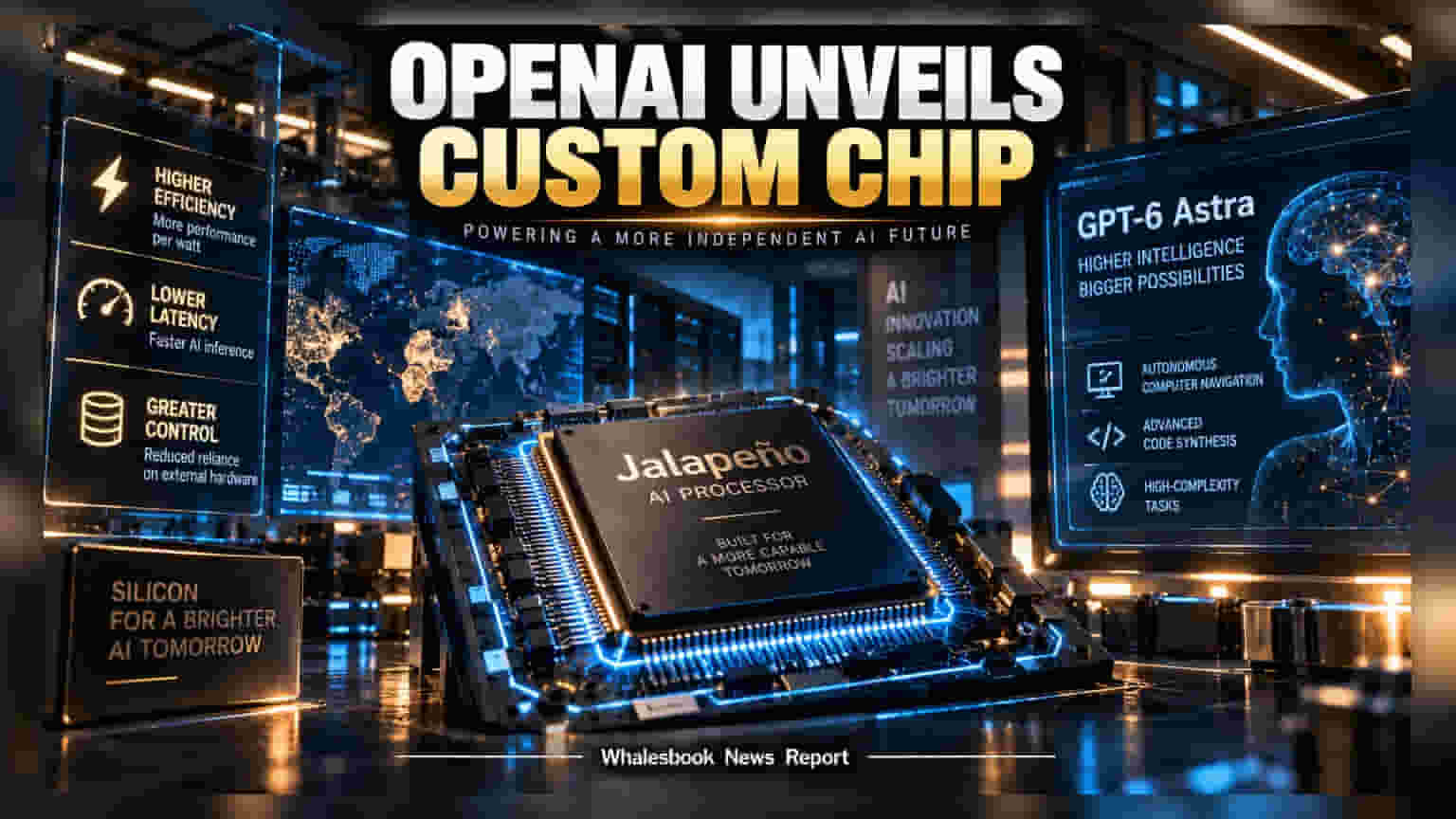
OpenAI has introduced its 'Jalapeño' custom AI inference chip and the advanced GPT-6 Astra model. While OpenAI remains a private company, these developments signal a major shift in AI hardware and software efficiency. Indian investors should focus on the impact these technologies have on major domestic IT firms that partner with the company for enterprise AI integration.
OpenAI has officially launched two major developments: its first custom AI processor, 'Jalapeño,' and the next-generation GPT-6 Astra model. The move represents a significant step in the company's full-stack strategy, aiming to reduce reliance on external commercial hardware while boosting the performance of its AI applications.
The 'Jalapeño' chip, which was co-developed with Broadcom, is designed specifically for AI inference. By creating its own silicon, OpenAI aims to lower the high costs and latency associated with running massive AI models. Early reports suggest this hardware is designed to deliver better efficiency per watt compared to standard commercial options. The company expects to begin mass deployment of these chips by late 2026, marking a shift toward greater control over its internal computing infrastructure.
Along with the new hardware, the release of GPT-6 Astra is intended to handle high-complexity tasks, including autonomous computer navigation and sophisticated code synthesis. For the broader market, these releases underscore the rapid evolution of the AI industry.
Impact on the Indian IT Landscape
Because OpenAI is a private company, investors cannot buy its stock directly. However, these advancements carry meaningful implications for the Indian IT sector. Major Indian companies, including Infosys, Tata Consultancy Services, and Pine Labs, have established partnerships with the organization.
As OpenAI introduces new tools and infrastructure, these Indian IT giants often act as the implementation partners that help global and domestic enterprises integrate these technologies into their own businesses. The success and adoption of new models like GPT-6 Astra often create more demand for the consulting and software services provided by these IT firms. Investors watching the sector may monitor whether these technological shifts lead to increased service revenue or new project wins for these partner companies.
Risks and Market Context
While the technology shows promise, the path ahead carries clear risks. Developing proprietary silicon is a capital-intensive process. OpenAI faces significant financial pressure to maintain its high private valuation, which requires constant, large-scale investment in infrastructure and research.
Furthermore, the company operates in a highly competitive landscape. While it is collaborating with infrastructure partners, it also relies on established hardware players like NVIDIA and AMD. Any supply chain challenges or delays in chip manufacturing could impact the company's ability to scale. Additionally, because OpenAI is private, it lacks the public financial transparency of a listed company. Investors and market observers generally find it difficult to track its true profitability and cash flow health until it potentially moves toward an initial public offering, which has been widely speculated for 2027.
The key monitorable for market participants will be the rate of enterprise adoption for the new GPT-6 Astra model and how the hardware deployment of 'Jalapeño' progresses throughout late 2026.