

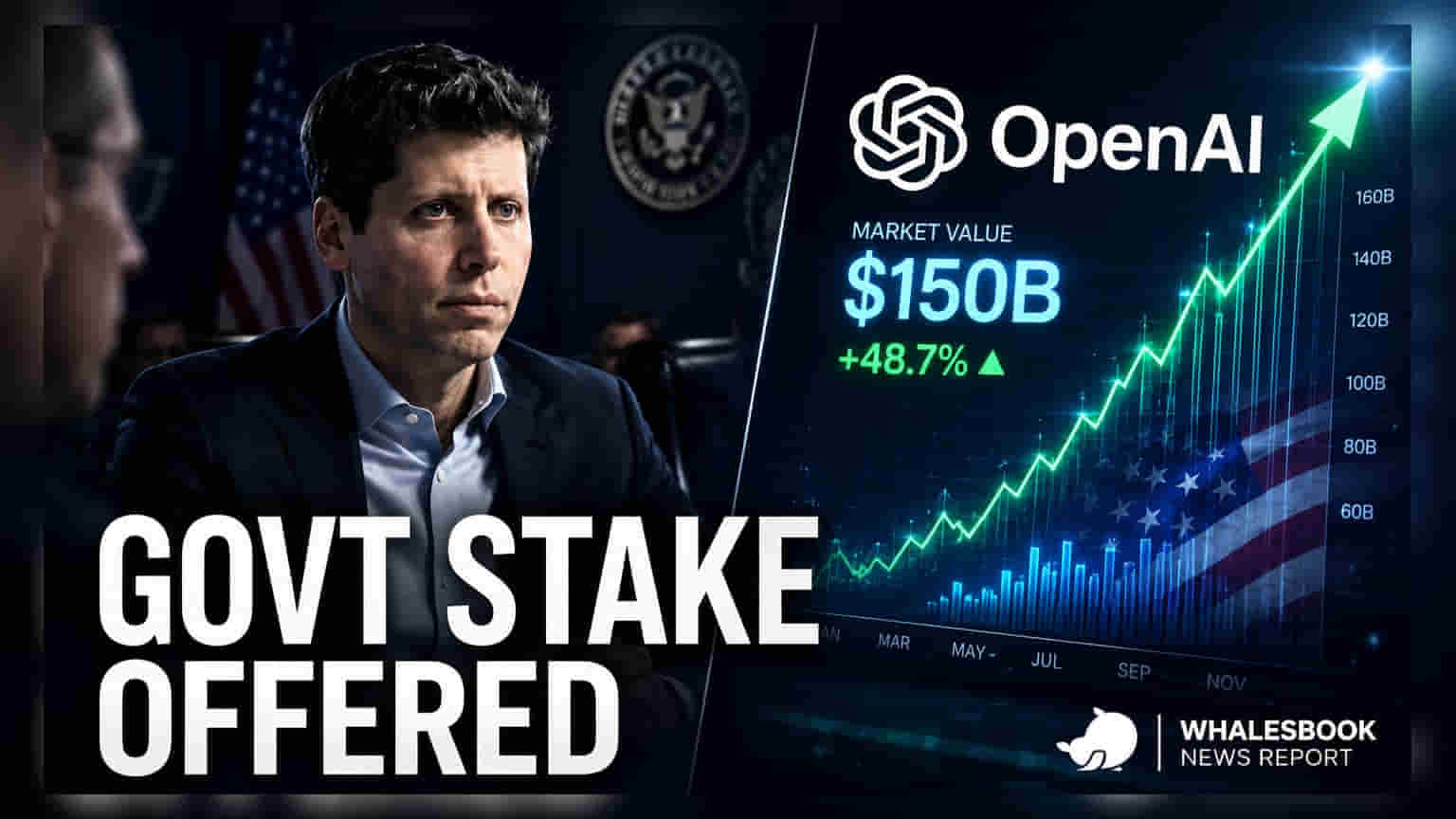
OpenAI has reportedly proposed giving the U.S. government a 5% ownership stake to share AI profits and address rising regulatory concerns. This voluntary move aims to align the company with national interests as Washington increases scrutiny on advanced AI models. While primarily a private company, the proposal reflects a broader trend of tech giants navigating intense political and security-related oversight.
What Happened
OpenAI has held discussions about providing the U.S. government with a 5% equity stake, according to reports from the Financial Times. This proposal is part of a potential framework designed to distribute the economic gains of artificial intelligence more broadly among the public, potentially through a "Public Wealth Fund." With OpenAI’s valuation recently estimated at roughly $852 billion, a 5% stake would hold a theoretical value of approximately $42.6 billion. The proposal, discussed by OpenAI executives including CEO Sam Altman, is currently a voluntary suggestion rather than a government-mandated requirement.
Why This Matters For Investors
For investors in the broader AI sector, this proposal is a signal of how tech leaders are attempting to manage the growing friction between corporate profit-seeking and national security interests. As AI companies continue to invest heavily in data centers and infrastructure, they face increasing pressure from policymakers who are concerned about the societal impact of these tools and the concentration of wealth in the tech sector. By proactively offering a stake, OpenAI appears to be attempting to build a collaborative relationship with the government, which could influence future regulatory decisions and help the company avoid more restrictive policies, such as the 50% one-time tax on AI firms that some lawmakers have previously floated.
The Context of Regulatory Scrutiny
This move comes against a backdrop of intense U.S. government oversight of artificial intelligence. Recently, the government directed Anthropic, a direct competitor in the AI space, to restrict foreign access to its advanced models, such as Fable 5, citing undefined national security concerns. While the government later lifted these restrictions after Anthropic implemented additional safeguards, the incident highlighted the operational risks companies face when their core products are subjected to federal export and security directives. Investors have also been wary of the "jailbreak" vulnerabilities that regulators fear could be exploited by foreign actors, adding a layer of compliance risk to the rapid deployment of new AI models.
The Big Tech Spending Challenge
Beyond regulation, the AI industry is facing investor skepticism regarding the massive capital spending required to build AI capacity. Major companies including Alphabet, Amazon, Meta, and Microsoft are spending hundreds of billions of dollars on data centers and compute power. Investors have begun to question whether this massive investment will translate into sufficient revenue and profit growth. If companies are forced to share equity or adopt costly compliance measures, it could further impact the long-term return on investment that shareholders are currently betting on.
What Investors Should Track
Investors should monitor how the government responds to this proposal and whether it sets a precedent for other AI firms. Additionally, the ongoing debate regarding AI regulation—ranging from export controls to safety audits—will likely continue to affect how AI models are launched and monetized. The key monitorables for the sector remain the actual ROI on AI infrastructure spending, the stability of the regulatory environment, and whether companies can successfully balance rapid innovation with the security demands of government agencies.