

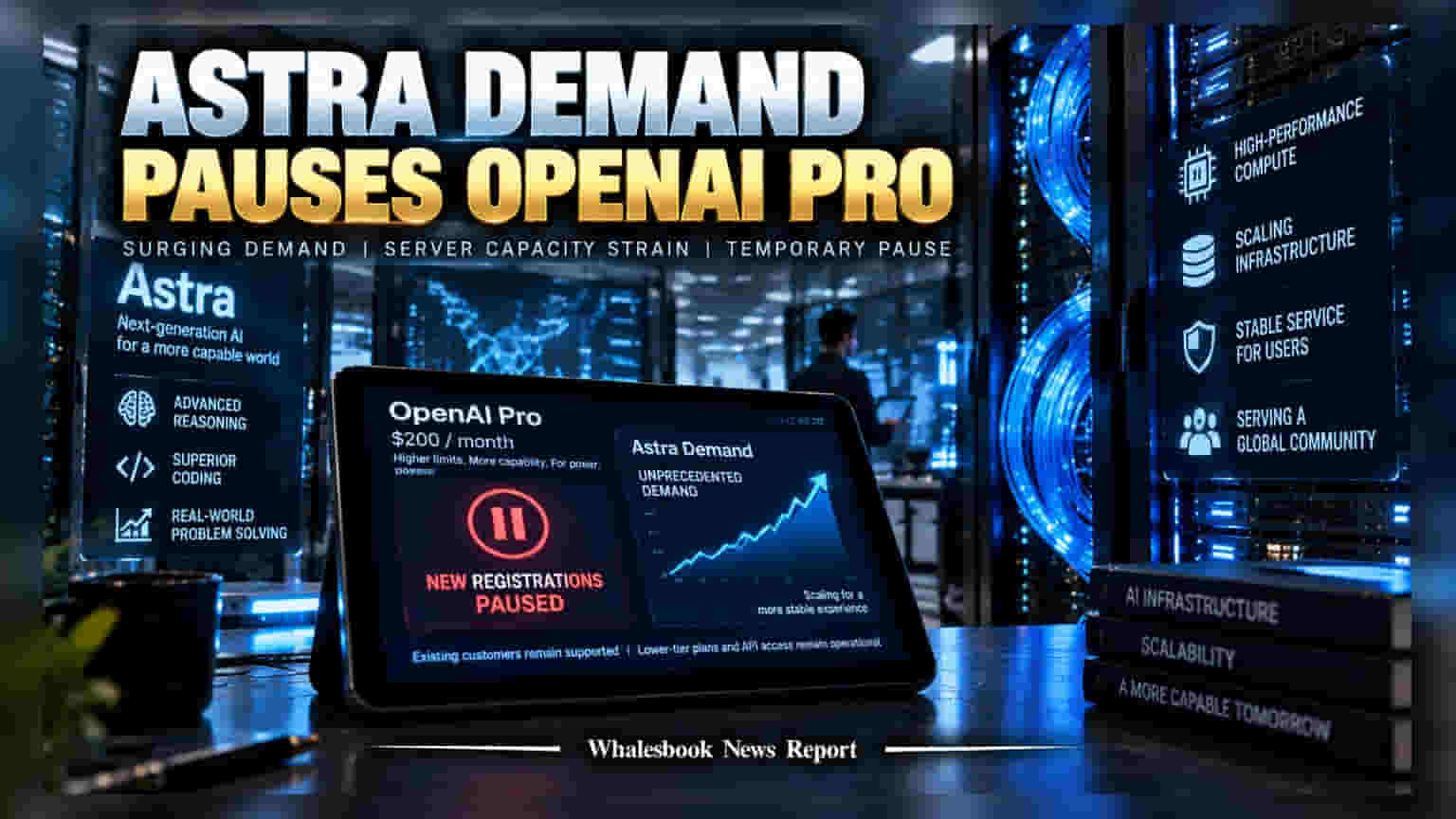
OpenAI has stopped new sign-ups for its $200-per-month Pro subscription after record demand for the new Astra model overwhelmed its servers. The company is prioritizing stability for current users while it works to scale its infrastructure. OpenAI remains a private company, and this bottleneck highlights the high compute costs and operational pressures facing AI developers today.
OpenAI has officially paused new registrations for its $200-per-month Pro subscription tier, citing an unprecedented surge in demand for its latest artificial intelligence model, Astra. The company, which is currently working to manage heavy server traffic, confirmed that the restriction is a temporary measure to ensure stability for existing customers. Lower-tier service plans and API access remain fully operational.
Infrastructure Strain and Costs
The launch of the Astra model on September 3, 2026, has pushed OpenAI’s server capacity to its limits. Astra is marketed as a major leap in complex logical reasoning and coding abilities, features that require significant computing power to run. Providing this level of service at scale is not only a technical challenge but also an expensive one. The need for constant, high-powered compute availability means that infrastructure constraints can directly impact the company's ability to onboard new users, even when there is strong market interest.
Corporate and Market Context
For investors following the artificial intelligence sector, it is important to note that OpenAI is currently a private company and is not listed on any public stock exchange. While the organization confidentially filed for an initial public offering (IPO) in June 2026, there is no public timeline for when shares might be available to trade. Because the company is private, investors looking for exposure to this space often monitor its operational milestones, infrastructure costs, and competitive positioning, as these factors influence the broader AI industry.
Risks and Future Outlook
Operating as a private, high-growth entity carries distinct risks. OpenAI is currently loss-making, and its intense capital requirements for server capacity create a continuous need for funding. For those interested in buying private shares through secondary markets, it is crucial to recognize that the valuation is high, and the company faces significant pressure to maintain growth while managing these massive infrastructure costs. Additionally, the AI field is highly competitive, and any inability to scale or maintain service quality could provide an opportunity for rivals to capture market share.
The key monitorable for the coming months will be how quickly OpenAI can expand its backend infrastructure to reopen its Pro subscriptions. Investors and tech observers will also watch for any further updates regarding its confidential IPO filing and how the company manages the cost-to-revenue balance for its most advanced models.