

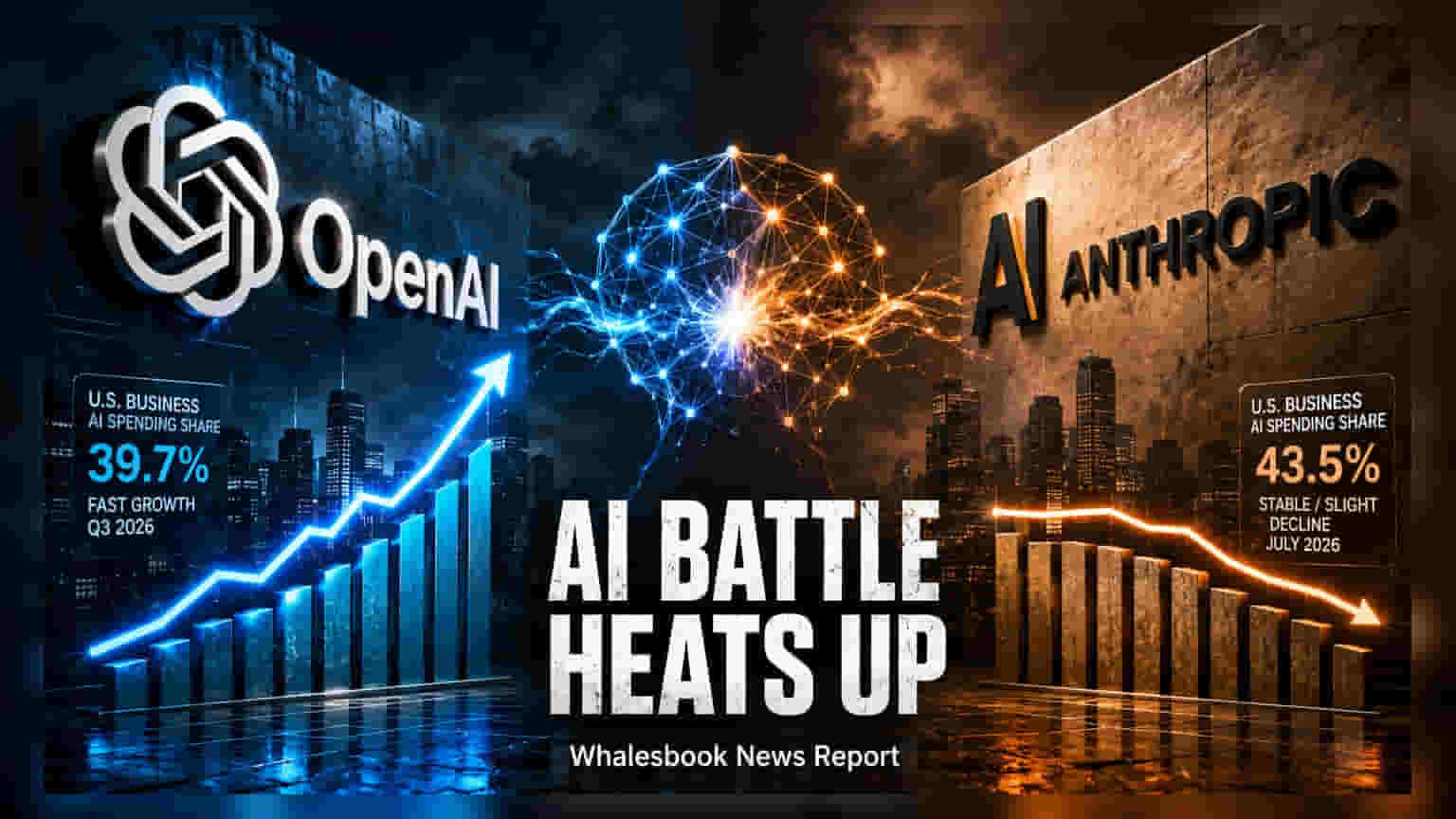
While OpenAI is gaining faster user traction in the U.S. enterprise market, Anthropic maintains a share lead and strong revenue growth. The contrast between OpenAI's significant 2025 losses and Anthropic's push toward a potential $2 trillion IPO highlights the high stakes and financial risks in the maturing AI sector.
The competitive landscape between AI giants OpenAI and Anthropic is shifting, with new usage data revealing a tug-of-war for business customers. According to recent data from corporate expense platform Ramp, Anthropic currently holds a leading 43.5% share of U.S. business AI spending as of July 2026. However, OpenAI is closing the gap, holding a 39.7% share and showing faster growth in the third quarter of 2026.
This shift in momentum is being driven by product preferences among developers. OpenAI’s newly released 'GPT-5.6 Sol' model has seen increasing adoption, drawing users who favor its performance. In contrast, Anthropic’s 'Fable 5' model has faced adoption headwinds. Analysts note that some businesses have been hesitant to fully commit to Fable 5 due to its pricing structure and specific data retention policies, which can clash with corporate compliance requirements.
Financial Divergence and IPO Outlook
While usage figures show a tight race, the financial realities behind these two companies tell a different story. Anthropic has demonstrated significant commercial scale, reporting preliminary revenue of over $11.5 billion for the second quarter of 2026—a 14-fold increase compared to the previous year. With its annualized revenue run rate reaching approximately $65 billion by July 2026, the company has reportedly achieved adjusted operating profitability. This strong financial standing has fueled investor speculation as the company prepares for a confidential IPO, with market targets placing its valuation at $2 trillion or higher.
OpenAI faces a more complex financial road. While its annualized revenue run rate exceeds $40 billion, the company reported a net loss of approximately $39 billion in 2025. This creates a sharp contrast in how investors perceive the two entities: one moving toward a public listing with demonstrated operating income, and the other prioritizing rapid growth and market share expansion despite significant bottom-line pressure.
Sector Volatility and Investor Risks
For investors and market observers, these figures underscore the extreme volatility in the enterprise AI sector. Corporate spending is not yet locked into single platforms; businesses are increasingly experimenting with different models, routers, and open-source alternatives to optimize costs and meet regulatory standards.
Looking ahead, the market will monitor two primary indicators. First, the ability of OpenAI to convert its developer traction into sustainable, profitable revenue to offset its heavy capital spending. Second, the progress of Anthropic’s IPO and whether the company can maintain its current revenue growth trajectory while facing increased regulatory scrutiny and competition. The sector remains cash-intensive, and any slowdown in enterprise adoption or a shift toward lower-cost AI providers could disrupt the high valuation expectations currently priced into these AI leaders.