 Whalesbook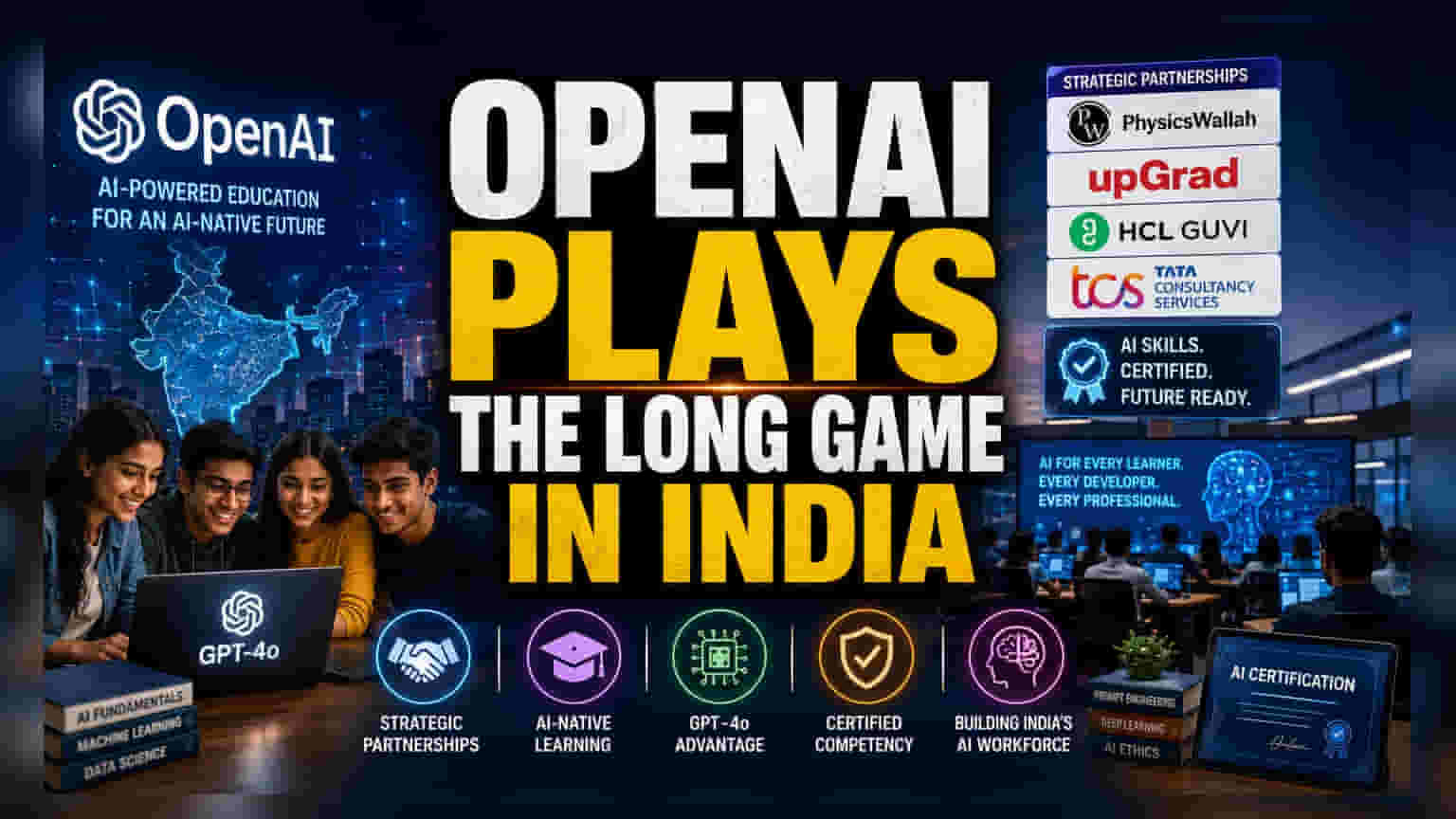


The Institutional Land Grab
OpenAI’s expansion into India represents a calculated transition from a consumer-facing chatbot service to an indispensable institutional utility. While the initial wave of adoption relied on individual student curiosity, the current operational pivot involves deep-seated integration with ed-tech leaders including PhysicsWallah, upGrad, and HCL GUVI. This move effectively outsources the pedagogical heavy lifting to established platforms, allowing OpenAI to standardize its application interfaces across India’s competitive academic landscape. By formalizing these partnerships, the organization is creating a walled garden of AI-native developers and workers long before they enter the corporate labor pool.
Competitive Dynamics and Market Positioning
In contrast to domestic competitors or localized open-source initiatives that prioritize low-bandwidth accessibility, OpenAI is banking on the dominance of its GPT-4o architecture. Peer benchmarking suggests that while competitors like Google’s Gemini or various Indian language-specific models focus on localized linguistic dexterity, OpenAI’s aggressive push into certifications—backed by the likes of TCS—creates a technical moat. This certification program effectively positions OpenAI as the gatekeeper of what constitutes modern AI competency, a strategy that echoes previous cycles where tech incumbents achieved dominance by becoming the standard training platform for professional software.
The Structural Risk of Cognitive Dependence
Critics frequently highlight that mass-market AI integration introduces a significant risk of cognitive erosion. The primary concern among academic observers is not just the misuse of tools for routine assignments, but the systemic risk of "cognitive debt," where fundamental analytical capabilities are sacrificed in favor of model-generated output. From a hedge-fund perspective, this represents a liability regarding long-term human capital quality. If the workforce relies on proprietary models for core logical problem-solving, the dependence on a single provider’s API and reasoning architecture becomes a systemic vulnerability for the firms employing these students. Furthermore, while educators hope to free up time for mentorship, there is minimal empirical evidence at scale that the administrative relief provided by AI translates into measurable improvements in student retention or complex critical thinking outputs.
Regulatory and Future Outlook
As India continues to refine its domestic AI governance, the legal burden for AI transparency and ethical data usage remains high. OpenAI’s commitment to an AI-native ecosystem is contingent upon navigating these shifting regulatory frameworks, particularly regarding data privacy in education. The company’s trajectory in the region suggests a play for long-term influence rather than immediate revenue, as it effectively subsidizes the training of a workforce that will eventually drive enterprise-level subscription renewals for its parent corporation and partners.