

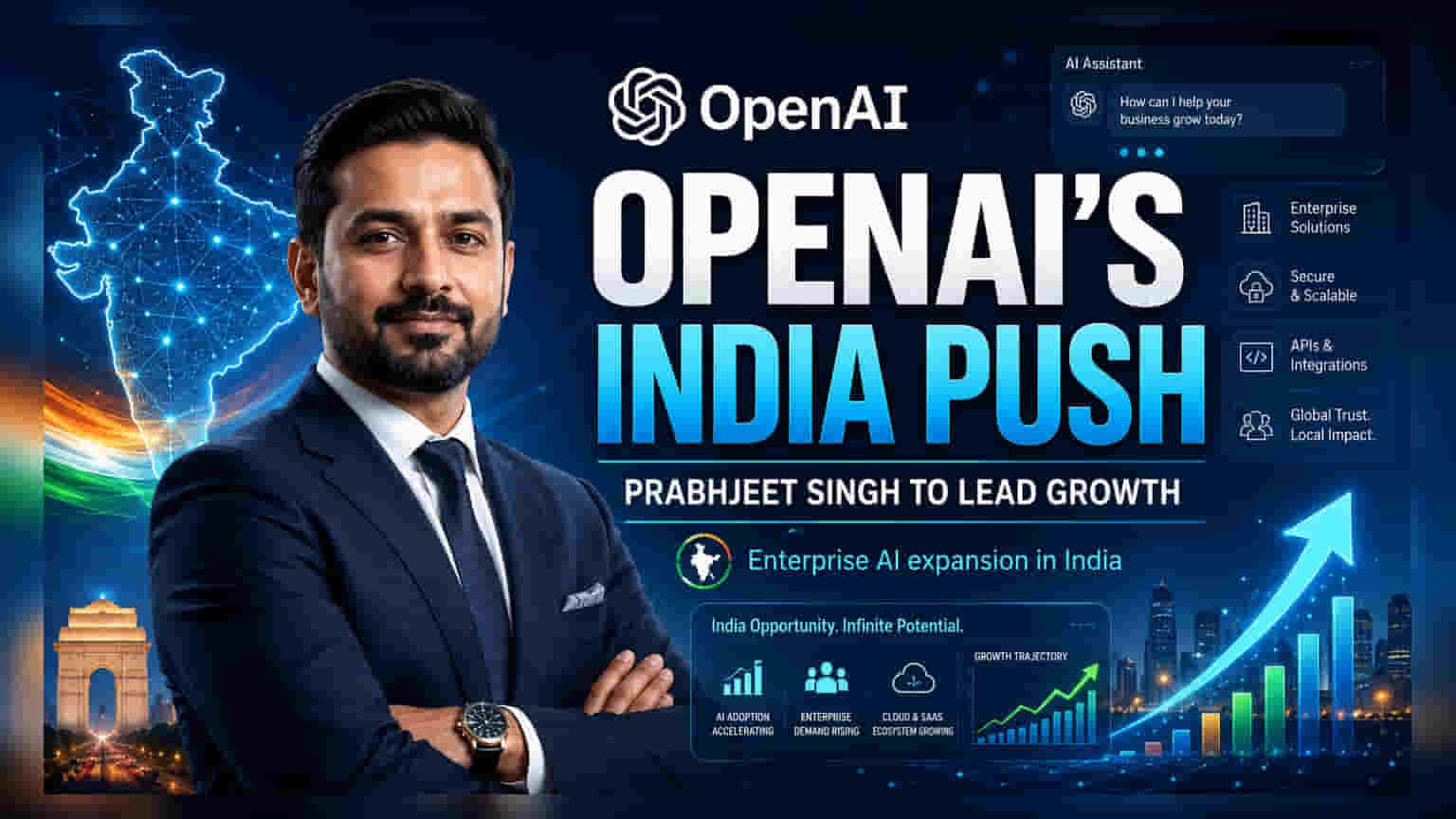
OpenAI has named former Uber executive Prabhjeet Singh as its India Managing Director to spearhead enterprise adoption and local partnerships. The appointment follows the establishment of its New Delhi office in 2025 and indicates a strong push to integrate its AI solutions into the Indian market.
What Happened
OpenAI has appointed Prabhjeet Singh, a veteran executive from Uber, as the Managing Director for its India operations. Singh will be responsible for leading the company’s growth strategy, promoting the adoption of its artificial intelligence solutions among Indian enterprises, and building strategic partnerships. He is expected to officially join the organization in September 2026 and will report to Kiran Mani, OpenAI’s Asia Pacific Managing Director.
This appointment marks a significant step for OpenAI, which established its first office in New Delhi in November 2025. By bringing on a leader with deep experience in the Indian market, the company is aiming to move beyond initial operations and into a phase of active scaling and market integration.
The Strategy For Scaling AI
Prabhjeet Singh’s background is central to why this appointment matters. During his nearly 11-year tenure at Uber, he oversaw operations in India, Bangladesh, and Sri Lanka. His track record includes expanding services across more than 125 cities, demonstrating an ability to manage high-growth operations in complex, multi-state markets.
For investors observing the Indian technology sector, this shift suggests that OpenAI is prioritizing local relevance. Rather than operating purely from a global headquarters, the focus is now on navigating the specific needs of Indian businesses, engaging with policymakers, and addressing the unique requirements of the domestic startup and developer ecosystem.
Impact On The Indian Tech Ecosystem
While OpenAI is not a listed company in India, its activities have a ripple effect on the broader tech landscape. The push for "enterprise adoption" of AI tools means that Indian IT services companies, cloud infrastructure providers, and software-as-a-service (SaaS) startups will likely see increased opportunities to integrate OpenAI’s models into their own product offerings.
As AI becomes more integrated into business operations, the focus for Indian tech companies will likely shift toward how effectively they can implement these tools to drive efficiency for their clients. This could increase the demand for talent, cloud capacity, and data management services within India, indirectly benefiting several sectors of the local digital economy.
What To Watch Next
The appointment of a dedicated India MD is a signal to watch for several developments. Investors and industry observers should track how OpenAI structures its partnerships with Indian companies—whether through direct enterprise contracts or ecosystem collaborations.
Another key monitorable is the company’s engagement with Indian policymakers. As AI regulations evolve globally, how OpenAI interacts with the Indian government regarding data sovereignty, copyright, and AI governance will be a critical factor for the long-term viability and expansion of its operations in the country. Finally, the speed at which OpenAI launches region-specific products or support systems will indicate the depth of its commitment to the Indian market.