

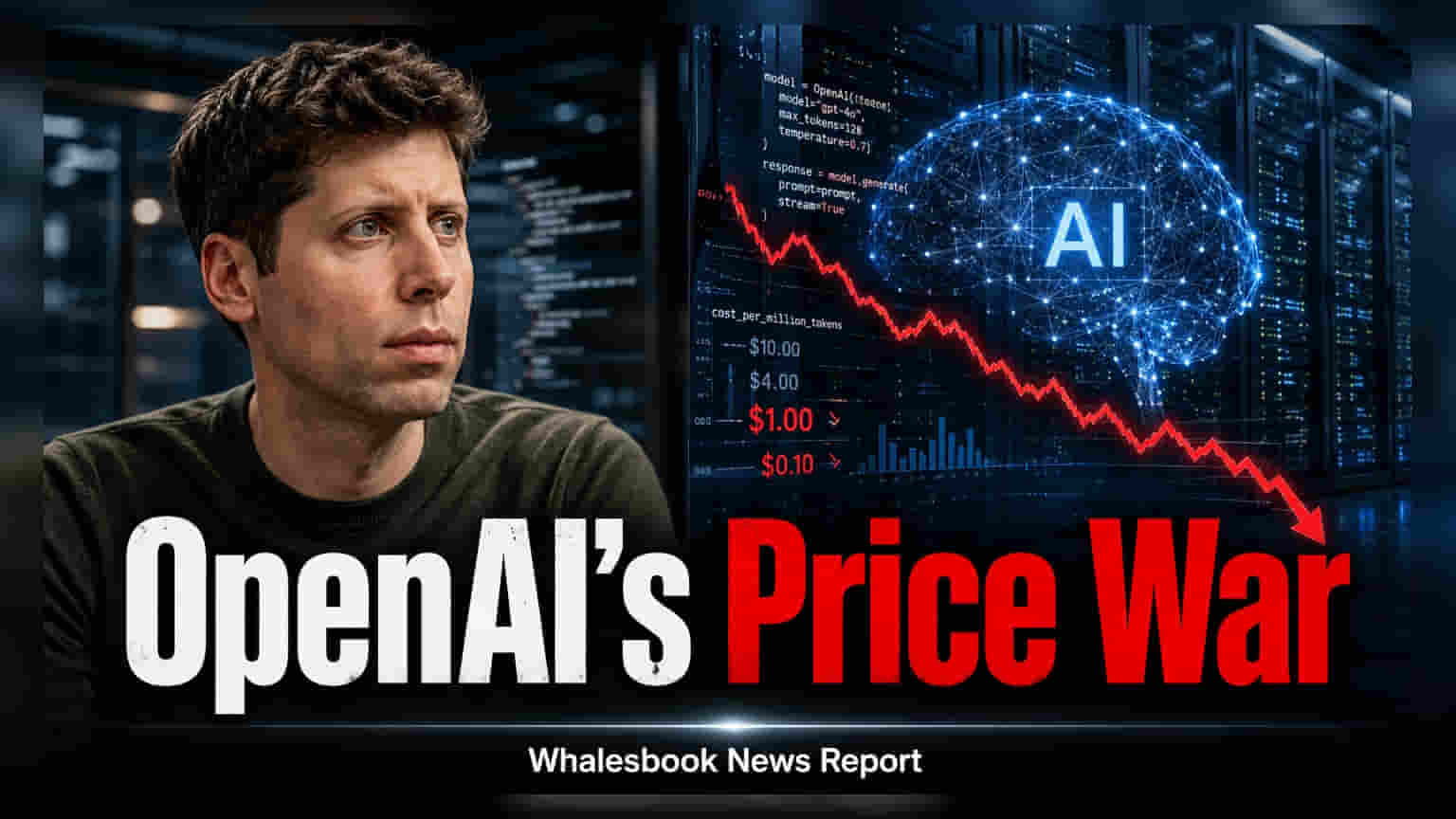
OpenAI has slashed pricing for its GPT-5.6 Luna and Terra AI models by 80% and 20%, respectively. This move targets enterprise users seeking lower operational costs amid rising competition from rivals like Anthropic and Z.ai. While the flagship Sol model remains unchanged, investors are monitoring whether these price cuts will strain OpenAI's financial resources ahead of a potential IPO.
OpenAI has announced a major reduction in the costs of its GPT-5.6 Luna and mid-tier Terra artificial intelligence models, aiming to make its technology more accessible to business users. The Luna model, designed for smaller-scale tasks, saw its pricing drop by 80%, while the Terra model experienced a 20% price reduction. The flagship Sol model remains unaffected by these changes.
Impact on Business Operational Costs
For companies integrating these tools, the pricing shift translates to significant savings. Luna’s input costs have been reduced to $0.20 from $1 per million tokens, with generation costs falling to $1.20 from $6. Similarly, the Terra model now costs $2 for input and $12 for output per million tokens, compared to the previous $2.50 and $15 respectively. These 'tokens' are the fundamental units used to measure AI usage, and lowering them is a strategic attempt by OpenAI to encourage more companies to shift from simple subscription models to deeper, usage-based integration.
Competitive Landscape and Financial Pressure
This pricing strategy serves as a direct response to intensifying competition. Rivals such as Anthropic, known for its Claude models, currently charge $3 per million input tokens and $15 per million output tokens for the Claude Sonnet 4.6, positioning OpenAI as a more cost-effective choice for budget-conscious enterprises. Additionally, OpenAI is facing pressure from international competitors like Z.ai, which has gained attention by offering comparable performance through its GLM-5.2 model at a competitive price point.
While these cuts are expected to stimulate higher usage volumes, they also raise questions about long-term financial stability. As AI labs like OpenAI and Anthropic continue to scale, they must manage heavy spending on infrastructure and research. Investors may track how these lower margins impact the company's path to profitability, especially as market speculation persists regarding a potential initial public offering.
Efficiency Gains and Future Monitorables
OpenAI has linked these price reductions to improved performance and internal code optimization within the GPT-5.6 framework, which has allowed the company to deliver results at a lower resource cost. For businesses, the primary monitorable remains the trade-off between lower unit prices and the overall surge in usage-based billing. Because many firms have moved away from flat-fee subscriptions, the predictability of their AI spending may continue to fluctuate. Future investor updates will likely focus on whether these price cuts successfully grow market share enough to offset the decline in revenue per unit of service.