

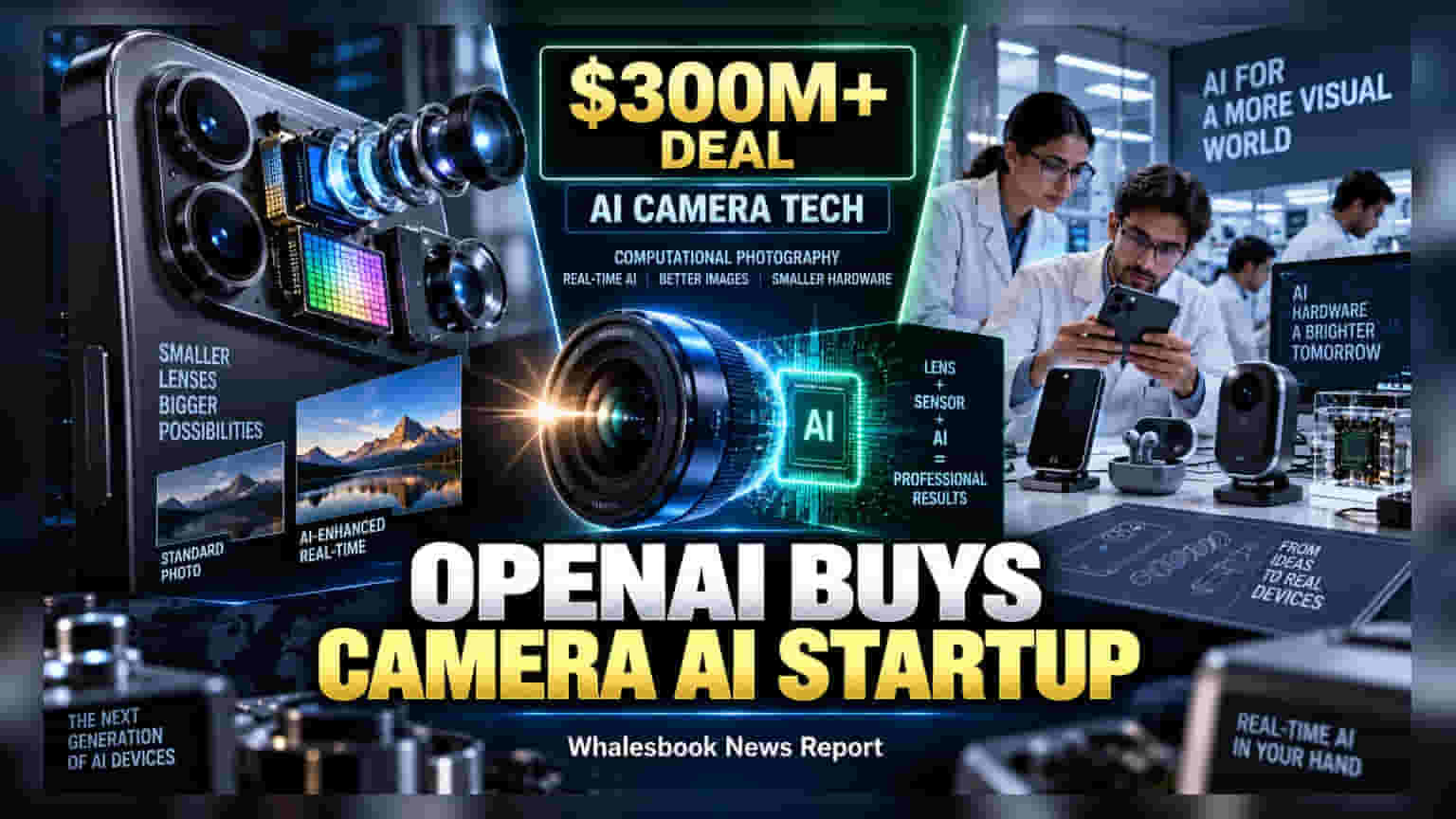
OpenAI has acquired smartphone camera technology firm Glass Imaging for over $300 million, signalling a strategic push into AI-powered hardware. While OpenAI is not a listed company, this move highlights the growing integration between AI and consumer devices, which may eventually impact global semiconductor and electronics supply chains relevant to investors.
OpenAI has acquired Glass Imaging, a developer of specialized smartphone camera technology, in a deal valued at more than $300 million. The move is a significant step for the AI research giant as it looks to extend its influence beyond software and into the world of physical devices.
Glass Imaging, founded by former Apple engineers Ziv Attar and Tom Bishop, is known for its expertise in computational photography. The company specializes in training neural networks to enhance image quality in real-time at the moment of capture, rather than relying on software processing after the photo is taken. This technology addresses the physical constraints of smartphone hardware, such as limited lens size and sensor space, by using AI to achieve professional-grade results.
For investors, it is important to note that OpenAI is a private company and is not publicly traded on any stock exchange. Therefore, there is no share price reaction, ticker, or direct investment path available for retail investors regarding this acquisition. The transaction does not have an immediate financial impact on Indian listed entities.
However, the deal serves as an indicator of a broader shift in the technology sector. Leading AI firms are increasingly moving toward building their own hardware, including smartphones, wearable devices, and AI-enabled companions. As OpenAI deepens its commitment to hardware, this could eventually influence the global consumer electronics and semiconductor supply chains. Many Indian manufacturing, design, and component-supply companies operate within these global value chains, meaning shifts in how future devices are built could have indirect long-term implications for the sector.
Executing a hardware strategy carries different risks compared to software development. Building physical devices is capital-intensive, involves complex supply chain management, and requires competing against established electronics giants. Investors monitoring the technology sector should track how AI companies navigate these challenges, specifically regarding product adoption, manufacturing timelines, and potential cost overruns. While this acquisition is a notable technical addition for OpenAI, the success of such integrations will depend on whether these AI-enhanced camera capabilities can actually differentiate their future hardware products in a crowded market.