

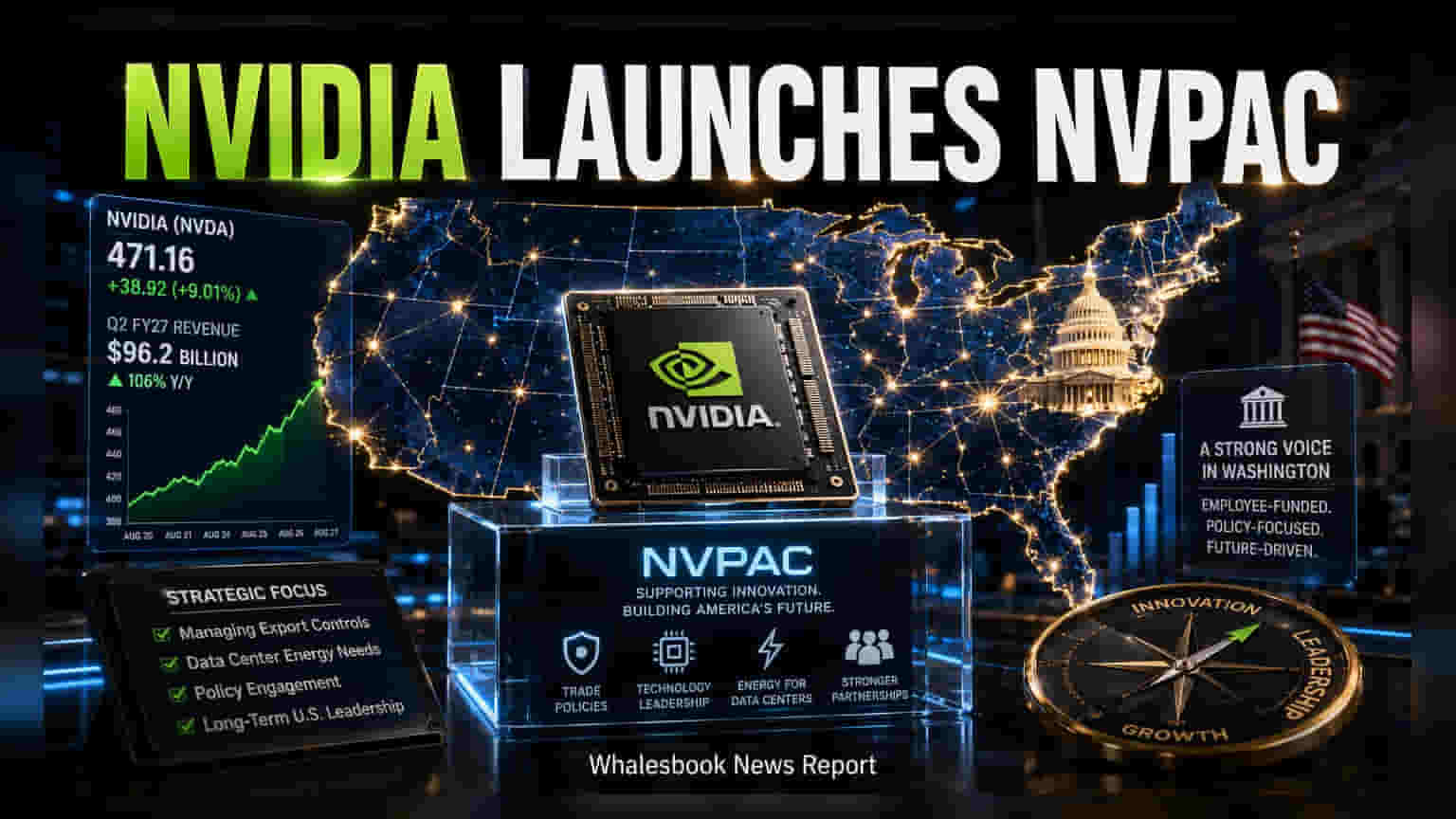
Nvidia is launching an employee-funded political action committee, NVPAC, to influence U.S. federal policies on technology and trade. This move follows the company’s recent blowout fiscal Q2 2027 results, where revenue surged 106% to $96.2 billion. As the chipmaker navigates regulatory and geopolitical hurdles, investors are weighing the company's massive influence in AI against emerging risks in infrastructure financing and export controls.
Nvidia is formalizing its political engagement by creating a federal political action committee, known as NVPAC. This employee-funded vehicle is designed to support candidates and policies that align with the company’s strategic goals, such as managing trade restrictions and data center energy requirements. The move mirrors the long-standing strategy of other major technology companies like Meta Platforms and Alphabet, which frequently use such committees to build relationships with policymakers in Washington.
This development comes at a time of significant momentum for the semiconductor giant. On August 27, 2026, Nvidia shares climbed approximately 9% following the release of its fiscal Q2 2027 earnings. The results were strong, with revenue reaching $96.2 billion, representing a 106% increase compared to the same period last year. This growth underscores the company's central role in the global artificial intelligence boom.
While Nvidia’s financial performance remains strong, its expansion into political advocacy highlights the complexities of operating at such a large scale. As the dominant provider of AI hardware, the company faces increasing regulatory scrutiny both in the United States and international markets. Navigating geopolitical issues, specifically regarding export controls on advanced AI chips, remains a significant challenge for the management.
Investors tracking the company’s progress should also be aware of the scale of the broader AI infrastructure ecosystem. Analysts have noted that Nvidia is increasingly involved in the financing of massive AI infrastructure projects. While this supports demand for its chips, it also creates potential risks related to the company’s exposure to these large-scale projects. Some market observers have pointed to the potential for significant credit exposure in these infrastructure initiatives, which could impact the company’s balance sheet if projects face delays or demand cools.
Moving forward, the primary monitorables for shareholders include potential changes to U.S. export policies, the company’s ability to manage its exposure to long-term AI infrastructure financing, and the sustainability of demand for its hardware amid broader economic pressures.