

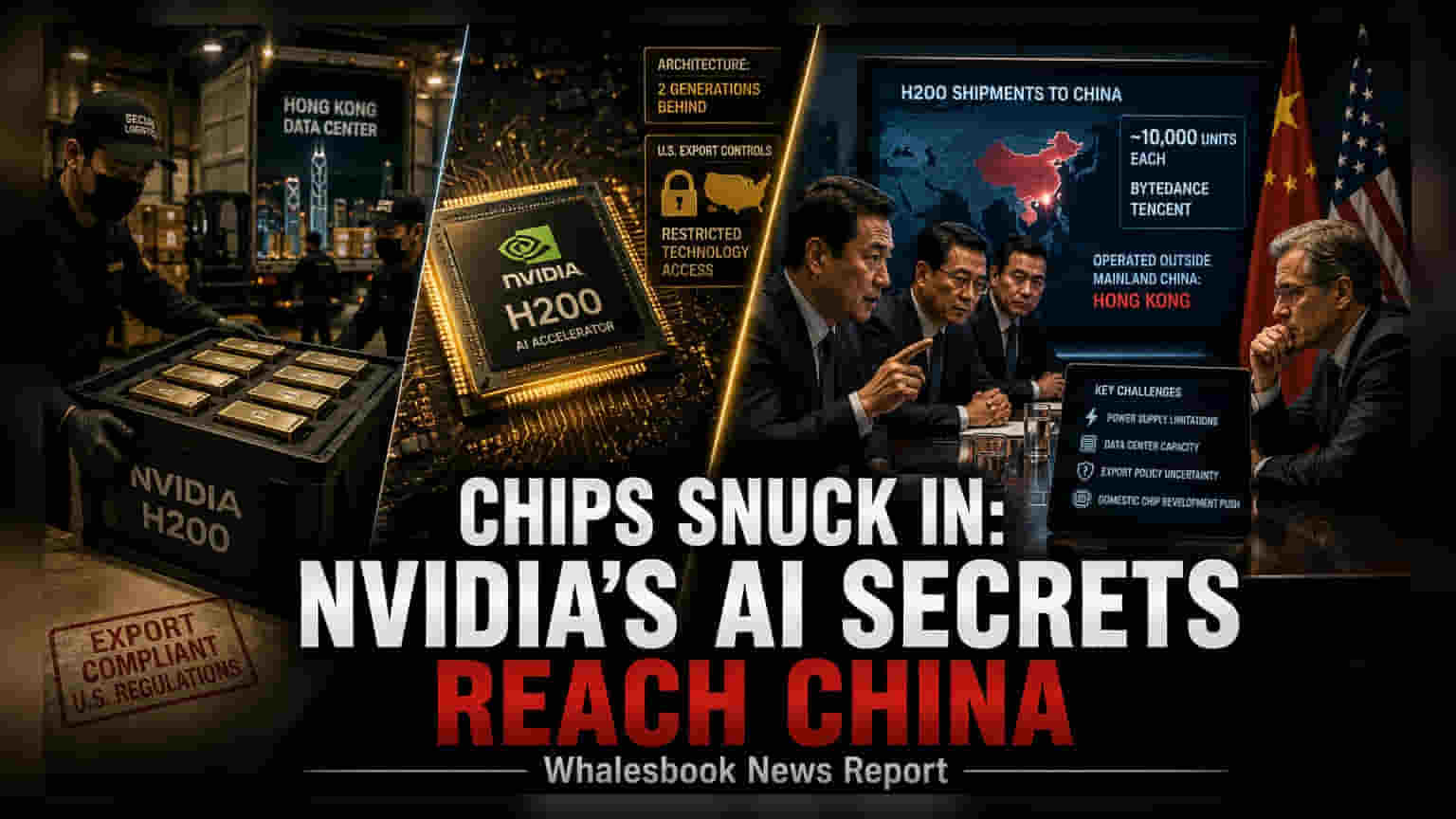
Nvidia’s H200 AI chips have begun arriving in China, with companies like ByteDance and Tencent receiving limited shipments. While U.S. export rules allow for these deliveries, Chinese regulators are directing firms to house the hardware outside the mainland to foster local alternatives. Investors should monitor how infrastructure limits in Hong Kong and the rise of domestic chips could impact Nvidia's long-term market share.
Nvidia's H200 artificial intelligence processors have started reaching customers in China, marking a new step in the semiconductor trade between the U.S. tech giant and its Chinese clients. Major firms including ByteDance and Tencent have reportedly taken delivery of approximately 10,000 units each. These shipments operate within strict U.S. export guidelines, which allow specific Chinese companies to procure up to 100,000 of these processors per entity.
While the delivery provides immediate hardware to Chinese tech giants, these chips are not the company's most advanced technology. The H200 processors being shipped are considered two generations behind the most powerful chips Nvidia currently offers. This technology gap is a direct result of ongoing U.S. export controls designed to restrict China's access to top-tier artificial intelligence computing power.
Strategic Regulatory Shifts
A notable development accompanying these shipments is the stance taken by Chinese authorities. Reports indicate that regulators have directed domestic tech companies to store and operate these imported processors outside of mainland China. Hong Kong has emerged as the primary hub for this activity. By keeping the hardware in a separate customs territory, Chinese firms can utilize the computing power without violating the import regulations that apply to the mainland.
This directive serves a dual purpose. Beyond circumventing import restrictions, it is a strategic move to prevent total reliance on American hardware. Authorities are reportedly pushing Chinese companies to use this time to accelerate the development and maturity of domestic chip manufacturing capabilities.
Operational and Financial Context
For investors, the situation involves both operational hurdles and financial considerations. Moving data center operations to Hong Kong is not a seamless solution. The region faces significant constraints regarding available physical space and, more importantly, power supply capacity. These infrastructure limitations could restrict the actual effectiveness of the chips that ByteDance, Tencent, and other firms are now receiving.
From a financial risk perspective, Nvidia has historically managed its China business with caution, often requiring upfront payments for these specialized orders. This strategy helps the company hedge against the volatility of shifting export policies and regulatory changes.
Looking ahead, the long-term outlook for Nvidia in the region remains complex. While the company continues to generate revenue from these older-generation chips, the push for domestic alternatives in China poses a risk to its future market share. The critical monitorables for investors will be any changes to U.S. export policies, the capacity of Chinese firms to scale their data centers in Hong Kong, and the speed at which domestic competitors can produce viable alternatives to Nvidia's hardware.