

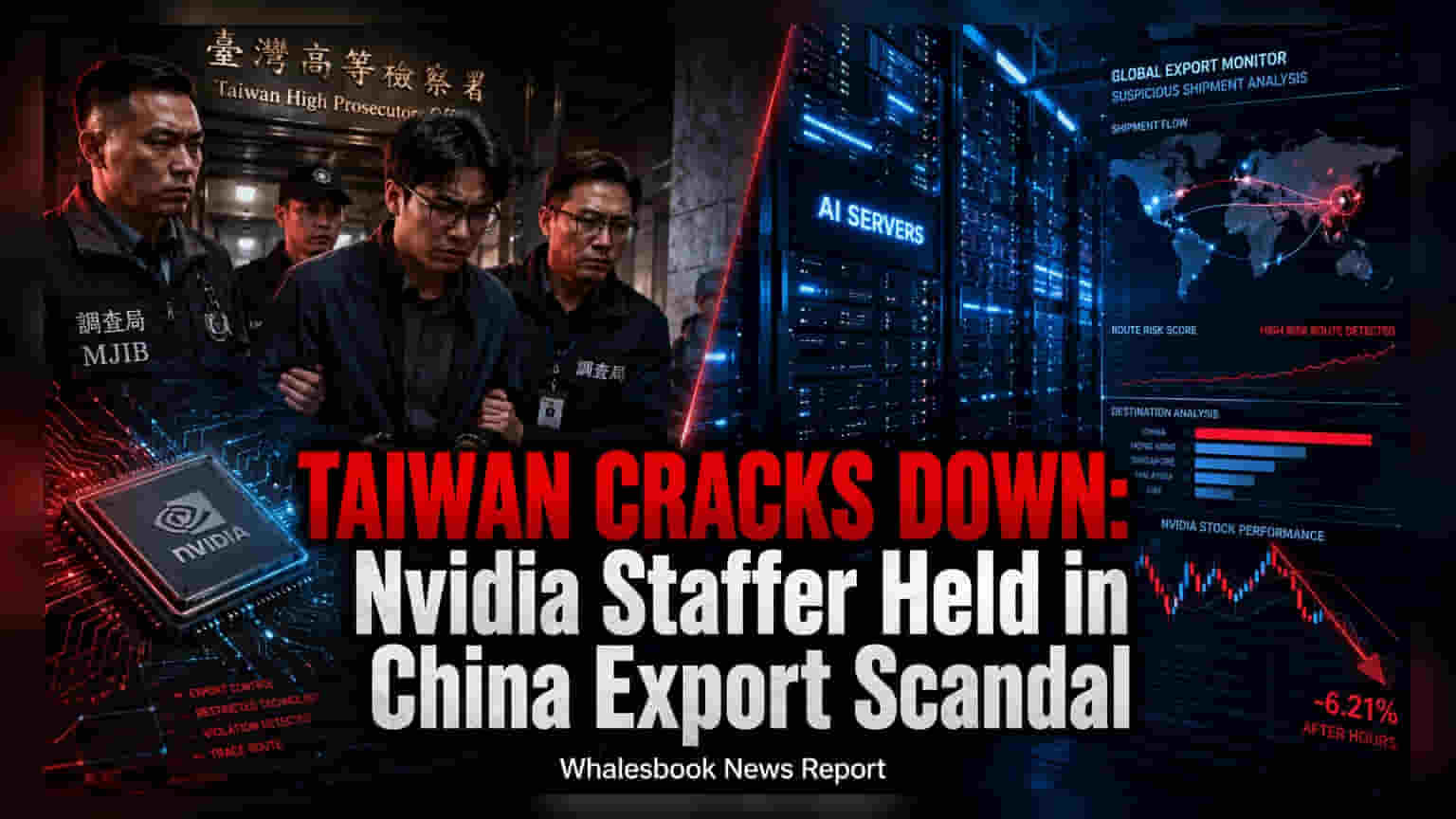
Taiwanese prosecutors have detained an Nvidia employee as part of an investigation into the illegal export of AI servers to China. The case involves Super Micro Computer hardware equipped with restricted U.S. chips, highlighting ongoing enforcement of international export controls.
Detailed Coverage
Taiwanese authorities have detained an employee of chipmaker Nvidia as part of a widening investigation into the unauthorized export of AI servers to China. The Keelung District Prosecutors Office confirmed that a suspect, identified by the surname Chang, was taken into custody to prevent potential evidence tampering or flight risk. The case centers on Super Micro Computer AI servers that contained Nvidia semiconductors restricted under U.S. trade regulations.
Since 2022, the United States has implemented strict rules prohibiting the sale or export of advanced artificial intelligence chips to mainland China to prevent these technologies from being used in military or strategic applications. Because many AI servers are manufactured or assembled in Taiwan, local authorities have increased scrutiny to ensure compliance with these international trade requirements.
This development is the latest phase in an expanding probe into Super Micro Computer Inc. Earlier actions by Taiwanese prosecutors in May and June resulted in multiple detentions, including employees from the company's Taiwan unit. The investigation is running parallel to legal actions in the United States, where the Department of Justice previously charged individuals associated with Super Micro for allegedly smuggling approximately $2.5 billion worth of U.S. technology to China.
Nvidia has maintained that it sells its products through established partners and original equipment manufacturers (OEMs). The company stated that these partners are responsible for ensuring that all sales comply with U.S. export control rules.
For investors, the primary concern remains the regulatory pressure on AI supply chains. As geopolitical tensions over semiconductor technology persist, companies involved in the production, assembly, and distribution of high-end AI hardware face increased compliance costs and potential legal risks if export controls are violated. The semiconductor sector is particularly sensitive to these shifts, as any disruption in supply chains or tightening of trade regulations can impact regional manufacturing operations and global distribution strategies.
The investigation remains ongoing, with Taiwanese authorities continuing their inquiry into the movement of restricted hardware. Investors will likely track future updates regarding the scope of the probe, potential regulatory penalties, and any changes in compliance procedures implemented by major hardware suppliers to navigate these export restrictions.