

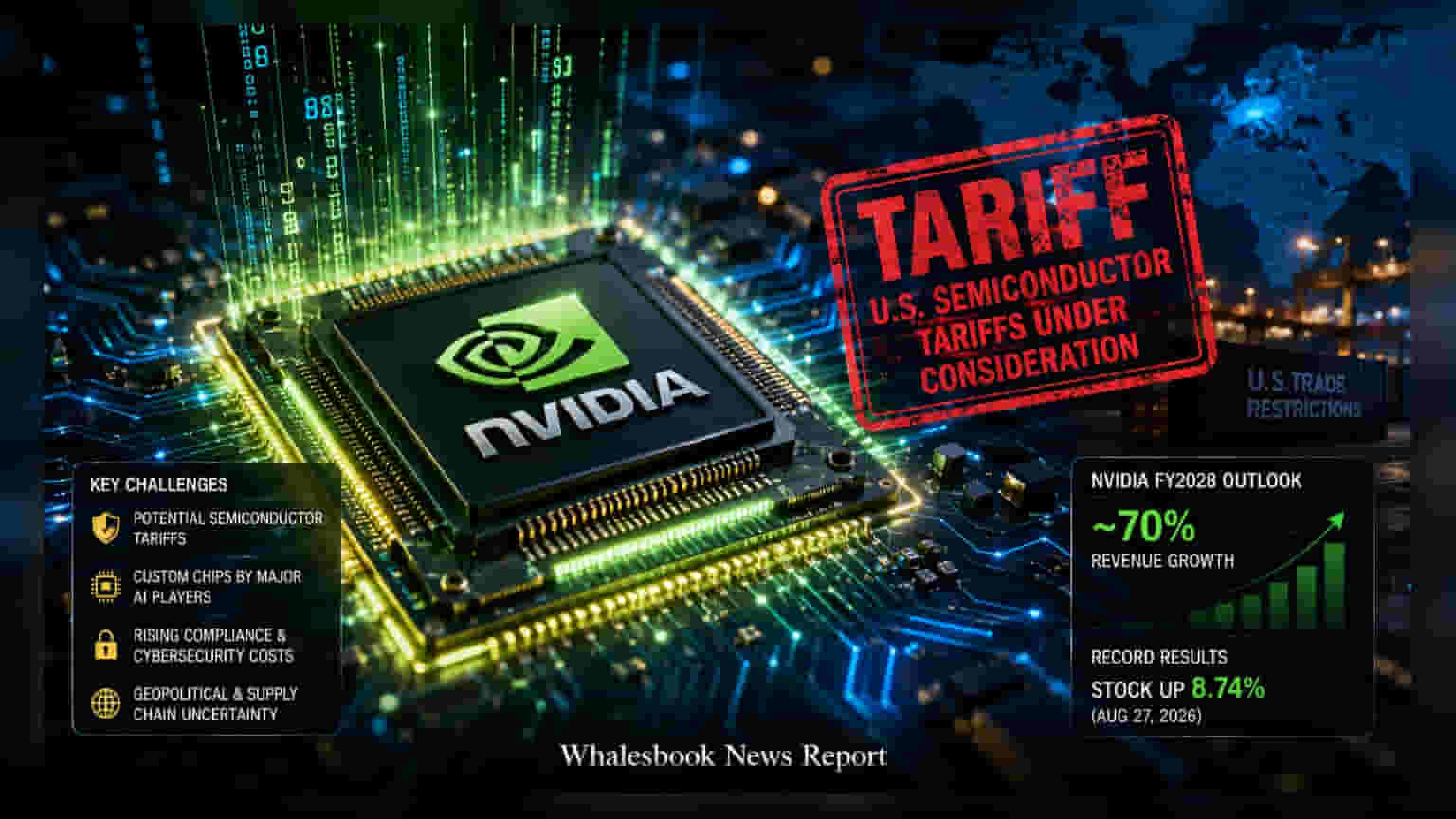
Nvidia CEO Jensen Huang has defended the company's AI financing model as concerns rise over potential new US semiconductor tariffs. This comes after the stock jumped 8.74% on August 27 following strong quarterly results. Investors are now balancing this financial performance against risks like emerging customer competition and global trade policy changes.
Nvidia’s leadership has publicly addressed market anxiety regarding its AI financing initiatives. CEO Jensen Huang defended the current financing model, which provides support to capital-intensive AI startups, stating it remains a necessary part of the ecosystem to foster innovation. This defense comes at a time of increased scrutiny, with critics questioning the sustainability of supporting smaller companies that, in turn, purchase Nvidia's high-performance hardware.
The company’s market performance remains strong despite these debates. Following the announcement of record financial results, Nvidia’s stock price increased by 8.74% on August 27, 2026. The company has provided a robust outlook, forecasting approximately 70% revenue growth for fiscal 2028, reflecting high demand for its AI computing infrastructure.
However, the company faces significant external pressures that investors are monitoring closely. Reports suggest the US government is considering new, broad semiconductor tariffs that could impact servers and laptops. Such trade restrictions could disrupt the global supply chain, potentially increasing production costs and impacting profit margins. While the company maintains its dominant market position, geopolitical volatility remains a persistent risk for semiconductor manufacturers.
Another development shaping the competitive landscape is the move by software giants to develop their own infrastructure. Anthropic, a key player in the AI space, has confirmed plans to build an in-house team to design custom AI chips. This shift toward vertical integration—where companies move away from third-party suppliers to build their own hardware—is a trend that could eventually soften reliance on Nvidia’s products. While Nvidia continues to maintain a multi-vendor strategy, the entry of major customers into chip design is a long-term factor that market participants are tracking.
Operational costs are also rising due to changing regulatory environments. New cybersecurity directives and compliance requirements are forcing companies to invest more capital into infrastructure hardening. These increased costs, combined with trade uncertainty and efforts by customers to reduce dependence on external suppliers, create a complex environment for the sector. The key monitorable for investors moving forward will be how the company navigates potential tariff implementations and whether the demand for its hardware can sustain its current growth rate despite these industry shifts.