

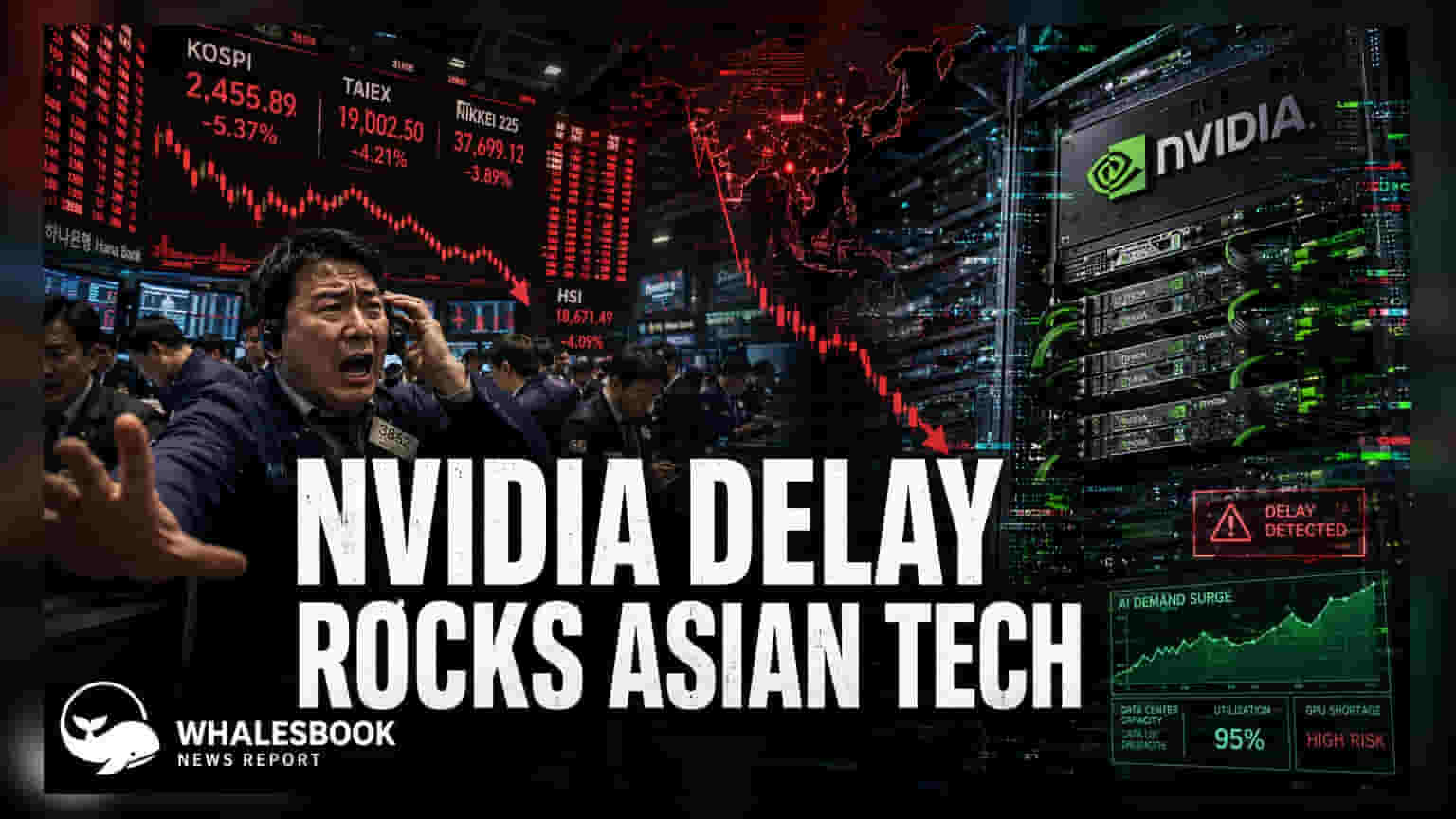
Asian technology shares fell after reports of a year-long delay for Nvidia’s Kyber NVL144 server system due to PCB manufacturing issues. The news has caused sharp declines among key regional suppliers, as investors react to potential changes in the deployment timeline for advanced AI hardware.
Technology stocks across Asia faced significant downward pressure on Monday following reports of a major setback for Nvidia Corp.’s next-generation AI server platform. The delay, linked to challenges in manufacturing the printed circuit boards (PCBs) required for the Kyber NVL144 system, has prompted concerns regarding the near-term rollout of advanced AI hardware.
Impact on Supply Chain and Regional Markets
The ripple effect of this delay was most visible in the share prices of key component manufacturers. Ibiden Co., a Japanese company and a major supplier of PCBs to Nvidia, saw its stock price decline by approximately 10%. In Hong Kong, Kingboard Laminates Holdings Ltd. experienced a steeper drop of 18%, while Taiwan’s Elite Material Co. saw shares fall by 10%. Additionally, Samsung Electro-Mechanics Co. in South Korea recorded an 11% decline in its stock value.
These movements highlight the sensitivity of the global AI supply chain to shifts in Nvidia’s product roadmap. Because many of these companies have seen significant valuation gains over the past year due to their roles in the AI hardware boom, any news of production bottlenecks or timeline shifts can lead to rapid profit-taking by market participants.
Nvidia Response and Investor Perspective
Nvidia has officially addressed the situation, with a company spokesperson stating that their overall technology roadmap remains unchanged. Despite this assurance, the market reaction reflects heightened investor caution. Many portfolios have become heavily concentrated in AI-related equities after a prolonged period of rising prices, making them more reactive to any news that could affect delivery schedules or revenue realization.
Industry analysts note that this delay does not necessarily mean that companies are cutting back on their total spending for artificial intelligence infrastructure. Instead, it suggests a slower deployment schedule for the most advanced server architectures. Investors are now balancing this shift against the reality of high valuations in the technology sector.
What Investors Should Track Next
The immediate monitorable for shareholders in this sector will be management commentary from both Nvidia and its primary suppliers regarding any revisions to production timelines or cost structures. Investors should also observe whether this delay results in a temporary decrease in order volumes for PCB manufacturers or if the demand for AI infrastructure remains robust enough to absorb the adjusted launch schedule. Given the current volatility, the performance of these component suppliers will likely continue to reflect updates on technical resolutions and revised shipment dates.