

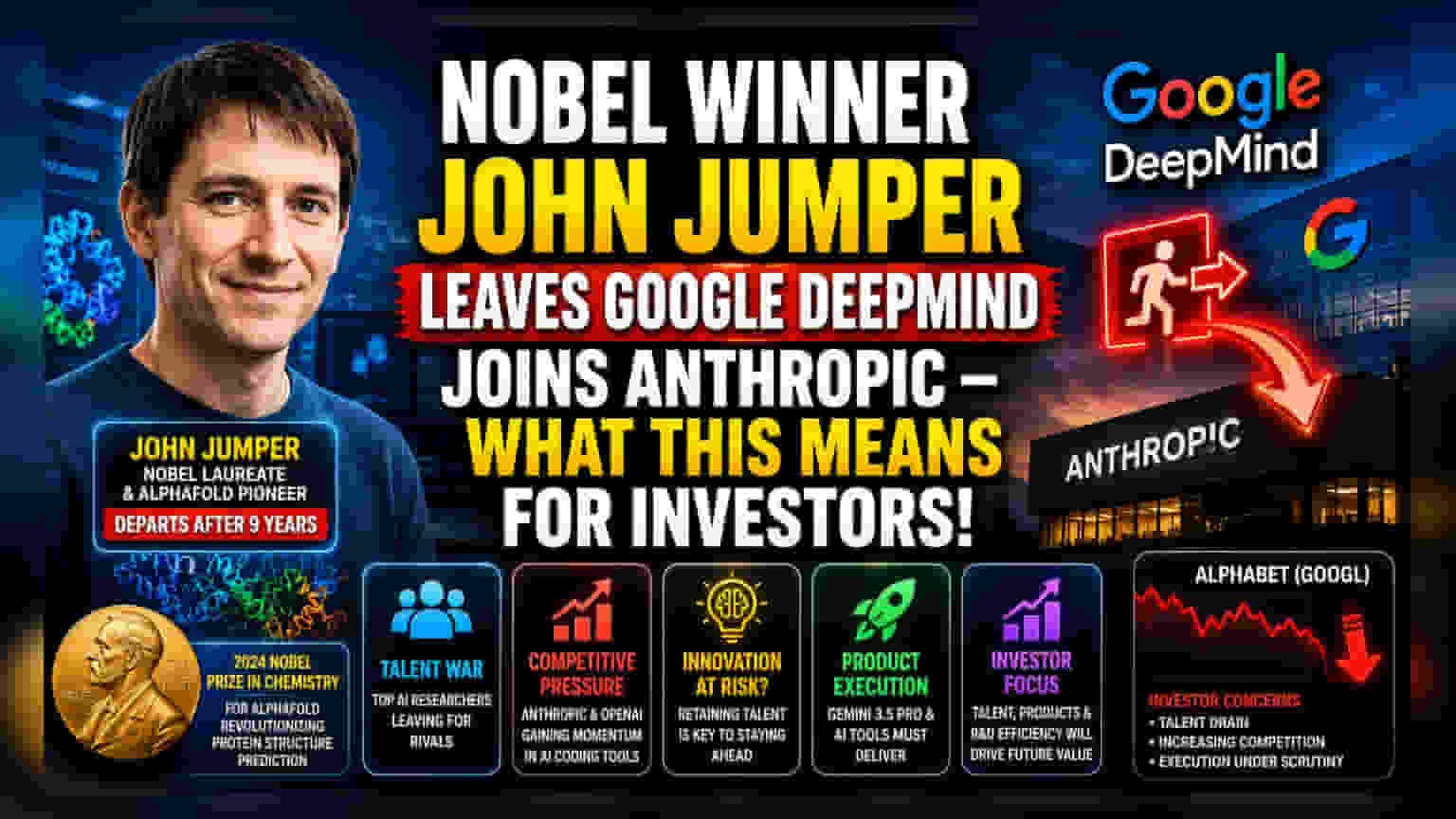
John Jumper, the Nobel Prize-winning creator of AlphaFold, is leaving Google DeepMind to join competitor Anthropic. This high-profile exit, following the departure of other key AI leaders, highlights the intensifying talent war in artificial intelligence. For investors, this move underscores the growing competitive pressure Alphabet faces as it works to translate its AI research into commercial success.
What Happened
John Jumper, a Nobel Prize-winning scientist and a central figure at Google DeepMind, has announced his departure from the company after nearly nine years. Jumper is best known for leading the development of AlphaFold, a groundbreaking AI system that predicts the 3D structure of proteins. His work was pivotal in advancing medical and biological research, earning him the 2024 Nobel Prize in Chemistry. Jumper has confirmed he will join Anthropic, a rival artificial intelligence startup, following a period of time off.
Why It Matters For Investors
The departure of a high-profile researcher like Jumper is significant for Alphabet Inc. (the parent company of Google). In the fast-moving AI sector, specialized talent is a company’s most important asset. When top researchers leave for direct competitors like Anthropic and OpenAI, it raises questions about a firm's ability to retain the talent necessary to maintain its technological edge.
This exit is particularly sensitive because it follows the departure of Noam Shazeer, another key AI researcher who recently moved to OpenAI. For investors, these personnel shifts highlight a broader challenge: Alphabet is currently fighting to maintain its lead against well-funded rivals. While Alphabet remains a dominant force in technology, the rapid pace of innovation at Anthropic and OpenAI is creating a competitive landscape where every major research hire—or loss—is closely watched.
The Competitive Picture
Alphabet has faced criticism from some observers and former employees regarding its ability to commercialize its AI advancements, particularly in coding tools. While Google DeepMind has consistently produced world-class scientific breakthroughs like AlphaFold, the market pressure is now focused on product execution and business integration.
Anthropic and OpenAI have gained significant momentum by focusing heavily on AI-driven coding assistants and enterprise tools. For Alphabet, the core investor concern is not just about R&D innovation but about how effectively it can turn its research into products that compete directly with those being rapidly deployed by these AI-focused challengers.
What To Watch Next
Investors may monitor several key areas as this story develops:
- Talent Retention: Whether Alphabet can stem the tide of high-level research departures.
- Product Execution: Any updates on the commercial success of the upcoming Gemini 3.5 Pro and other AI coding tools, which will be vital for Alphabet to keep pace with industry rivals.
- R&D Efficiency: How Alphabet aligns its vast AI research capabilities with the growing demand for business-ready software solutions.
The final impact of such talent moves on Alphabet's market position will depend on its ability to balance foundational research with the speed required to monetize AI technology in a highly competitive market.