 Whalesbook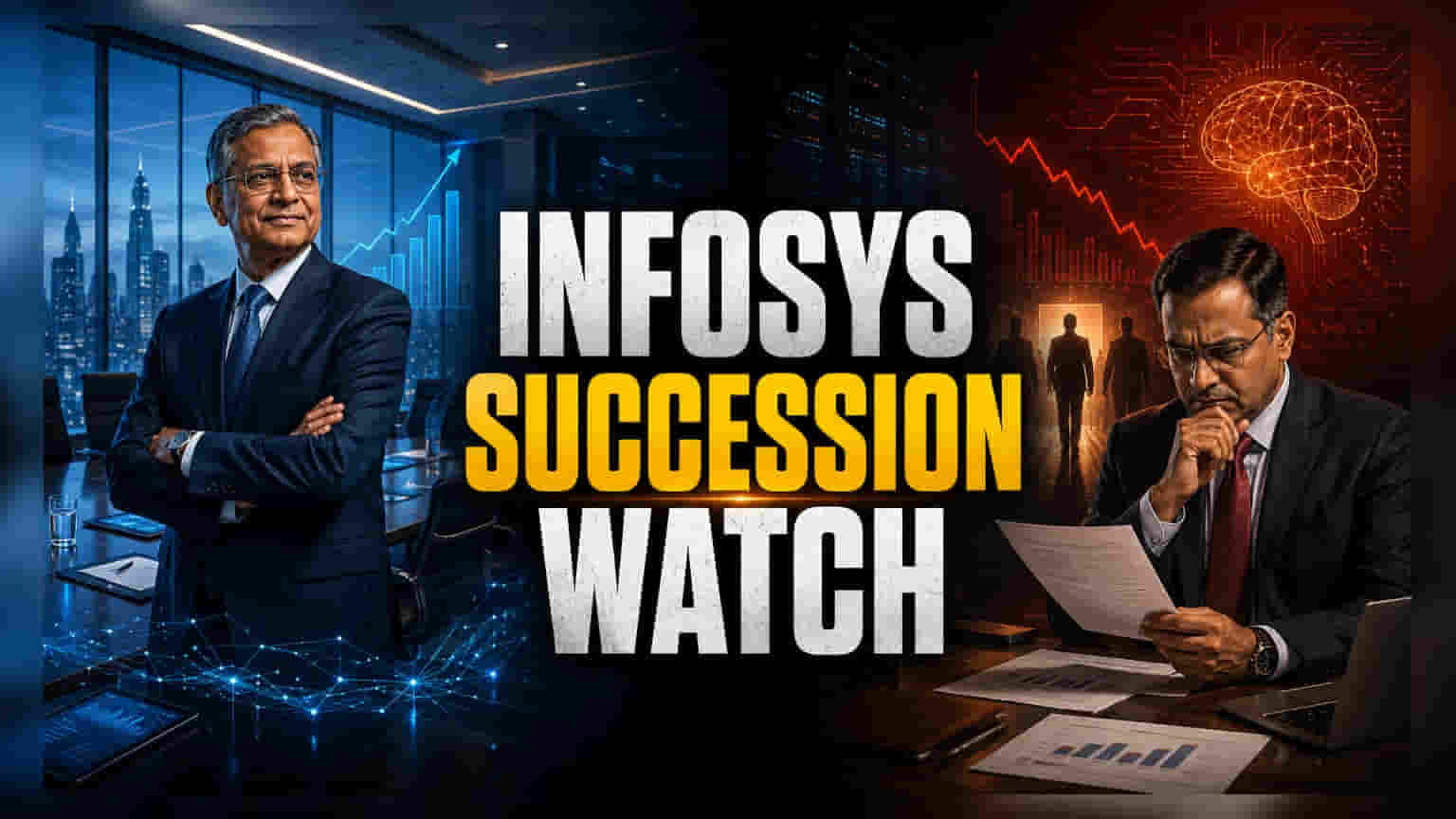


Strategic Continuity and the Succession Mandate
Nandan Nilekani’s potential re-election as non-executive chairman signifies a deliberate move toward institutional continuity. Returning to the company in 2017 to steady a ship then troubled by leadership disputes, Nilekani has since overseen a growth cycle that pushed revenues past the $20 billion mark. However, the clock is ticking on his own mandate, with internal governance rules capping his tenure at age 75. His third term is primarily viewed by analysts as a strategic runway to facilitate the appointment of a non-founder successor, ensuring the company avoids the executive churn that has historically plagued the IT sector.
The Executive Pivot Point
The elevation of Nitin Paranjpe to non-executive vice chairman represents a structural fortification of the board. Paranjpe, drawing on his extensive global experience at Unilever and Heineken, is positioned to provide the operational gravitas required as Infosys pivots toward complex AI-led service models. This move runs parallel to the uncertainty surrounding CEO Salil Parekh. With Parekh nearing the end of his current term in early 2027 and having already surpassed the standard retirement age for executive directors, the board is opting for a measured, phased transition. Market sentiment suggests a short-term contract extension is likely, providing a buffer to conduct a comprehensive search without triggering the market instability often associated with sudden C-suite exits.
The Forensic Bear Case: Structural and Competitive Risks
Despite current institutional confidence, the firm faces tangible headwinds. A major point of friction for investors is the perceived thinning of the internal leadership bench, particularly following the departure of high-profile executives like Mohit Joshi and Ravi Kumar S. to competitor firms. Unlike its peer Tata Consultancy Services, which benefits from an established internal pipeline, Infosys’ reliance on external talent and potential cultural integration risks remains a recurring concern for long-term holders. Furthermore, the company’s FY27 guidance remains conservative, reflecting intense pricing pressure and the ongoing transformation from traditional time-and-materials contracts to platform-based AI delivery. Any failure to effectively manage margin compression during this shift could jeopardize the company's valuation premium, which has already seen a significant contraction compared to its historical 12-month average P/E ratio.
Sector Outlook and Market Positioning
The broader IT sector is grappling with cyclical demand uncertainty, yet Infosys continues to show relative strength, evidenced by recent institutional buying and volume surges that suggest a recovery attempt from earlier year-to-date lows. As the company prepares for its 45th Annual General Meeting, the focus remains on disclosure and governance. Investors are closely monitoring the board’s capacity to balance these near-term operational challenges with the longer-term requirement to reinvent the firm’s service architecture in an era of rapid technological disruption.