 Whalesbook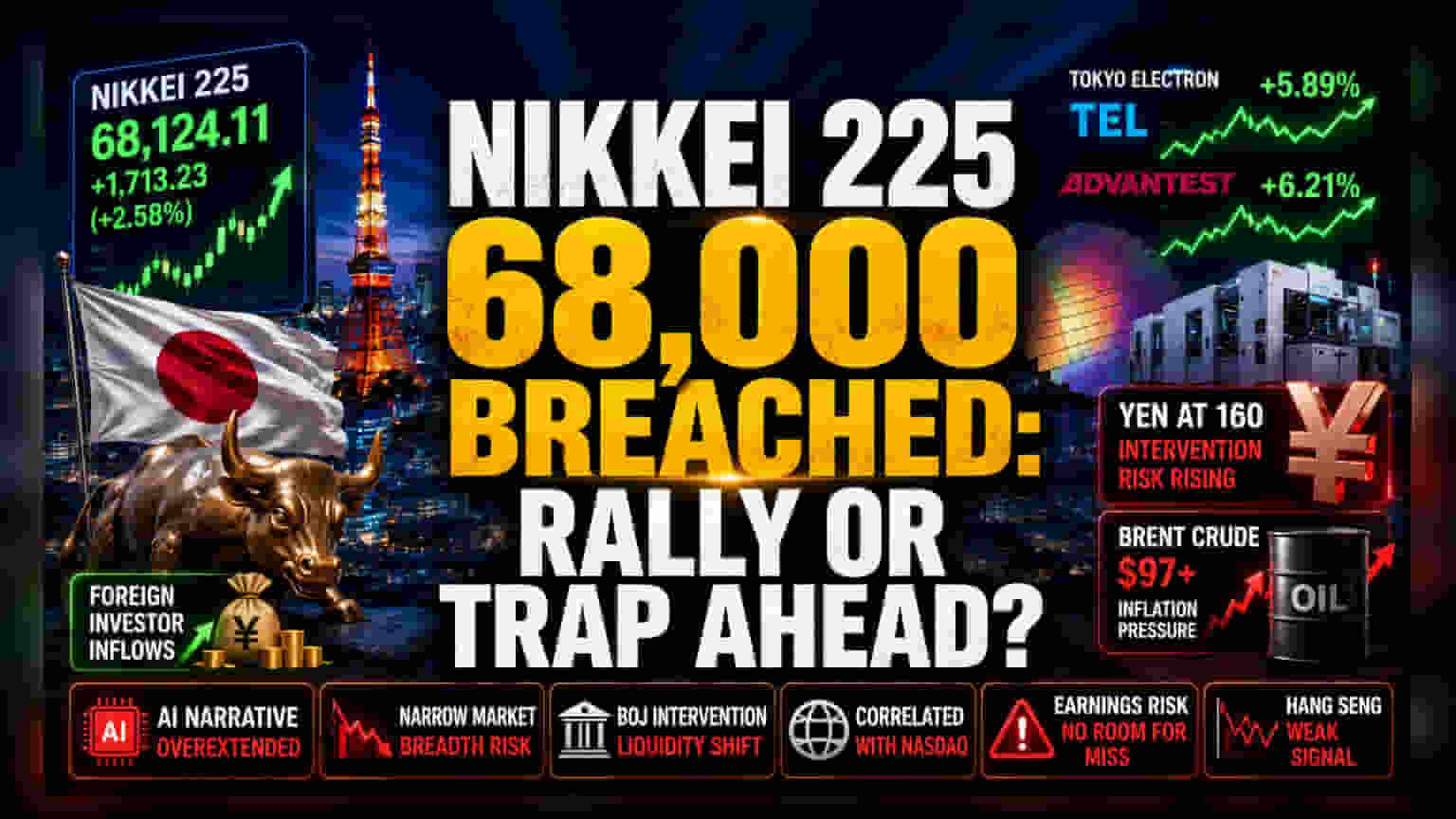


The Valuation Gap and Market Momentum
The historic breach of the 68,000 level for the Nikkei 225 represents more than just a psychological milestone; it reflects a concentrated capital rotation into Japanese semiconductor equipment manufacturers. The sharp ascent of Tokyo Electron and Advantest has provided the index with outsized gains, yet this narrow leadership suggests an increasing fragility. Historically, such concentrated momentum often precedes sharp corrections when the underlying AI-themed narrative faces reality-based resistance. While the market celebrates these gains, the breadth of participation remains limited, leaving the index susceptible to abrupt reversals if foreign institutional inflows, which have been pivotal this year, decide to rotate into lagging defensive sectors.
The Yen Dilemma and Macro Headwinds
Investors are navigating a difficult paradox where the weak yen—which recently touched the 160 level—acts as a double-edged sword. While a weaker currency traditionally aids the earnings of Japan’s large-cap exporters, the current velocity of the currency’s decline threatens to trigger intervention from the Bank of Japan, which could abruptly change the liquidity conditions that have supported this rally. Furthermore, the persistent rise in Brent crude prices to over $97 per barrel adds an inflationary tax on the Japanese economy, which relies heavily on energy imports. This cost pressure threatens to compress operating margins for industrial firms that are not directly insulated by the semiconductor boom.
The Forensic Bear Case
The reliance on high-beta technology stocks creates significant downside exposure during periods of global macro volatility. Unlike the broad-based recovery observed in previous market cycles, current Japanese equities are increasingly correlated to U.S. Nasdaq performance, meaning any cooling in American artificial intelligence capital expenditure will have a magnified effect in Tokyo. Furthermore, the divergence between the bullish Nikkei and the bearish sentiment seen in the Hang Seng index suggests that regional risk appetite is bifurcating. Investors should be wary of the extreme technical overextension in names like Tokyo Electron, where daily percentage gains have reached levels rarely sustained over long durations without significant pullbacks. The current structural dependency on the AI narrative leaves little room for earnings misses or guidance revisions in the upcoming quarterly disclosures.