 Whalesbook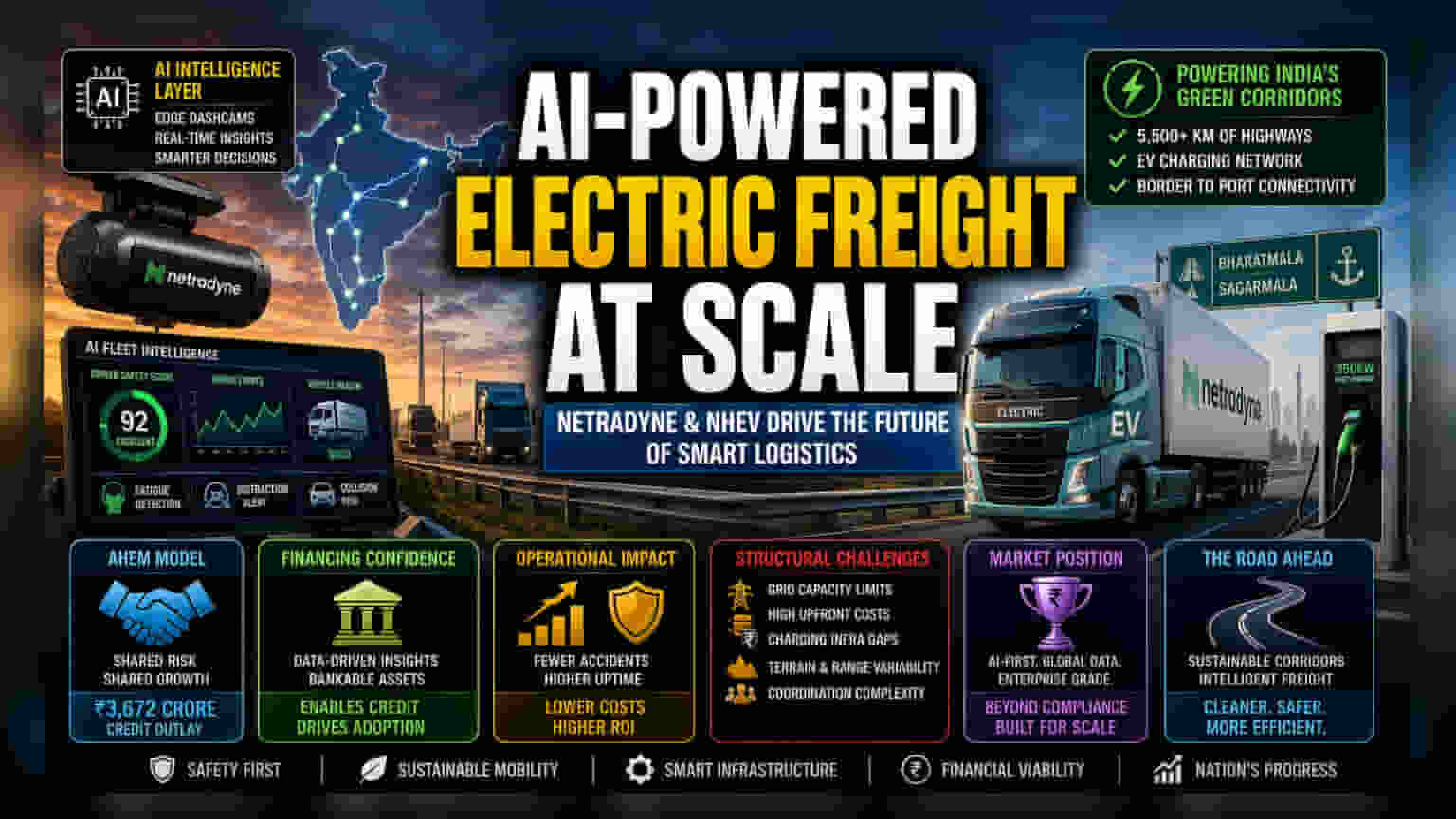


The Intelligence Layer for Electric Freight
The integration of Netradyne’s AI platform into the National Highways for Electric Vehicles (NHEV) network represents a departure from traditional infrastructure-only models. While prior efforts focused primarily on the physical deployment of chargers, this partnership acknowledges that the commercial viability of electric heavy-duty vehicles depends equally on uptime and asset utilization. By deploying edge-computing dashcams and AI-driven monitoring, the initiative aims to provide real-time diagnostic and driver-behavior data, directly tackling the uncertainty that currently plagues institutional lenders and freight operators evaluating electric transitions.
Scaling the AHEM Financing Model
The partnership functions within the framework of the Annuity Hybrid E-Mobility (AHEM) model, a public-private structure designed to mitigate the high upfront capital expenditure of electric trucking. Backed by a significant ₹3,672 crore credit outlay, the project seeks to establish a bankable ecosystem where risk is distributed among public, private, and individual stakeholders. The introduction of Netradyne’s technology acts as a performance-monitoring layer, providing the evidentiary data required for financial institutions to extend credit and manage assets within the complex Bharatmala and Sagarmala corridor network.
The Forensic Bear Case: Structural Dependencies
Despite the technological optimism, the success of this 5,500-km network faces systemic headwinds. The Indian logistics sector remains fragmented, and the adoption of high-power electric vehicles for long-haul freight is currently hindered by grid capacity constraints and significant variations in terrain, which can drastically alter battery performance. Critics also point to the high upfront manufacturing costs of electric heavy-duty trucks and a persistent shortage of specialized charging infrastructure capable of supporting rapid, multi-vehicle charging sessions.
Furthermore, the heavy reliance on a hybrid financing model necessitates flawless coordination between multiple government ministries and private developers. Any delays in the implementation of the PM Gati Shakti National Master Plan could lead to fragmented coverage, leaving fleet operators with isolated, unserviceable corridors. Netradyne’s entry, while providing a necessary safety and tracking layer, cannot resolve foundational infrastructure issues such as power stability and the long-term impact of heavy-duty usage on national grid loads.
Market Outlook and Competitive Positioning
Netradyne continues to solidify its presence in the Indian market, differentiating its product from local telematics providers by leveraging proprietary vision-based analytics and global fleet data. While competitors such as Aditi Tracking and various Indian IoT-based management startups offer compliance-focused solutions (e.g., AIS-140), Netradyne is positioning itself as a premium, AI-first alternative for large-scale enterprise and government-backed fleets. The company’s ability to sustain growth in this sector will depend on its capacity to prove ROI through measurable reductions in accident rates and improvements in vehicle uptime, effectively convincing conservative logistics operators that the long-term efficiency gains of electric mobility outweigh the current operational volatility.