

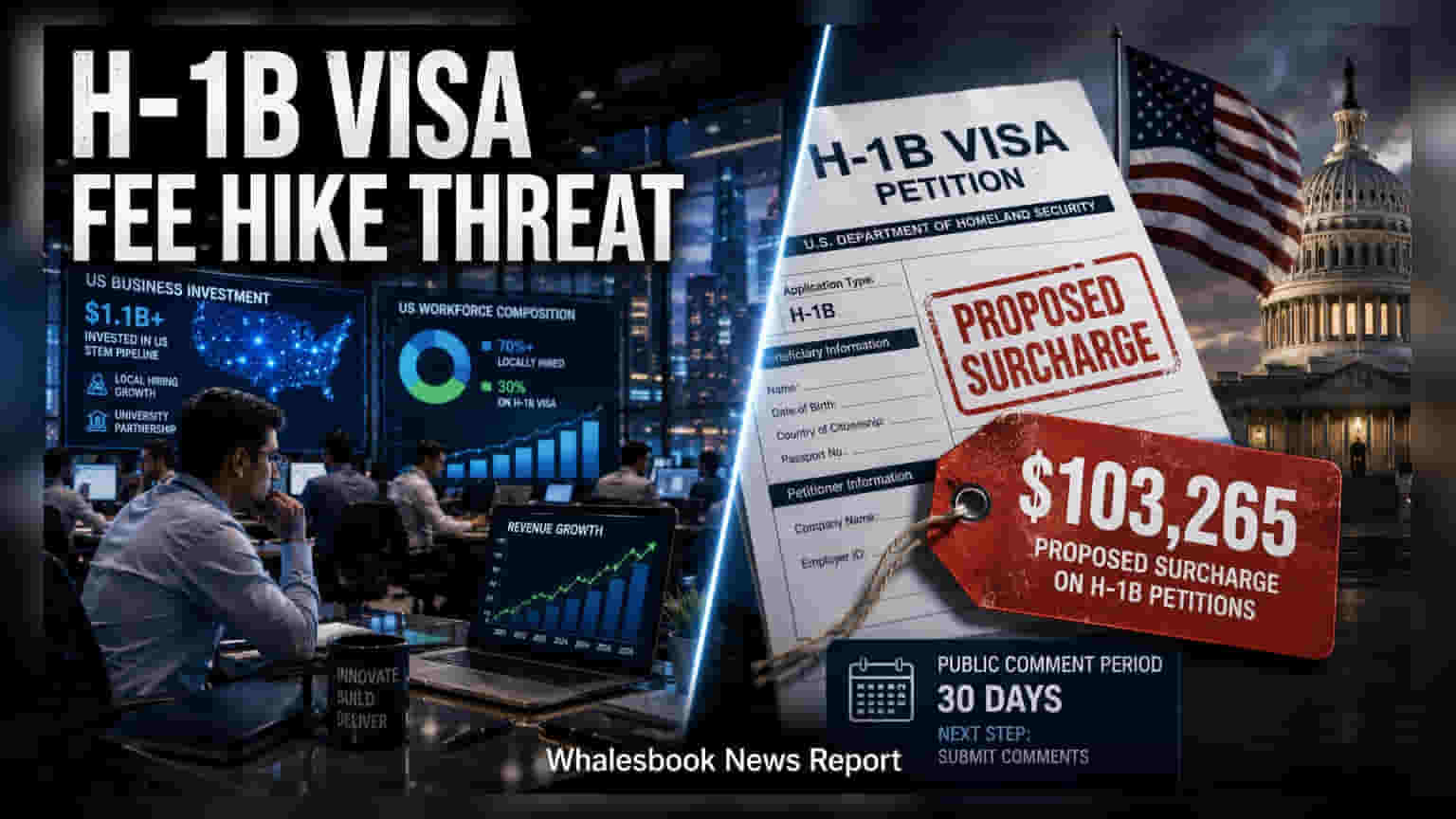
Nasscom is challenging a US proposal to impose a $103,265 fee on H-1B visa petitions, arguing it overlooks the Indian IT sector's shift toward local hiring. While major firms have reduced reliance on visa-dependent talent, investors are monitoring this potential regulatory cost as it could impact profit margins if the proposal becomes law.
The US Department of Homeland Security has proposed a $103,265 surcharge on cap-subject H-1B visa petitions, a move that has drawn immediate opposition from Nasscom. The industry body is actively engaging with US stakeholders, arguing that the fee structure fails to reflect the current business model of Indian IT services, which has evolved significantly over the last five years.
Impact on Business Models
For investors, the critical question is how much this fee would actually hurt the bottom line of major Indian tech companies like Tata Consultancy Services, Infosys, and Wipro. The industry has been actively moving away from the traditional model of flying in large numbers of workers from India. Instead, these companies have invested over $1.1 billion into the US STEM pipeline, focusing on hiring local talent and partnering with US academic institutions. For many firms, a significant portion of their US workforce is now locally hired, which provides a natural hedge against volatility in immigration policy.
Regulatory and Legal Context
This is not the first time the industry has faced attempts to hike visa costs. A similar high-fee proposal from a previous administration was struck down by a federal court in June 2026. The fact that this new proposal is being pursued through a formal regulatory rulemaking process suggests it may face its own set of legal and administrative hurdles. The Department of Homeland Security has opened a 30-day public comment period, which is the next major step. During this time, companies and industry groups will have the opportunity to present data on how such fees might disrupt their operations and the broader US economy.
Risks and Market Monitorables
Despite the reduced reliance on H-1B visas, the proposal introduces a layer of regulatory uncertainty that can cause stock market volatility. If implemented, such costs could lead to pressure on operating margins, which are already being watched closely amid varying global demand. Investors should note that while larger companies have the resources to adapt their hiring strategies, mid-tier firms with higher dependency on foreign talent might face more immediate challenges. The key monitorable for shareholders will be management commentary in upcoming earnings calls regarding their specific visa exposure and the potential impact of these regulatory costs on their future profit guidance.