

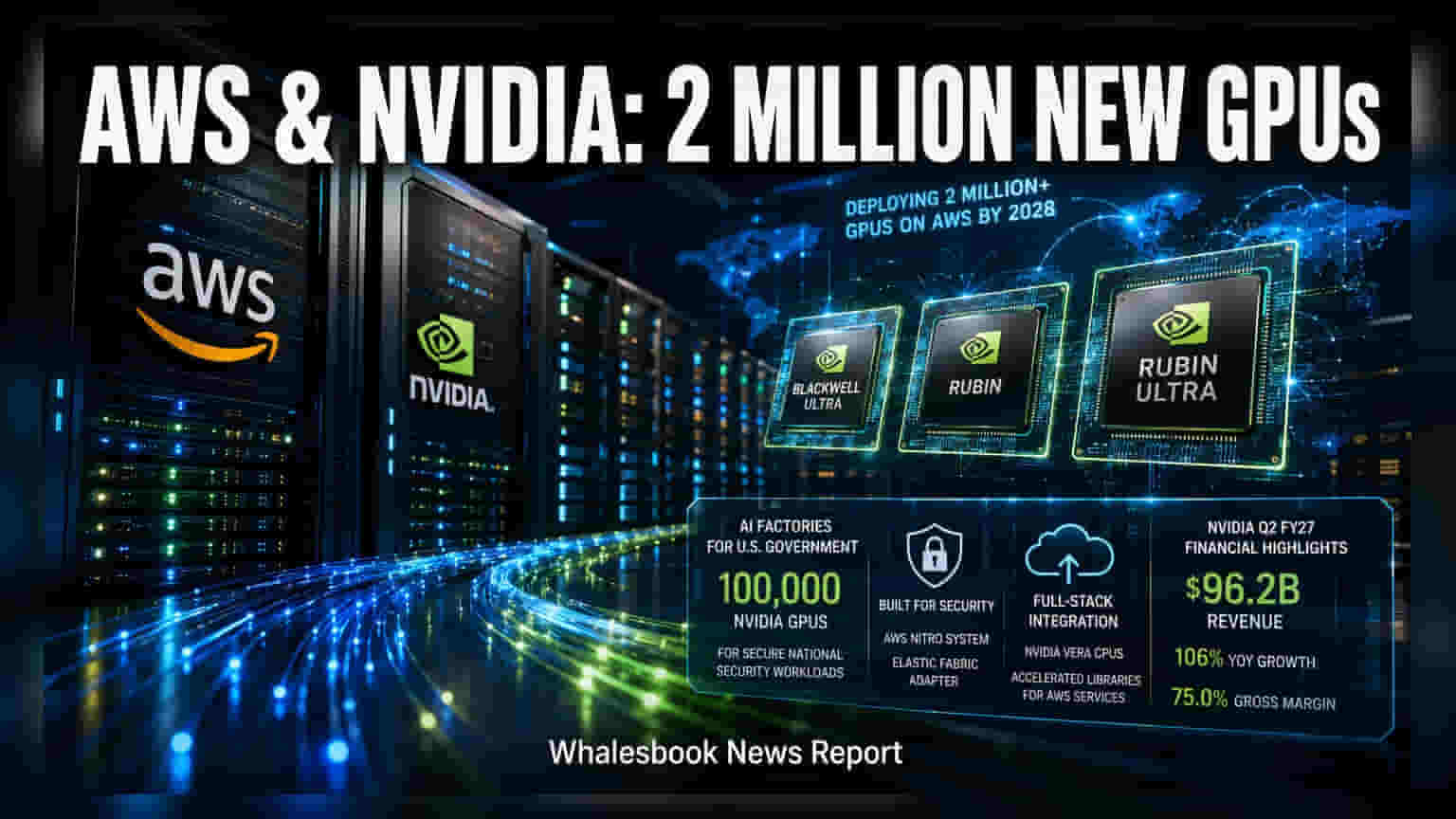
NVIDIA and AWS have announced plans to deploy two million advanced AI chips across their network by 2028 to meet rising demand. The deal also includes building specialized secure AI factories for government use. Investors are now focused on how this large-scale deployment affects NVIDIA's supply chains and profit margins.
NVIDIA and Amazon Web Services (AWS) have announced a significant expansion of their artificial intelligence infrastructure collaboration. The companies plan to deploy two million additional high-end GPUs—specifically the Blackwell Ultra, Rubin, and Rubin Ultra series—across AWS’s global cloud network by 2028. This move is a substantial upward revision from previous forecasts, reflecting the continued, high demand for compute power to support large-scale AI models.
Targeting Secure Government AI
A key part of this expanded partnership is the creation of specialized "AI factories" designed for the United States government. This initiative involves integrating 100,000 NVIDIA GPUs into secure AWS infrastructure. These units will be specifically configured to handle sensitive national security and federal workloads, utilizing advanced security tools like the AWS Nitro System and Elastic Fabric Adapter. By targeting this niche, the companies are aiming to secure a strong position in the public sector, which is increasingly seeking private, secure environments for AI development.
Financial and Strategic Context
This partnership goes beyond simply providing hardware. The integration covers a full technological stack, including NVIDIA’s Vera CPUs and specialized software libraries that help speed up data processing. This approach is designed to make the AWS platform more effective for customers using Amazon’s own AI services like Bedrock and SageMaker.
From a financial standpoint, NVIDIA continues to show high growth, having reported revenue of $96.2 billion for the second quarter of fiscal 2027, which was a 106% increase compared to the previous year. The company maintained a strong gross margin of 75.0% during this period. These numbers highlight the scale of the company’s current operations and the high pricing power it currently holds in the AI hardware market.
Risks and Market Challenges
While the expansion highlights growth, it also introduces significant operational challenges. A major concern for investors is supply chain stability. NVIDIA is currently managing high demand that reportedly exceeds its ability to supply chips, meeting only about 70% of total market requirements. Any failure to scale production to meet this ambitious two-million-unit target could lead to lost revenue opportunities or client dissatisfaction.
Additionally, the company faces intense pressure to maintain its high profit margins. As competitors accelerate their own AI chip development, NVIDIA must continue to innovate rapidly to justify its premium valuation. There is also execution risk inherent in these massive infrastructure projects; building out complex hardware and software stacks across global data centers is technically difficult and expensive. Investors will need to watch how these projects impact the company's long-term cash flow and whether it can manage the reliance on large third-party manufacturers to produce these chips at scale.