

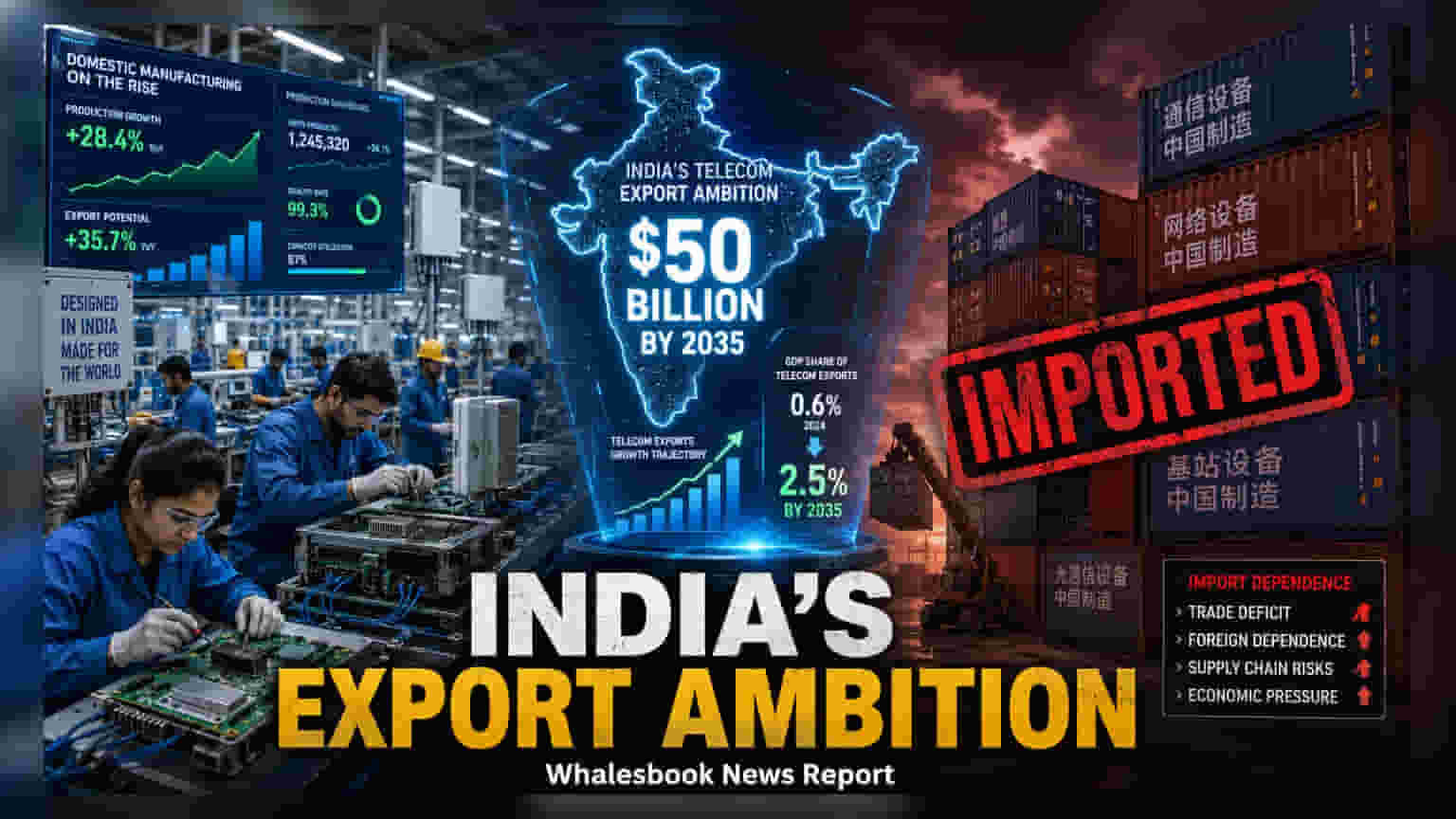
NITI Aayog has proposed fresh policy steps to transform India's telecom and network equipment (TANE) sector into a $50 billion export hub by 2035. The report highlights that local manufacturers currently face a 26-29% cost disadvantage, leading to heavy reliance on imports. Addressing this gap through targeted support is seen as the primary way to reduce the sector's current trade imbalance.
A new report released by NITI Aayog on August 13, 2026, has outlined a roadmap to turn India into a significant global exporter of telecom and network equipment (TANE). The plan sets an ambitious goal of reaching $50 billion in exports by 2035. To achieve this, the think tank argues that the government must address structural problems that currently make it difficult for Indian companies to compete with global suppliers.
The TANE sector is currently valued at approximately $25 billion, but it suffers from a large trade deficit. Data from the report shows that India imports between $4 billion and $5 billion of equipment annually, while exports stay low, often between $0.6 billion and $1 billion. A major hurdle is the heavy dependency on foreign suppliers for critical components like 5G base stations, signal processors, and antennas, with over 80% of these parts imported, largely from China.
For investors and market observers, the key challenge highlighted is a cost disadvantage known as fiscal disability. Indian manufacturers face costs that are 26% to 29% higher than international rivals. This cost gap makes it difficult for local firms to price their products competitively. The report explains that this happens partly because manufacturing in India often remains focused on simple assembly rather than high-value production, keeping domestic value addition below 20%.
Another significant issue is procurement habits. Private telecom operators in India, who account for the vast majority of equipment buying, have traditionally preferred established international brands. This makes it hard for local manufacturers to scale up, as they often struggle to win large orders despite government push for domestic sourcing.
The NITI Aayog report suggests that existing tools like the Production Linked Incentive (PLI) scheme are a good start but need more support to make a lasting impact. If implemented, these policy changes could help shift the sector from an import-dependent model to one where India serves as a global manufacturing center. The study estimates that such a shift could double the sector's contribution to the national GDP and create roughly 500,000 skilled jobs.
Moving forward, the primary factor for investors to monitor will be the government's specific policy responses. The effectiveness of these measures will depend on whether they can bridge the cost gap, incentivize high-value domestic manufacturing, and encourage large telecom operators to increase their local sourcing. The speed at which Indian firms can increase their value addition and move beyond simple assembly will be a critical indicator of the sector's progress toward the long-term export goal.