

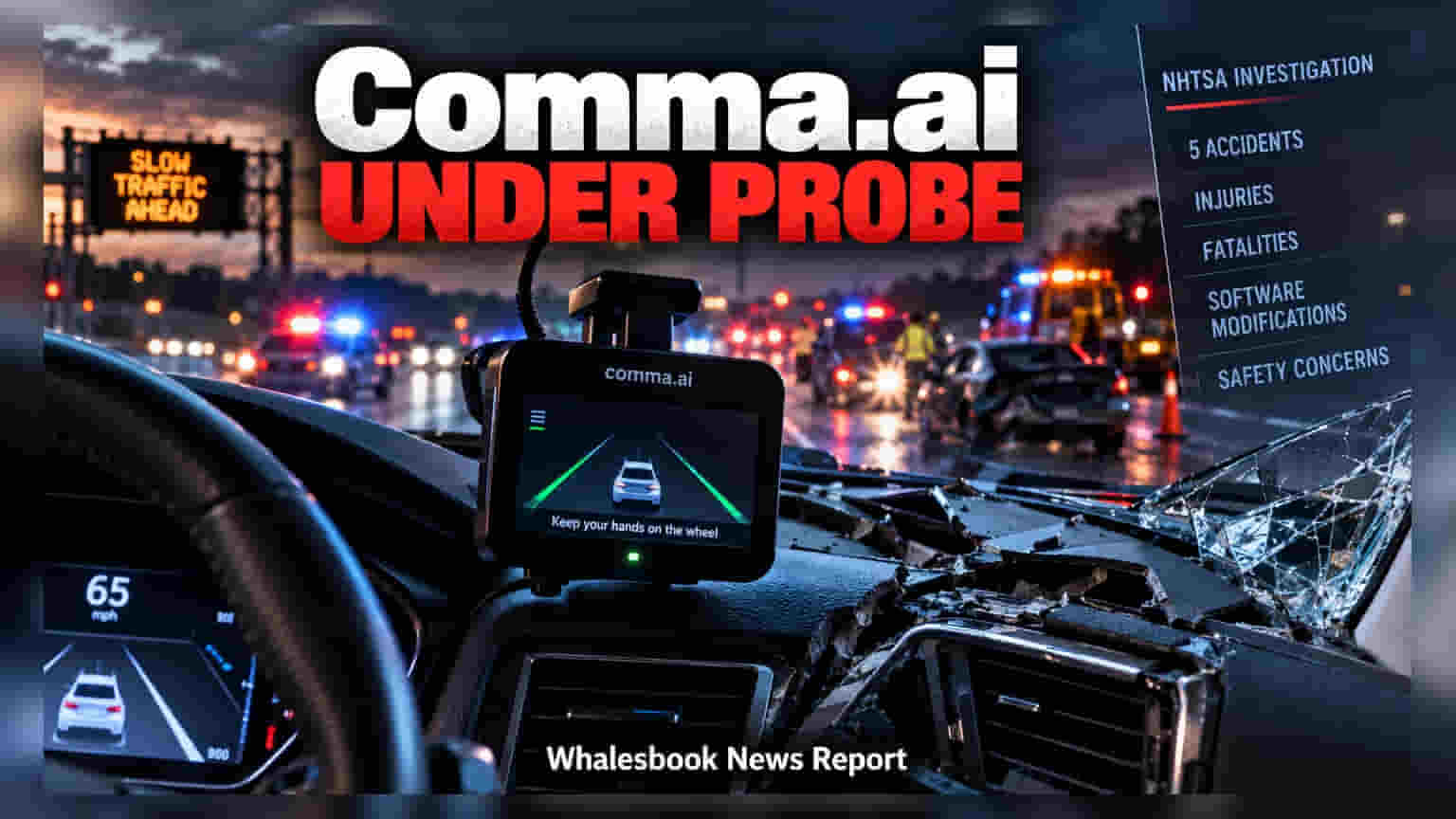
The US National Highway Traffic Safety Administration has launched an investigation into Comma.ai following five vehicle crashes, including two fatal incidents. The probe focuses on reports that the company’s driver-assistance system failed to detect stopped vehicles, alongside risks posed by unauthorized third-party software modifications.
The National Highway Traffic Safety Administration (NHTSA) has officially opened an inquiry into Comma.ai, a developer known for aftermarket driver-assistance hardware. The investigation follows a series of five documented accidents involving the company's devices, which are designed to provide automated lane centering and adaptive cruise control for various vehicle models. Regulators are examining reports that the software failed to identify or react to stopped or slow-moving traffic, leading to collisions that resulted in injuries and at least two fatalities.
Software Modifications Under Review
A critical part of the regulatory investigation focuses on the use of unauthorized modifications to the company's open-source software, known as 'openpilot.' Preliminary findings from the Office of Defects Investigation indicate that some of the accidents may have involved 'forked' versions of the software. These third-party iterations are designed by developers outside of the company and often bypass the security and operational guardrails integrated into the official software.
One specific incident mentioned in regulatory reviews involved a Toyota RAV4 equipped with 'FrogPilot,' a third-party modification. This vehicle reportedly struck a stationary first-responder vehicle in Louisiana, resulting in passenger fatalities. This highlights a significant challenge for the company: ensuring the safety and integrity of its system when users apply unverified custom code that may disable core safety features.
Liability and Safety Standards
Founded in 2015 by George Hotz, Comma.ai markets its products as an accessible alternative to proprietary advanced driver-assistance systems offered by major automotive manufacturers. The company consistently includes warnings that drivers must remain attentive and ready to take control of the vehicle at all times. However, the recurring nature of these accidents has prompted federal authorities to re-examine the safety protocols governing aftermarket autonomous technologies.
The central issue for investors and industry observers is the potential for liability when hardware-software mismatches occur. While the company claims its system is intended to improve driving safety and efficiency, the investigation will determine whether the current safety framework is sufficient to manage the risks inherent in aftermarket installations. As the investigation progresses, the company’s ability to defend its safety record and address potential regulatory restrictions on its software modifications will be critical. The next phase will likely involve further scrutiny of the company’s software architecture, safety documentation, and the extent to which it can prevent or discourage the use of unauthorized code modifications.