

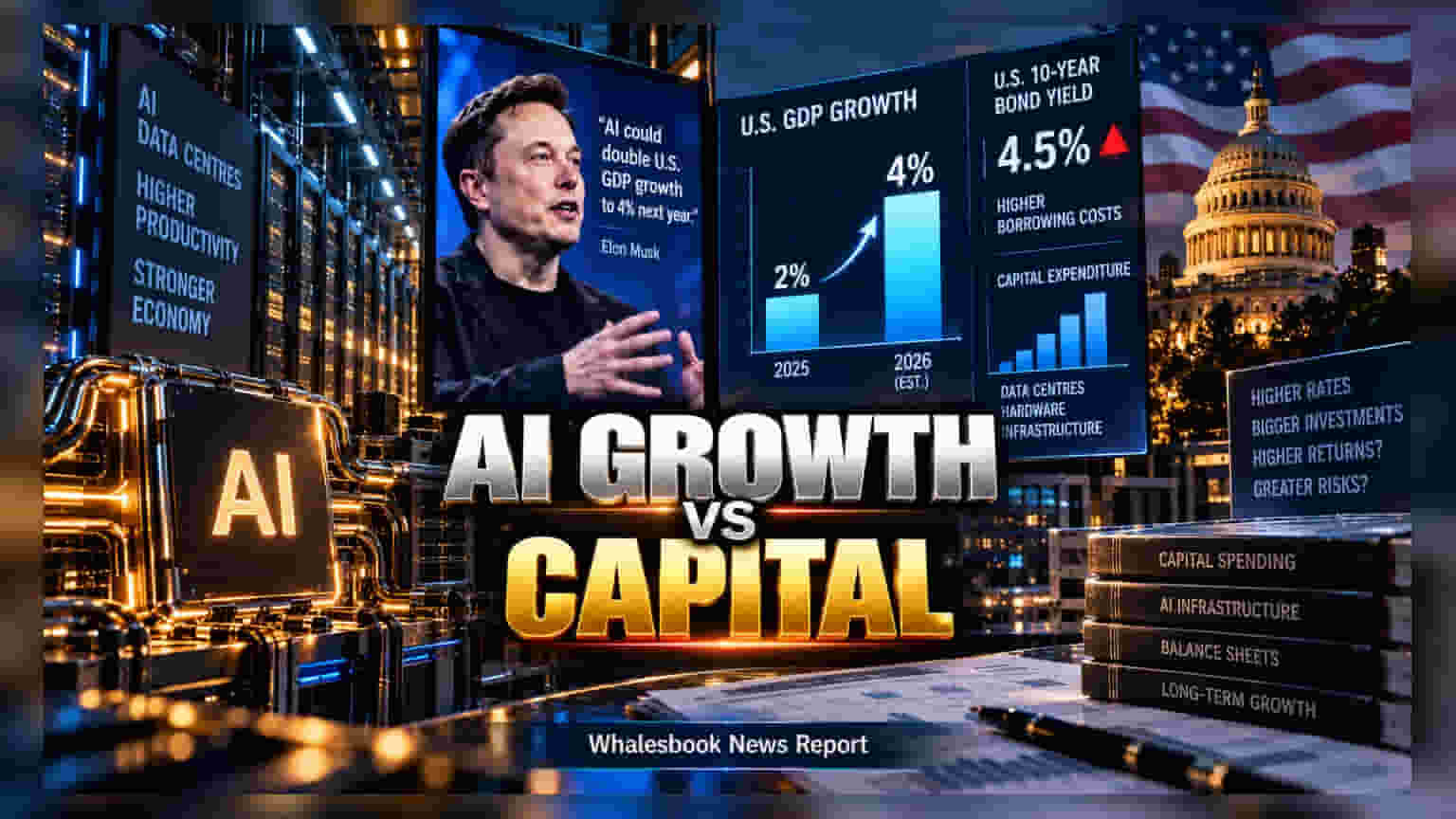
Elon Musk projects AI could lift US economic growth to 4% next year, but market risks including rising capital costs and interest rates remain a concern. Investors are increasingly questioning if massive AI infrastructure spending will lead to sustainable profits.
Elon Musk has estimated that artificial intelligence adoption could significantly accelerate the US economy, potentially raising GDP growth from roughly 2% to 4% next year. While this highlights the productivity gains expected from AI integration across various industries, the optimism is being tested by the realities of the current capital-intensive investment cycle.
The massive spending on data centres, hardware, and advanced computing capacity is a major shift from previous technology booms, which often favored asset-light business models. Today, major technology companies, known as hyperscalers, are committing substantial capital to build the infrastructure required to scale AI capabilities. These companies are funding these projects through a combination of debt, equity, and internal cash generation, placing a spotlight on their balance sheets.
Investors are now focusing on whether this rapid demand for AI will translate into sustainable profits. A key concern raised by analysts is the cost of monetization. Rapid changes in technology, including shorter commercial life cycles for AI models and the need for constant updates, have sparked debates about whether the returns on investment will justify the high levels of expenditure.
The broader economic environment adds another layer of complexity. With higher US bond yields and tighter financial conditions, the cost of borrowing has risen. As the US Treasury faces higher refinancing needs, sustained high interest rates could keep borrowing costs elevated, potentially impacting how companies fund these long-term infrastructure projects. If yields remain high, it may put pressure on the valuations of technology stocks, particularly those heavily reliant on borrowed capital.
For equity investors, the focus is shifting from simple AI adoption to capital discipline. The market is increasingly watching for signs that companies can generate adequate financial returns on their investments rather than just focusing on top-line growth. Future momentum will likely depend on the guidance provided by large technology companies regarding their capital spending, the actual pace of AI revenue generation, and the direction of long-term interest rates.