

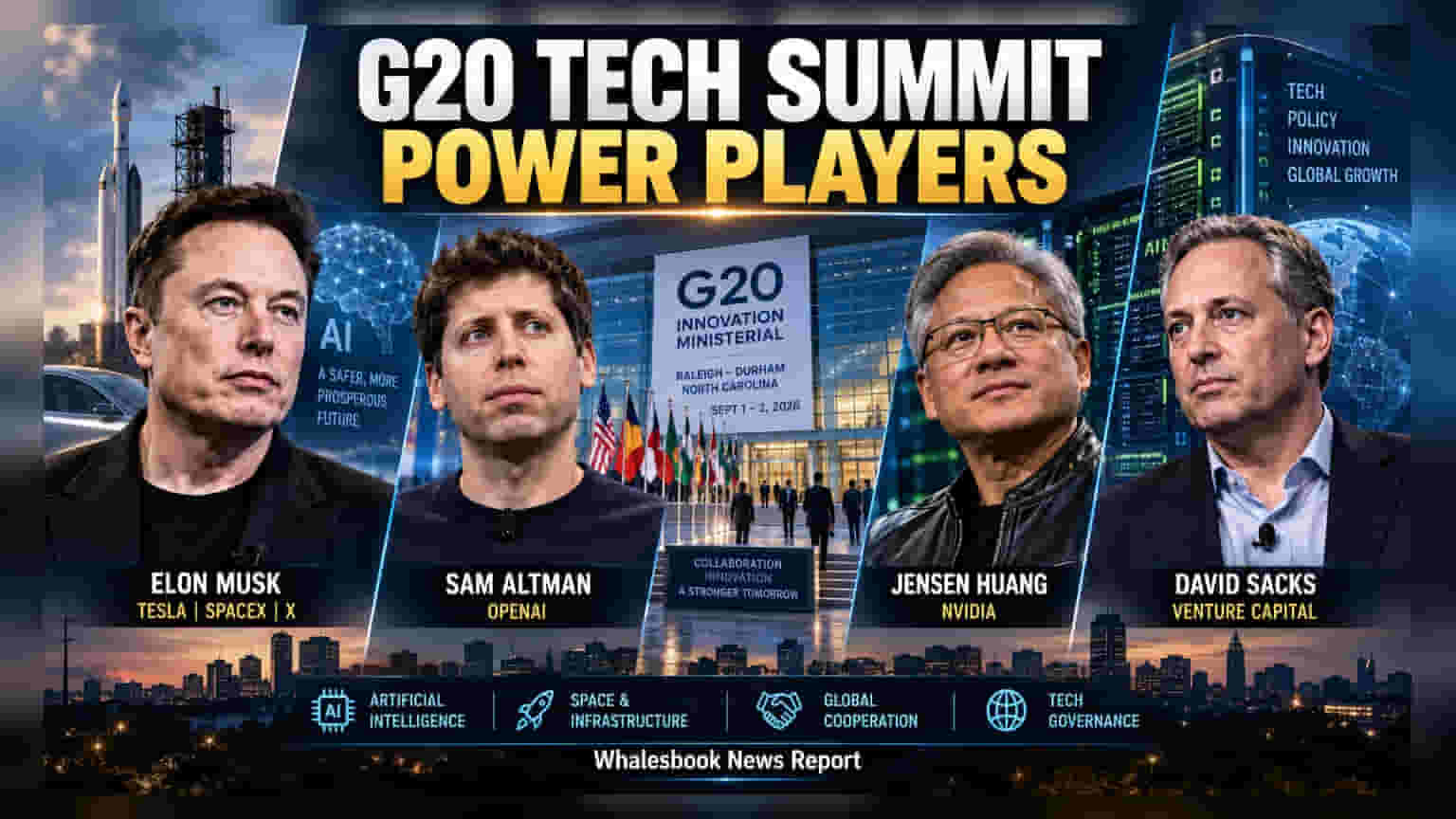
Elon Musk, Sam Altman, and Jensen Huang are set to headline the G20 Innovation Ministerial in North Carolina on September 1-2, 2026. Hosted by the U.S. Commerce Department, the summit will focus on global policies regarding artificial intelligence and advanced infrastructure. Investors are monitoring the event for potential regulatory signals that could impact the technology sector.
Business leaders Elon Musk, Sam Altman, Jensen Huang, and venture capitalist David Sacks are scheduled to participate in the upcoming G20 Innovation Ministerial meeting. The event will take place in the Raleigh-Durham region of North Carolina on September 1 and September 2, 2026. As the United States holds the G20 presidency this year, this gathering is being hosted by the U.S. Commerce Department and the White House Office of Science and Technology Policy.
Global Tech Policy and Future Governance
The presence of high-profile industry figures at a G20 ministerial meeting highlights the increasing intersection between private enterprise and government policy. Commerce Secretary Howard Lutnick is expected to host sessions with the industry leaders to discuss the framework for emerging technologies. For global markets, this meeting acts as a signaling event for how major economies plan to approach the governance of artificial intelligence, space-based infrastructure, and hardware standards. With Nvidia’s central role in the AI hardware ecosystem and OpenAI’s software leadership, these discussions could set the tone for future trade policies and development standards on a global scale.
Implications for Tech Valuation and Regulation
For investors, such gatherings are significant because policy decisions often lead to changes in the operating environment for large technology companies. Regulatory frameworks for AI or trade restrictions on hardware components can directly influence the growth trajectory and profit margins of firms like Nvidia, Tesla, and companies heavily invested in AI, such as Microsoft. While the specific agenda is focused on collaboration and innovation, the outcomes of these G20 talks often trickle down into national regulations. Markets typically monitor these sessions for signs of tighter oversight or, conversely, government support for critical tech infrastructure.
While the summit is an opportunity for policy alignment, it also introduces uncertainty. Investors should be aware that policy debates regarding data privacy, AI safety, and export controls can create short-term volatility in tech-heavy indices. If the summit results in new cross-border compliance requirements, it could increase operational costs for global tech firms. The key monitorable for market participants will be the official communiqués released by the G20 officials following the meetings, as these will provide the clearest indication of future regulatory directions.