

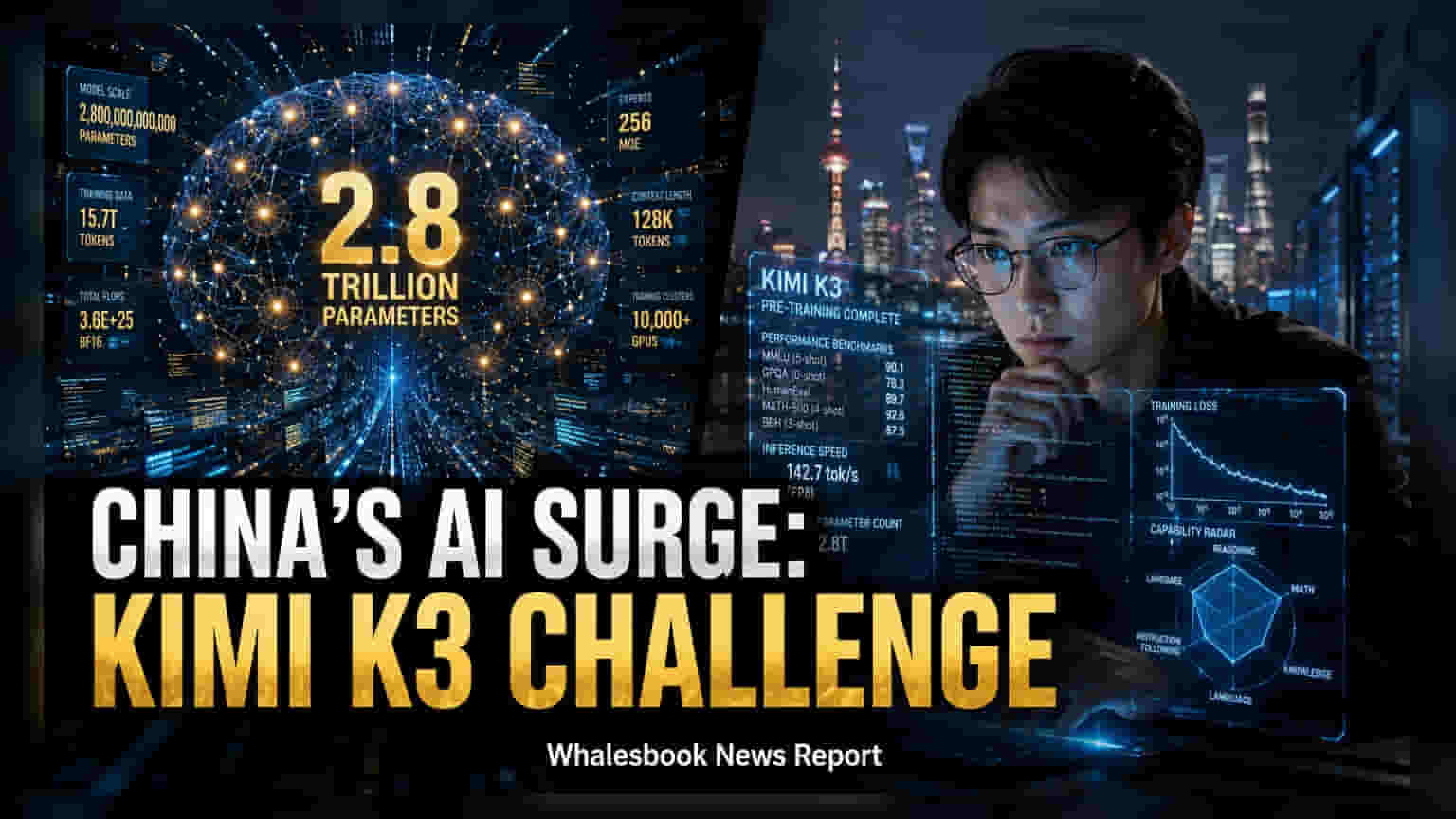
Chinese startup Moonshot has launched Kimi K3, a 2.8 trillion-parameter open-weight AI model designed for complex coding and reasoning. This release marks a shift in the global AI landscape, as Chinese firms accelerate development to match the performance of top U.S. competitors. Investors are observing this progress as companies like Alibaba and Tencent provide strategic backing to the sector.
Chinese artificial intelligence startup Moonshot has launched Kimi K3, an open-weight AI system featuring 2.8 trillion parameters. This release represents a milestone in the company’s efforts to build large-scale autonomous systems capable of complex reasoning and extensive coding. Unlike proprietary closed-source models, open-weight systems allow users to download and modify the underlying code, a feature that often encourages wider adoption among developers and enterprises.
Technological Advancements and Performance
Moonshot stated that Kimi K3 includes architectural enhancements designed to improve computing efficiency, which is essential for managing a 1 million-token context window. This large context window allows the model to process and retain significant amounts of information within a single prompt, aiding tasks that require deep knowledge. According to performance evaluations from industry trackers like Artificial Analysis and Vals AI, Kimi K3 has shown capabilities comparable to top-tier international models in multi-step tasks. The model is specifically engineered to maximize hardware efficiency through optimized GPU kernel usage, which helps in reducing latency during complex operations.
Competitive Landscape in China
The release of Kimi K3 follows a trend of rapid model deployment among Chinese AI firms. Other notable developments include Z.ai’s GLM-5.2 and MiniMax’s upcoming 2.7-trillion parameter model, which is expected to launch in the third quarter of 2026. Prior to these, DeepSeek’s V4-Pro and Meituan’s LongCat-2.0 had already reached the 1.6 trillion-parameter threshold. This sequence of releases indicates a compressed timeline for AI innovation in China, moving past the previous industry consensus that domestic developers were significantly behind their Western counterparts.
Strategic Backing and Market Implications
Moonshot’s growth is supported by major Chinese technology entities, including Alibaba and Tencent. For investors, the involvement of these large-cap tech companies is a critical monitorable, as they provide the necessary capital, data infrastructure, and cloud resources to fuel these resource-heavy AI projects. While the rapid advancement of these models presents opportunities in software and computing services, it also brings potential risks related to international regulatory environments and the evolving security standards for AI exports. The sustainability of these development cycles will depend on the continued availability of high-end computing hardware and the ability of these firms to maintain performance leads in a highly competitive global environment. The next important step for the sector will be the adoption rates of these open-weight models among developers and the eventual commercial monetization of these massive systems.