

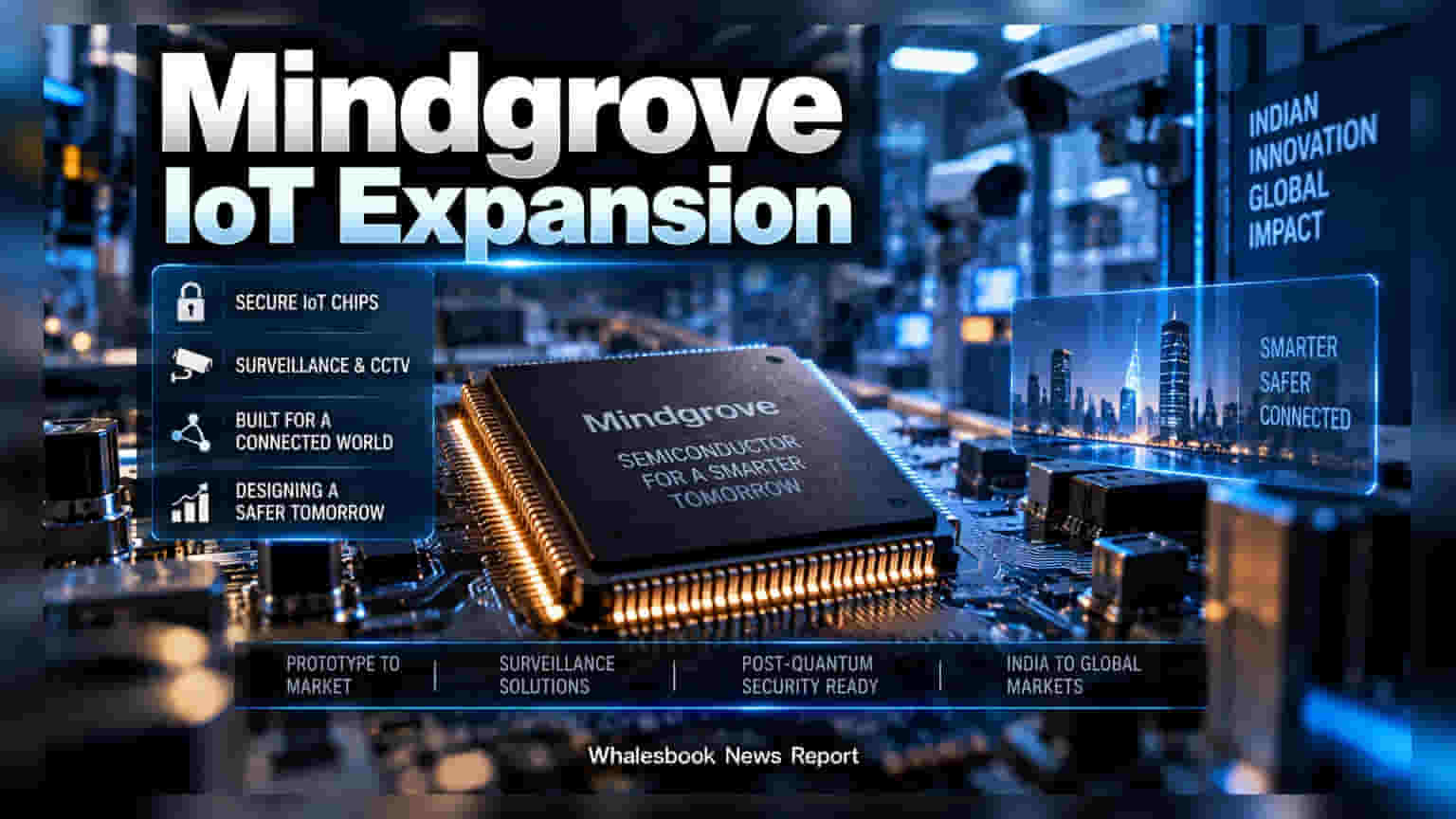
Fabless semiconductor startup Mindgrove Technologies plans to launch secure IoT chips by year-end 2026. The firm aims to reach profitability by FY28 as it expands into the security surveillance market. While scaling its roadmap, the company continues to navigate global supply chain pressures and intense competition for raw materials.
Mindgrove Technologies, an Indian fabless semiconductor startup, is preparing to move from product testing to full-scale commercial shipments of its secure Internet of Things (IoT) chips. The company plans to make these chips available by the end of 2026, a move that marks a transition from prototype development to active market distribution. As a fabless company, Mindgrove focuses on the design and research side of semiconductor production, outsourcing the actual manufacturing to specialized foundries. This model allows the startup to focus on innovation while managing the high costs associated with setting up a factory.
Financial clarity is a priority for the startup as it scales operations. The management has indicated a goal to reach revenue-positive status—essentially becoming profitable—by the final quarter of the 2027 financial year or the first quarter of the 2028 financial year. For a technology startup in the hardware sector, maintaining this timeline will depend on its ability to secure repeat orders and scale production efficiently without significant cost overruns.
Targeting Surveillance Markets
Beyond IoT, Mindgrove is working on the Vision SoC V2600, a processor specifically designed for the high-growth security surveillance and CCTV market. The company is positioning this product to capture demand from the ongoing transition where old analog video recorders are being replaced by modern network-based video recorders. This shift requires chips that can handle high-resolution image sensors and fast internet connectivity. The V2600 is currently in the prototyping phase, with customer trials scheduled for 2027. To keep its technology relevant, the company is also looking ahead by integrating support for post-quantum security algorithms, which are expected to become standard in the industry by 2030 or 2031.
Managing Supply Chain Risks
Expansion in the semiconductor space comes with inherent risks, particularly regarding supply chains. The company has faced pressure due to intense competition for raw materials, largely driven by the global demand for AI-related hardware. Furthermore, geopolitical tensions in the Middle East have previously caused logistical bottlenecks for the firm. While management has noted that these issues have been mitigated, enabling consistent repeat orders, supply chain stability remains a critical monitorable for the business. Any future disruption in the availability of manufacturing capacity or raw materials could delay project timelines or increase production costs. For now, the company is focused on the domestic market but aims to reach international customers through partnerships with multinational clients. The key to the company's long-term success will be its ability to maintain its design roadmap, manage cash flow, and successfully execute these upcoming product launches in a competitive global market.