

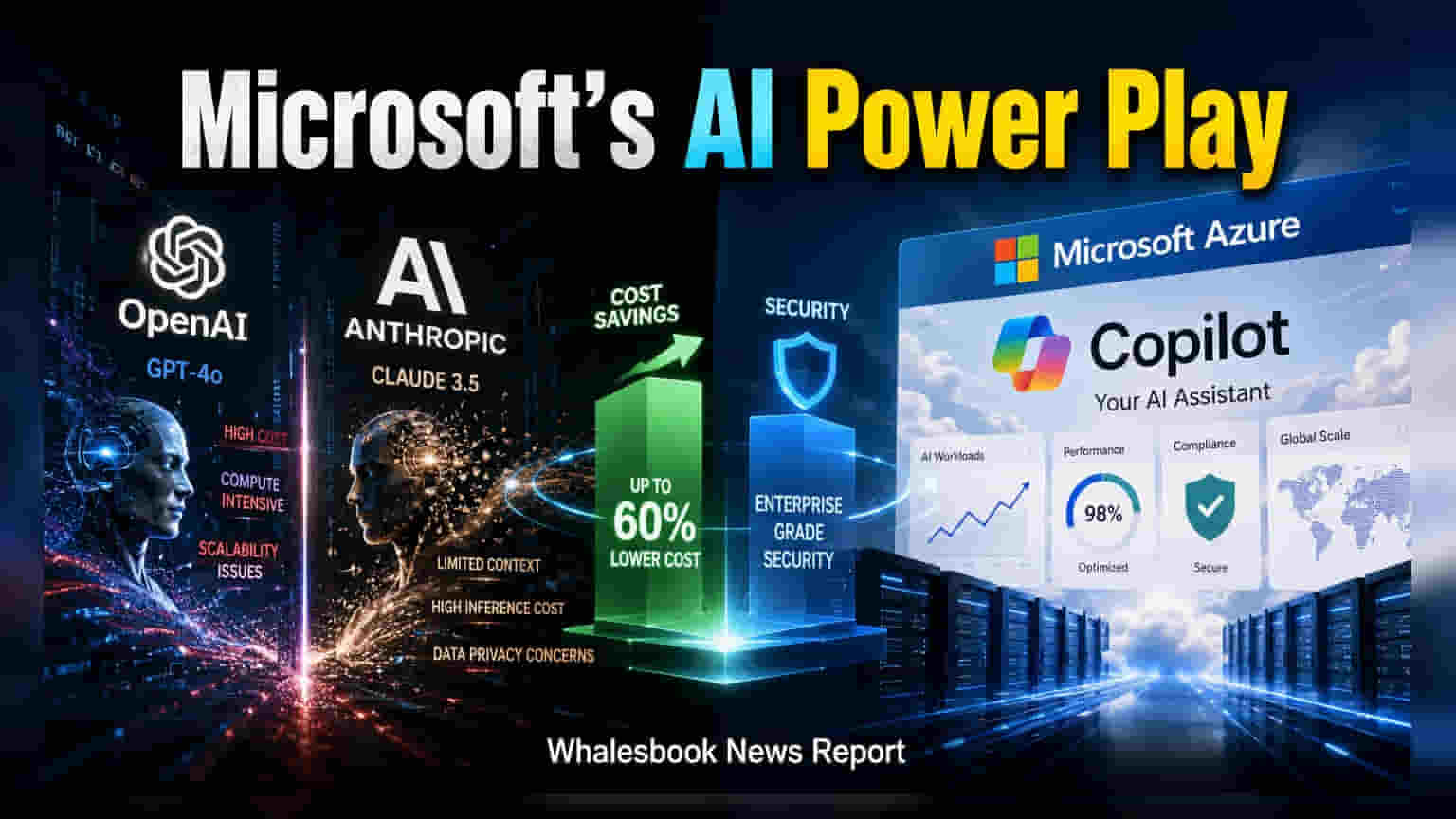
Microsoft is aggressively promoting its own AI models and proprietary Maya chips as a cost-effective alternative for enterprise clients. By urging companies to avoid over-reliance on partners like OpenAI and Anthropic, the tech giant aims to reduce vendor lock-in risks and enhance data security. This shift directly challenges the business models of its frontier AI partners while leveraging Microsoft’s massive infrastructure scale.
Microsoft is redefining its role in the artificial intelligence sector by positioning its proprietary technology as a direct competitor to the services provided by its partners, OpenAI and Anthropic. While Microsoft continues to hold substantial investments in these frontier AI labs, CEO Satya Nadella is now actively encouraging enterprise customers to diversify their model usage to prevent vendor lock-in and address data security concerns.
The strategy involves a move toward homegrown infrastructure, including the company’s own AI chips branded as Maya and a new family of models called MAI. During recent communications, the leadership emphasized that these in-house solutions are designed to offer better performance per watt and lower operational costs for large-scale enterprise deployments. For example, the newly introduced MAI Cyber One Flash is being marketed as a more efficient and affordable alternative to existing security models.
Financial context remains a critical driver of this pivot. Microsoft reported a robust fiscal year ending June 30, 2026, with total revenue reaching $331.8 billion and a net income of $133.7 billion. This immense financial strength allows the company to invest heavily in self-developed AI infrastructure, reducing its long-term reliance on external providers whose high-cost models can compress margins for enterprise clients.
From a technical perspective, the company is advocating for an architectural approach where the application layer is kept separate from the model layer. This design allows businesses to swap models as needed without significant disruption. Microsoft’s Copilot suite, which includes tools like GitHub Copilot, serves as the primary gateway for integrating these proprietary models into existing enterprise workflows.
Risk management is also a core theme in Microsoft's pitch. The company has highlighted incidents involving frontier model security as a reason for enterprises to avoid relying on a single AI provider. By offering a broader catalog of its own tools, Microsoft aims to position itself as a more stable and secure partner for corporate technology needs.
Investors will likely track how this competitive positioning affects Microsoft’s partnership dynamics with OpenAI and Anthropic in the coming quarters. Key areas to monitor include the adoption rates of the new MAI models, the cost-benefit performance of the Maya chips, and whether enterprise clients begin shifting significant workloads away from third-party frontier labs toward Microsoft’s internal ecosystem. The ability of the company to execute this transition without disrupting its existing cloud infrastructure demand will be a primary indicator of the strategy’s success.