

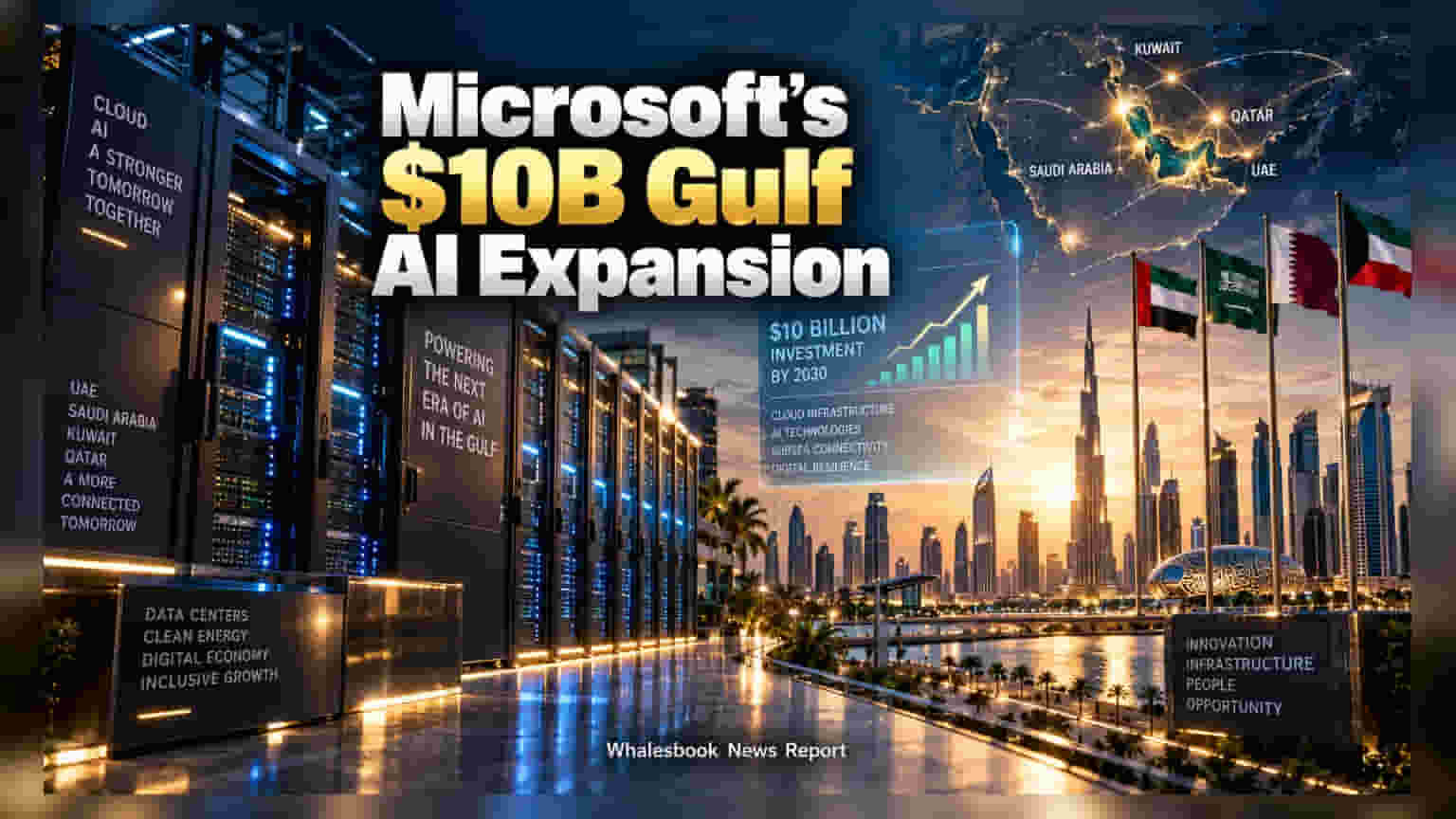
Microsoft plans to invest over $10 billion by 2030 to build cloud and AI infrastructure across the UAE, Saudi Arabia, Kuwait, and Qatar. The initiative aims to capture rising regional demand as Gulf nations diversify their economies. Investors should monitor how this significant capital spending impacts the company's regional revenue growth and operational risks in volatile geopolitical zones.
Microsoft has announced a long-term plan to invest over $10 billion into cloud and artificial intelligence infrastructure across the Gulf Cooperation Council (GCC) nations by 2030. The investment covers key markets including the UAE, Saudi Arabia, Kuwait, and Qatar. This represents a major commitment to building a digital foundation for a region currently undergoing a significant economic transition.
The company is focusing on creating a robust cloud network to support the region's growing appetite for artificial intelligence and data services. As part of this commitment, Microsoft is also allocating $400 million specifically for subsea and terrestrial connectivity projects. This is intended to ensure that data can move securely and reliably across borders, which is critical for maintaining consistent service quality in a region that requires high levels of data uptime.
For investors, the strategic importance of this move is clear. Gulf nations are actively trying to reduce their economic reliance on oil revenues by investing heavily in technology, digital infrastructure, and AI. By establishing itself as a primary infrastructure provider, Microsoft is looking to capture a significant share of this emerging demand. The company is already collaborating with major local entities, including a partnership with the Abu Dhabi-based AI firm G42, to align its services with local government and business requirements.
However, this expansion comes with unique challenges. Operating data centers and managing cloud traffic in the Middle East involves navigating regional geopolitical volatility and potential risks to physical assets. Investors should note that the company is placing a strong emphasis on digital resilience, which involves rigorous data protection assessments and planning for operational continuity despite regional instability. While Microsoft has substantial cash reserves to fund this expansion, the high cost of physical infrastructure and security measures means the company needs consistent demand from local governments and enterprises to generate a sustainable long-term return on its investment.
Competition in the region is also increasing. Other major global technology firms are also vying for dominance in the Gulf, meaning Microsoft will need to maintain its competitive edge in service quality, security, and local partnerships. Moving forward, shareholders may want to track the pace of project execution, the company's ability to navigate regional political sensitivities, and whether this infrastructure investment leads to tangible growth in cloud and AI adoption among regional businesses and government sectors.