

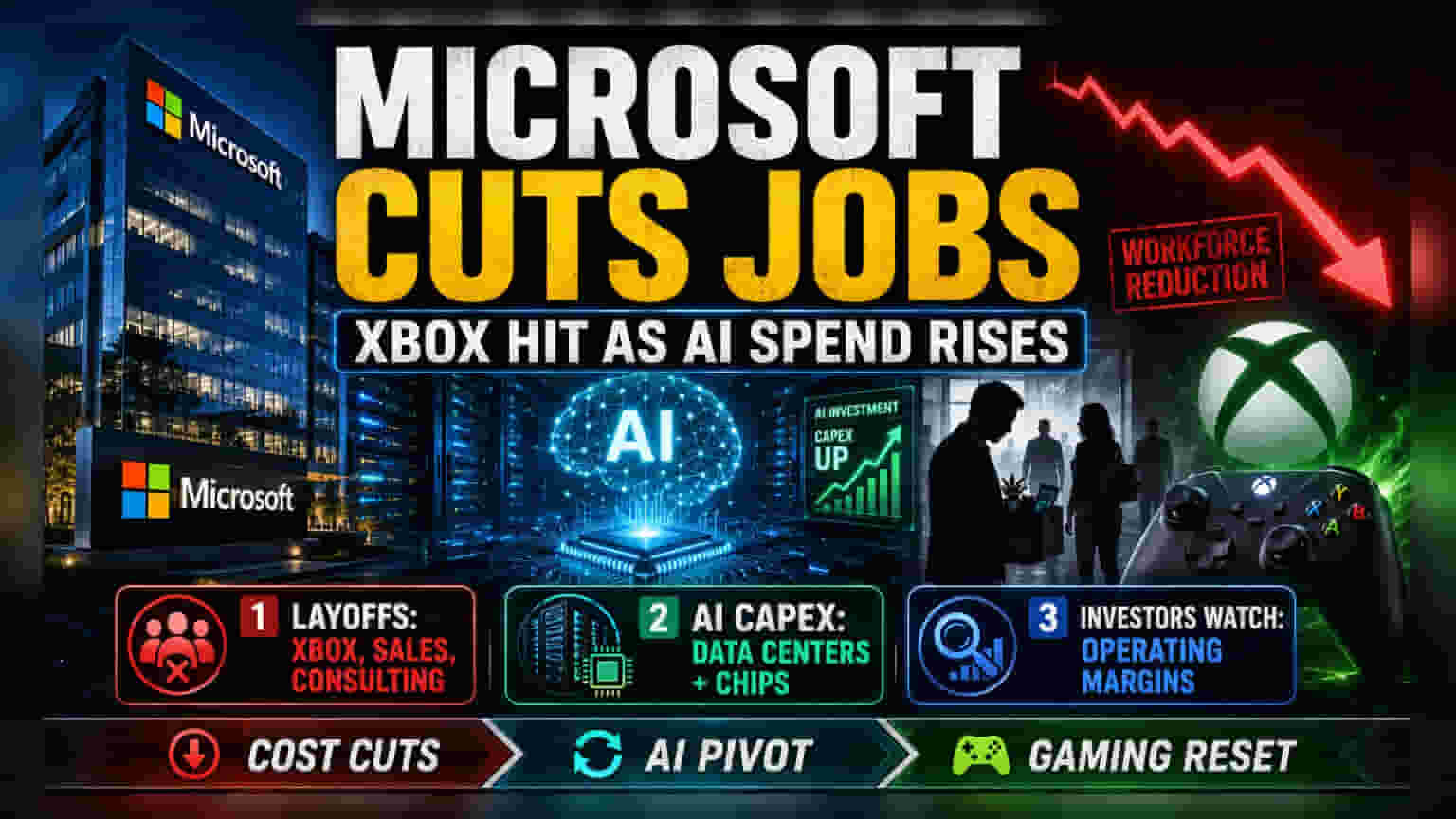
Microsoft is initiating a new round of job cuts, impacting its Xbox and sales divisions as it shifts resources toward artificial intelligence. The move aims to manage operational costs while the company funds massive AI infrastructure expansion. Investors are closely monitoring how this efficiency drive affects future profit margins and service quality.
What Happened
Microsoft is preparing a fresh round of layoffs that will impact employees across its Xbox gaming division, along with its sales and consulting units. While the exact number of jobs affected was not disclosed in the company’s internal plans, the scope is expected to be smaller than the massive workforce reductions seen in previous years. This move is part of the technology giant's ongoing efforts to balance its aggressive spending on artificial intelligence with the need to keep operational costs under control.
The AI Spending Trade-Off
The central reason for these cuts is the massive financial shift toward artificial intelligence. Building and maintaining AI capabilities requires enormous capital spending on data centers, advanced chips, and energy. To pay for these heavy investments without hurting overall profitability, technology companies often look for ways to trim expenses in other parts of their business. For shareholders, this represents a trade-off: the company is essentially sacrificing headcount in legacy or support areas to fuel growth in its new AI-driven product suite.
Why The Xbox Division is in Focus
The changes in the Xbox division follow signals from leadership about the need to "reset" the gaming business. Gaming is a core consumer revenue stream for Microsoft. While the division brings in significant cash, it also requires constant investment in content, hardware, and services. By trimming the workforce, the company may be trying to improve the profit margins of this specific unit. However, a risk for investors is whether these cuts will impact the quality of game development or customer service, which are essential for maintaining user engagement in a highly competitive gaming market.
What This Means For Margins
For investors, the most important metric to track in coming quarters will be operating margins. When a company cuts jobs to reduce expenses, it is often an attempt to protect or expand its profit margin despite the rising costs of its AI expansion. If these cuts succeed, the company can show better bottom-line results. However, if the business slows down because of lower capacity or reduced sales support, the market may view the layoffs as a sign of underlying weakness rather than strategic efficiency.
Risks and Execution Challenges
While cost-cutting is common in the tech sector, it is not without risk. Reducing the workforce can affect employee morale and operational performance. Additionally, relying on headcount reduction as a primary method to manage costs is a finite strategy. If demand for Microsoft’s core software or gaming products softens, simply cutting jobs may not be enough to satisfy investor expectations for growth.
What Investors Should Track Next
Investors should keep an eye on the company’s upcoming quarterly financial results for specific updates on how operating expenses are trending. Additionally, management commentary regarding the "reset" of the gaming division and the returns on AI spending will be critical. The ultimate test will be whether the efficiency gains from these layoffs translate into sustainable profit growth, or if they are merely a stop-gap measure to offset the high costs of the AI pivot.