 Whalesbook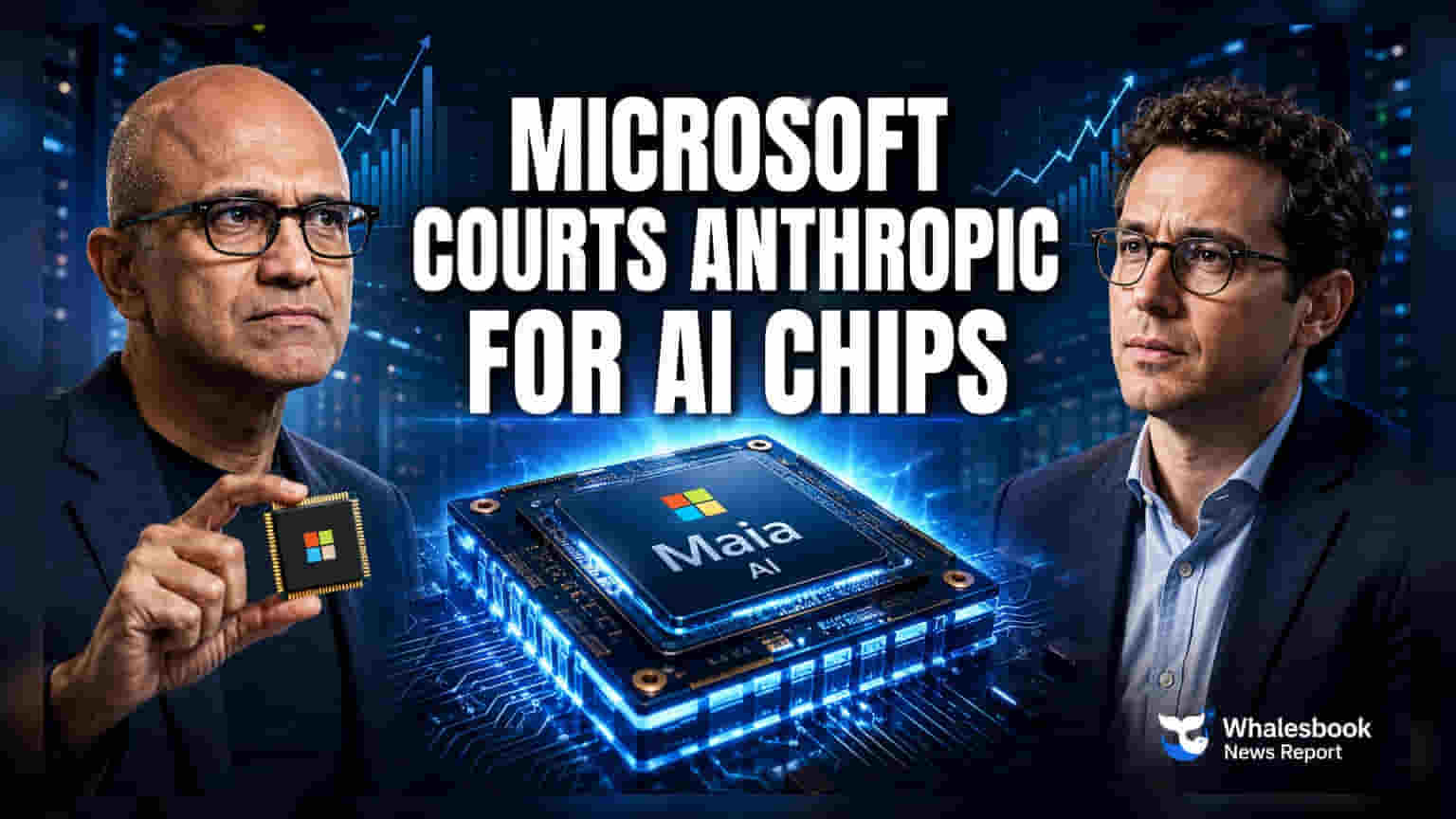


This potential chip supply agreement represents a critical commercial validation for Microsoft's custom silicon ambitions, aiming to capture a larger share of the AI infrastructure market. The deal signifies a deepening alliance, moving beyond capital investment to a direct hardware partnership.
Strategic Goals
Microsoft is actively working to reduce its reliance on outside chip makers, especially Nvidia, by creating its own AI chips like the Maia 200. The second-generation Maia chip, introduced in January, is designed for better efficiency, reportedly offering over 30% more tokens per dollar than current options. With these chips already in use in Microsoft's data centers, supplying Anthropic would provide a crucial real-world test and a major customer, validating its internal silicon plan amid soaring AI demand.
Anthropic's Compute Needs and Diversification
Anthropic, a leader in AI safety and research, has openly discussed the immense challenge of securing enough computing power for its Claude chatbot and related services. Its recent large computing capacity deal with SpaceX, worth $1.25 billion monthly through May 2029, highlights the scale of its infrastructure requirements. While mostly using Nvidia GPUs, Anthropic has been actively diversifying its hardware partners, securing long-term deals with Amazon Web Services for Trainium chips and planning to use Google's tensor processing units. This potential arrangement with Microsoft would further diversify its hardware ecosystem.
Market Competition and Valuation
The global AI chip market is highly competitive. Major cloud providers like Amazon and Google are also developing their own custom silicon for internal use and external clients. Microsoft's $5 billion investment in Anthropic, along with Anthropic's commitment for $30 billion in Azure cloud services, shows how closely linked their relationship is. A successful chip supply deal could significantly change competitive dynamics, giving Microsoft a clear advantage in offering integrated hardware and cloud solutions, while potentially commanding a premium for its Maia offerings. Competitors like Nvidia, the current market leader, may see increased pressure as cloud providers increasingly control their own hardware. While Microsoft's custom silicon is new compared to established players, this partnership could speed up its adoption and development.
Future Impact
If this deal happens, it would signal a significant shift in the AI infrastructure supply chain. It shows a trend toward vertical integration among major tech companies, aiming to improve performance, cost, and supply chain security for their AI operations. The success of Microsoft's Maia chips with a demanding partner like Anthropic could lead to wider adoption within Microsoft's cloud services and potentially attract other AI developers looking for tailored hardware solutions.