

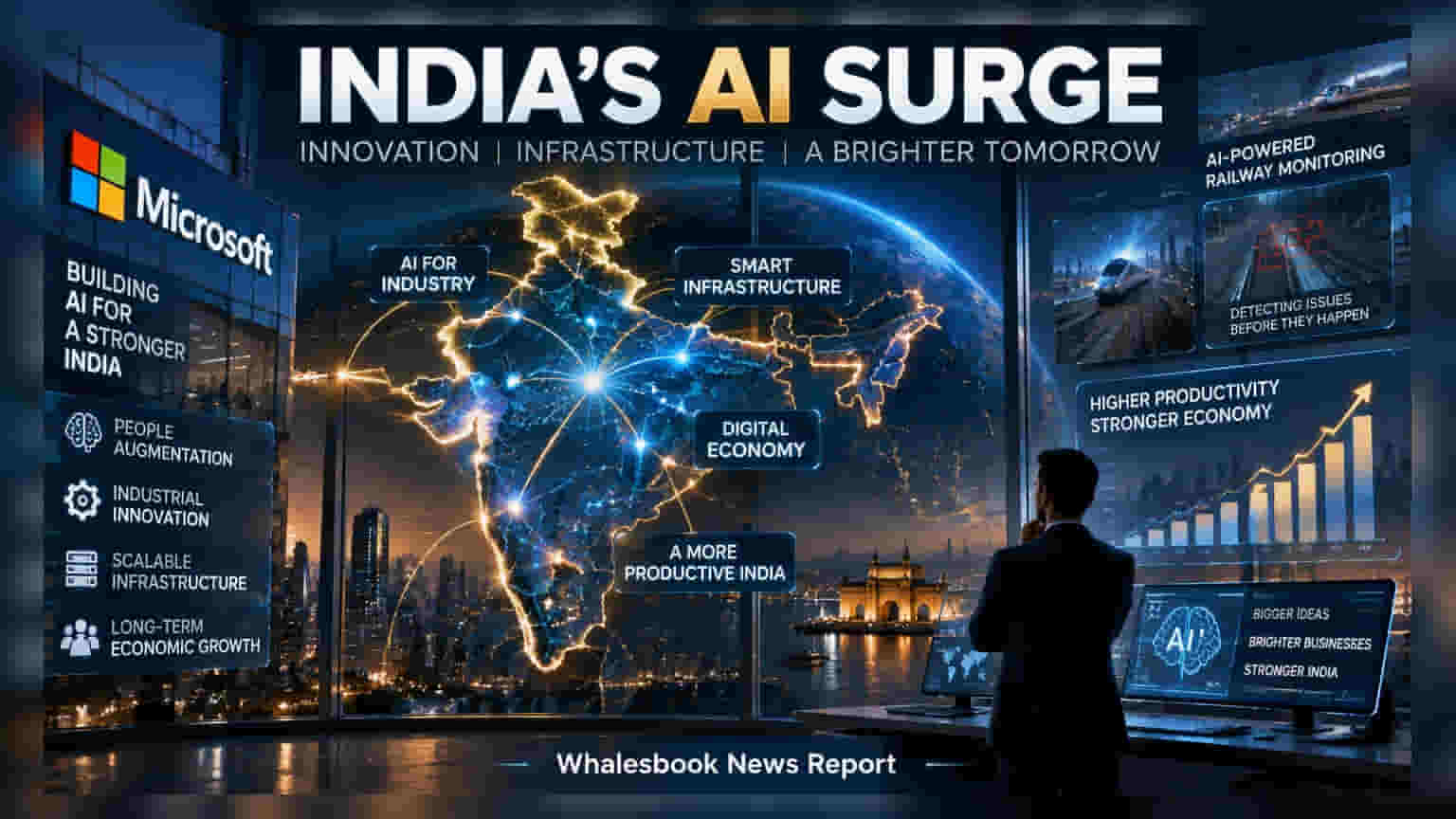
Microsoft India managing director Rajiv Kumar envisions the country as a global leader in AI volume and innovation. The strategy focuses on using AI to boost human productivity and enhance industrial safety, such as in railway operations. This push toward AI infrastructure is expected to play a critical role in driving India's long-term economic growth.
Microsoft India is positioning the country as a central hub for artificial intelligence innovation, according to Rajiv Kumar, Managing Director of the Microsoft India Development Center. Speaking at a recent infrastructure summit, the company emphasized that India’s role in global AI projects is set to grow as the technology becomes more deeply integrated into the economy.
The strategy focuses on a practical approach to technology. Instead of viewing AI solely as a replacement for human work, Microsoft aims to focus on AI as a tool that enhances human capabilities and ambition. This perspective is important for investors who watch how businesses adopt new technology to improve operational efficiency and competitiveness.
One key area highlighted was industrial infrastructure. Microsoft is working on applications like AI-powered video analysis for railway systems, which helps detect equipment malfunctions more effectively. For investors, this shows that AI is moving beyond simple software tasks into heavy industry and public service sectors, which could eventually lead to cost savings and improved safety protocols for large-scale operations.
However, companies face a significant challenge in this transition. Businesses are currently trying to build new AI-based services while maintaining their existing, older business systems. This process, which requires balancing innovation with legacy technology, is a key point for shareholders to observe. The success of firms in managing this balance will determine how quickly they can scale and see productivity gains from their technology investments.
The broader impact on India’s economy is also significant. Microsoft projects that consistent AI adoption can help improve output across various industries, supporting long-term growth. As the company continues its commitment to infrastructure development, the focus remains on how well businesses can translate these digital tools into tangible economic results. Investors tracking the technology and IT service sectors should monitor how these shifts in digital infrastructure influence corporate performance and long-term project execution.