

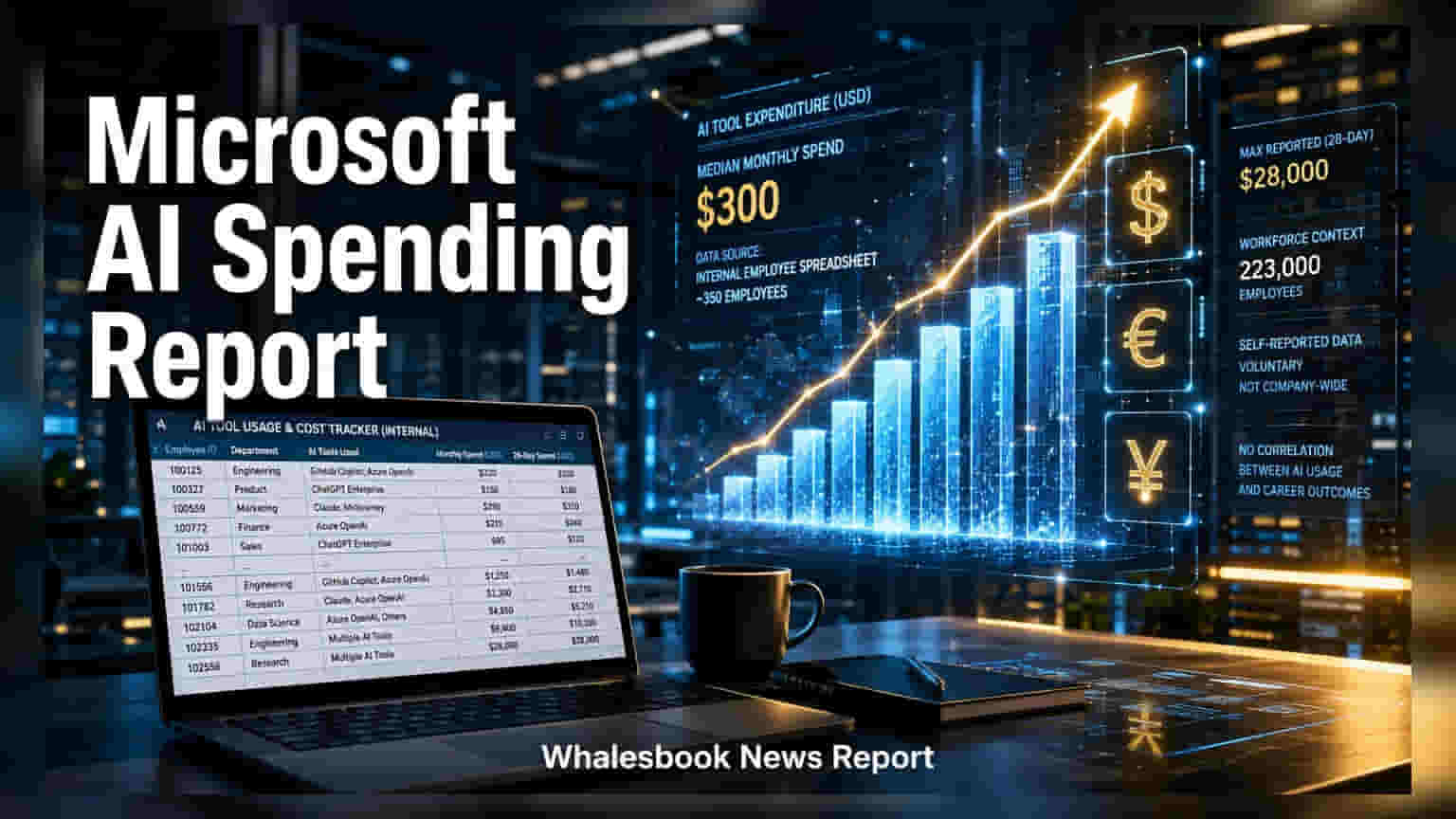
Internal data from Microsoft employees shows a median monthly spending of $300 on AI tools, highlighting the scale of internal adoption. The company is now implementing department-level token limits to manage the rising infrastructure costs associated with these technologies.
A snapshot of internal Microsoft data has revealed that employees are actively tracking their use of artificial intelligence tools, with a reported median monthly expenditure of $300. This information comes from a voluntarily maintained compensation spreadsheet where approximately 350 staff members have documented their monthly AI usage. While the data is self-reported and represents a small fraction of Microsoft’s 223,000-person workforce, it provides a rare glimpse into the scale of AI experimentation happening within the company.
Managing Rising Infrastructure Costs
For investors, the primary takeaway from this development is how the company is handling the financial impact of AI adoption. The surge in AI tool usage naturally leads to higher computing and infrastructure costs. In response, Microsoft has reportedly begun implementing cost-management measures, including token-usage limits for specific departments. These limits are designed to ensure that while employees continue to experiment with AI to drive productivity, the operational expenses remain within reasonable boundaries.
Understanding the Data Context
It is important to view these figures in the correct context. The spreadsheet, while insightful, is not an official company-wide financial statement. The variation in usage is significant, with some employees reporting costs as high as $28,000 for a 28-day period, while others report much lower amounts. Because this is a voluntary, staff-managed list, it does not necessarily represent the usage patterns of every employee or every division.
Furthermore, current internal analysis indicates that there is no direct correlation between an employee’s high AI usage and their career outcomes, such as promotions, raises, or bonuses. This suggests that the company is still in the early stages of determining exactly how these tools translate into measurable productivity gains for individual roles.
Investor Monitorables
The broader investor concern regarding AI companies remains the balance between heavy investment in infrastructure and the actual return on investment. While AI integration is intended to boost output, the cost of powering these tools is substantial. Investors should continue to monitor upcoming financial updates for management commentary on AI efficiency, the impact of these cost-management measures on profit margins, and whether the company is successfully converting these substantial infrastructure investments into long-term revenue growth. The key question for the market is not just how much the company is spending, but how effectively that spending is being optimized to deliver financial results.