

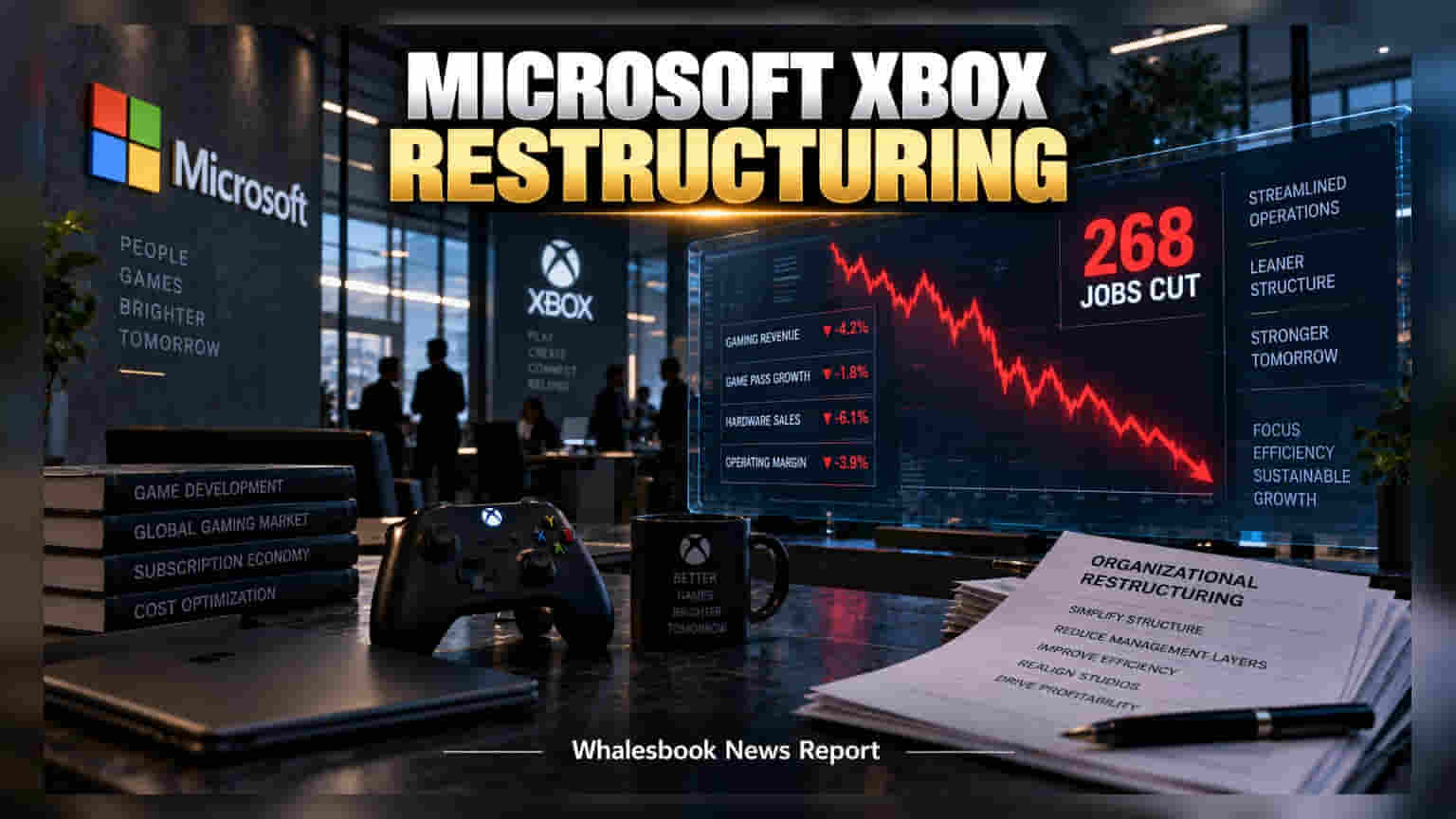
Microsoft has cut 268 jobs in its gaming division as part of a wider effort to streamline management and cut operational costs. The move reflects the company’s struggle to align significant content spending with consistent revenue growth. Investors are watching how these changes affect profit margins and the performance of its subscription services.
Microsoft has initiated another round of job cuts within its gaming division, with 268 employees affected as part of an ongoing organizational restructuring. This move is part of a broader "reset" aimed at simplifying the division's management structure, which leadership has previously noted was bloated, with too many reporting layers. The company is working to reduce these layers significantly to improve operational speed and decision-making.
The core investor concern surrounding this update is the company's capital allocation and the return on its massive investments in the gaming sector. Over the past five years, Microsoft has deployed over $20 billion into its gaming ecosystem, encompassing content creation, platform development, and hardware. However, the division has faced headwinds in matching these expenditures with proportional revenue growth. In recent periods, the company has dealt with stagnant or declining revenue, which has put pressure on profit margins. By consolidating operations—such as placing the next Halo title under Activision’s oversight and moving Obsidian under the Bethesda umbrella—Microsoft is attempting to eliminate redundancies and improve the efficiency of its various game studios.
Challenges in Subscription and Hardware
The gaming industry is currently navigating a post-pandemic correction, where consumer demand has normalized after a surge in growth during 2020-2021. For Microsoft, this has manifested as slower-than-expected growth for its Game Pass subscription service, which is a cornerstone of its long-term gaming strategy. Additionally, the company faces rising hardware costs, particularly for storage and memory components, which have further squeezed margins. These factors, combined with the difficulty of integrating massive acquisitions like Activision Blizzard and ZeniMax, have made it harder to maintain the high profitability levels that investors expect from a company of Microsoft's scale.
Strategic Shift Toward Efficiency
The ongoing restructuring process, which began earlier in the year, marks a pivot away from the high-headcount, rapid-expansion model that defined the company’s gaming strategy in recent years. By shrinking the management layers and realigning its studios, Microsoft aims to create a leaner publishing and development strategy. The future of certain studios, such as Ninja Theory, remains a point of uncertainty as the company continues to evaluate which assets fit into this new, cost-conscious structure.
For investors, the key monitorable will be the company’s upcoming quarterly financial results, specifically the operating margins for the gaming segment. Shareholders will be looking for signs that the cost-cutting measures are successfully improving profitability and whether the gaming division can generate stronger returns from its existing portfolio of studios without needing to increase its capital spending further.