

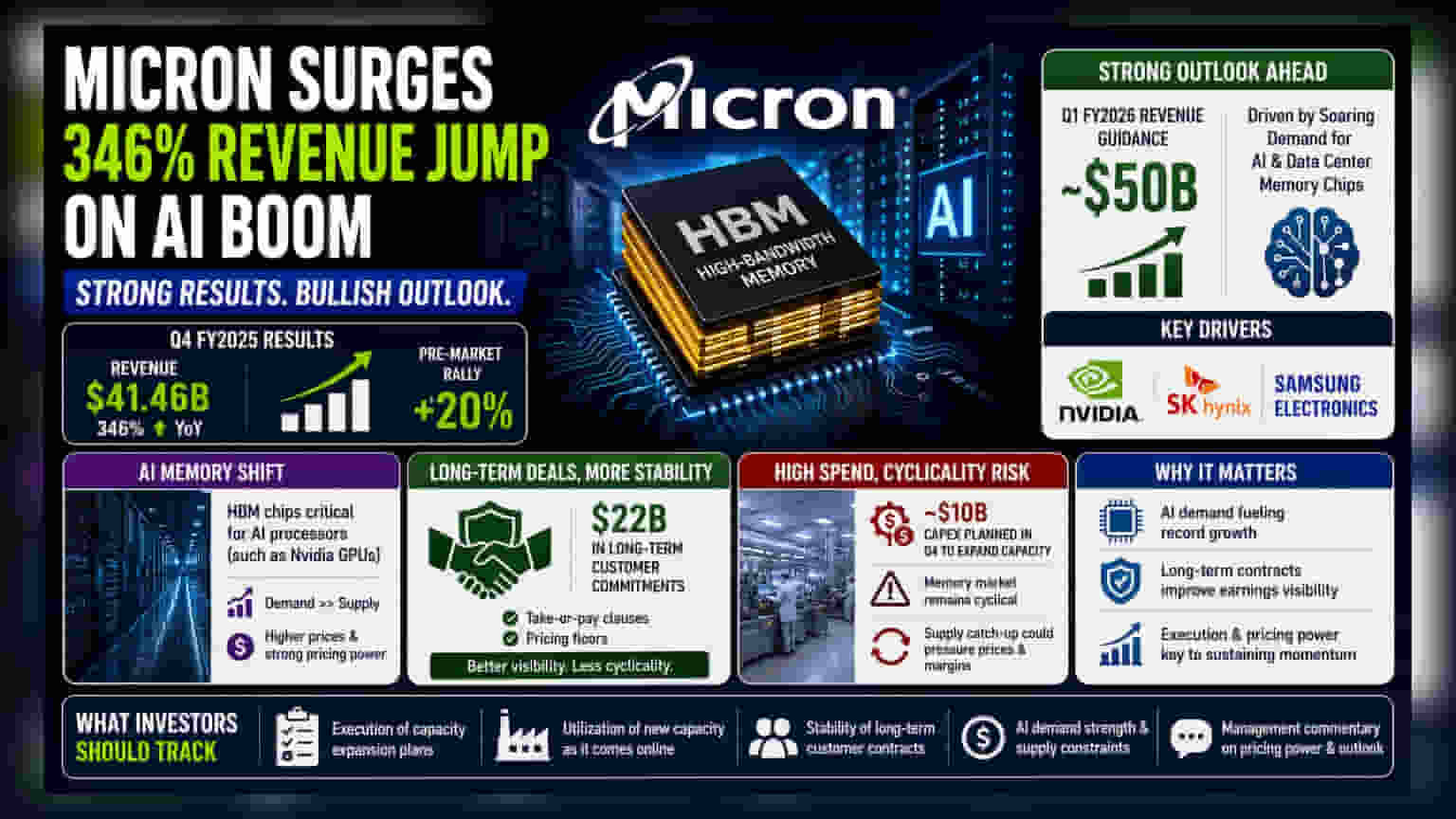
Micron Technology shares rallied nearly 20% after reporting quarterly revenue of $41.46 billion, fueled by massive AI memory chip demand. The company provided strong growth forecasts and locked in $22 billion in long-term customer contracts. Investors are now focused on whether this high spending on expansion will deliver consistent profits amidst the volatile memory chip cycle.
What Happened
Micron Technology reported a massive jump in quarterly revenue to $41.46 billion, a 346% increase compared to the same period last year. Following this report, the company's shares rallied nearly 20% in pre-market trading. The surge in financial performance is largely driven by the high demand for memory chips used in artificial intelligence (AI) and data center infrastructure. The company also issued an optimistic forecast for the coming quarter, expecting revenue to reach approximately $50 billion.
Understanding The AI Memory Shift
Micron is a key supplier of High-Bandwidth Memory (HBM) chips, which are essential components for AI processors, such as those made by Nvidia. Because the demand for these AI chips currently exceeds the available supply, manufacturers are able to command higher prices. This trend has created a competitive environment where Micron, along with peers like SK Hynix and Samsung Electronics, are prioritizing production capacity to meet the needs of data center operators.
Stability Through Long-Term Deals
To move away from the historical "boom-and-bust" cycles of the memory chip industry, Micron has shifted its business strategy. The company has secured $22 billion in long-term customer commitments. These contracts often include terms that protect the company, such as "take-or-pay" clauses (where customers must pay for a certain amount regardless of usage) and pricing floors. These agreements provide better visibility into future earnings and act as a buffer against potential market slowdowns.
The Spending And Cyclicality Risk
While growth is strong, the company is also significantly increasing its money spent on expansion (capex). Micron plans to invest roughly $10 billion in the fourth quarter to build capacity. While this spending is necessary to meet AI demand, it requires substantial cash, which can put pressure on the balance sheet if market conditions change. Memory chips have traditionally been a cyclical business, meaning demand can drop quickly if the market becomes oversupplied. Investors often remain cautious about whether the current high prices for memory chips will last or if supply will eventually catch up, leading to lower margins.
What Investors Should Track
For investors, the most important areas to monitor are the company's ability to execute its expansion plans without delays and the actual utilization of that new capacity. Additionally, track the stability of the long-term customer contracts and whether the demand for AI infrastructure remains as high as currently projected. Management’s future comments on supply constraints and pricing power will be key indicators of how long this high-growth phase might continue.