

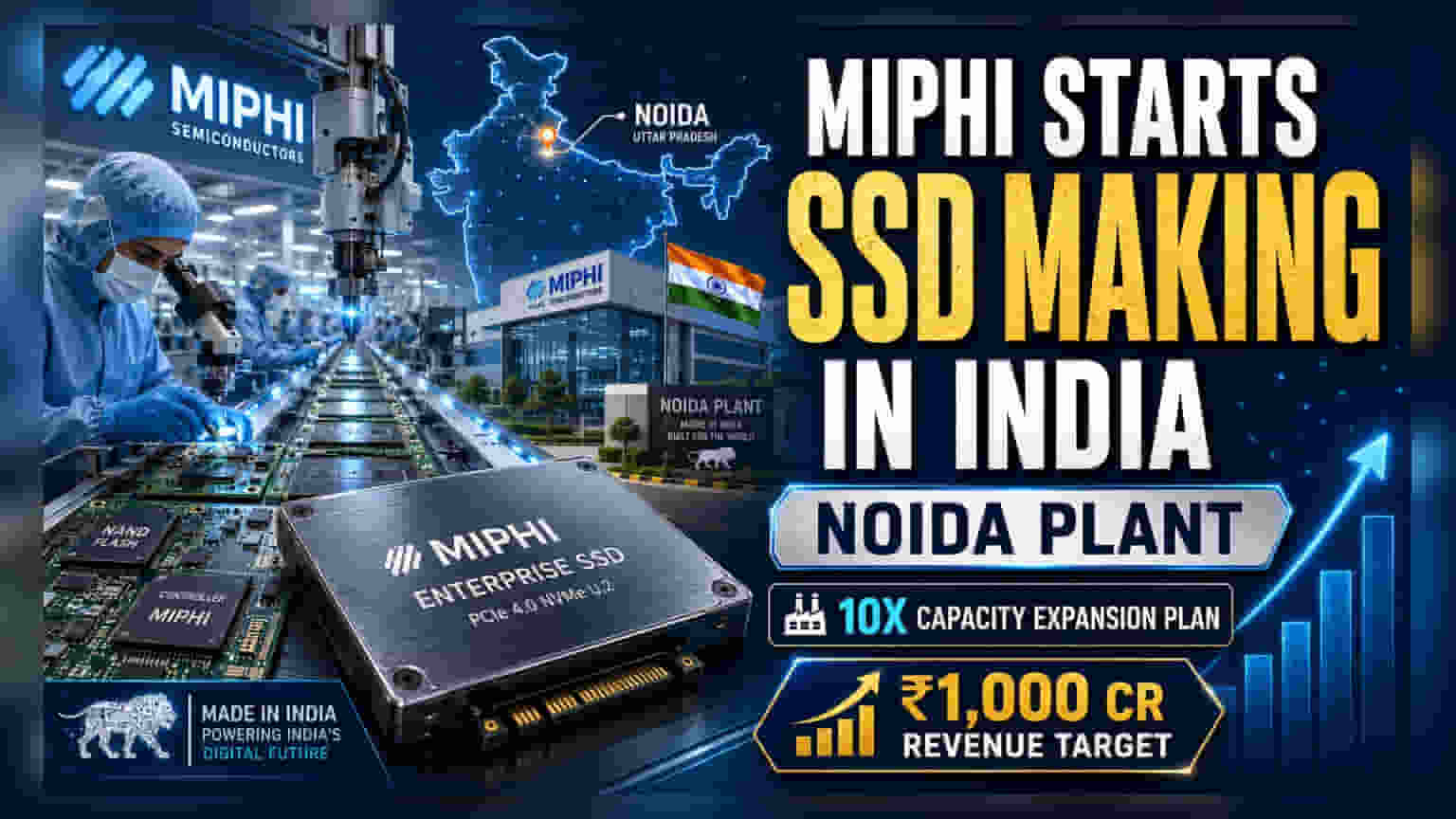
MiPhi Semiconductors, a joint venture between Micromax Informatics and Taiwan’s Phison Electronics, has started manufacturing enterprise-grade SSDs in Noida. With a plan to ramp up capacity tenfold and a ₹1,000 crore revenue target for the year, the venture marks a shift toward high-value semiconductor manufacturing in India.
What Happened
MiPhi Semiconductors, a joint venture between India’s Micromax Informatics and Taiwan-based Phison Electronics, has commenced the local manufacturing of enterprise-grade solid-state drives (SSDs) at its facility in Noida, Uttar Pradesh. This development marks a significant step for the company, as it moves beyond smartphone assembly to produce advanced data storage components. The joint venture, which is 55% owned by Micromax and 45% by Phison, aims to position itself as a key player in the Indian semiconductor manufacturing landscape by producing memory solutions locally.
The Growth And Production Plan
The company has announced aggressive growth plans to support this manufacturing milestone. MiPhi is reportedly targeting a capacity increase of 10 times—moving from 30,000 to 300,000 units per month—within the current year. To support this scaling, the venture has projected an initial revenue target of approximately ₹1,000 crore for the year. Furthermore, the company has outlined plans for an additional capital investment of nearly ₹1,000 crore to expand production capacity and enhance its design capabilities, as it looks to leverage India’s emerging semiconductor incentive framework.
Why This Matters For The Electronics Sector
This move aligns with India's broader 'Make in India' initiative and the government’s push to build a domestic semiconductor ecosystem. Enterprise-grade SSDs are critical components in data centers, artificial intelligence infrastructure, and advanced computing. Until now, India has largely relied on imports for these high-value storage solutions. By producing them locally, MiPhi is attempting to integrate into the global supply chain, a strategy that is becoming increasingly important as the government rolls out the India Semiconductor Mission (ISM) 2.0. This mission aims to provide structured support for design, manufacturing, and R&D, positioning India as a reliable node in the global semiconductor network.
Business And Competitive Context
The success of this venture relies on the synergy between Micromax’s established manufacturing footprint in India and Phison’s specialized technology in NAND flash controllers. While Micromax is a private company, the entry of such joint ventures into domestic component manufacturing is a trend that observers of the Indian electronics manufacturing services (EMS) sector watch closely. As India strengthens its position as a global hub for electronics, the ability of local manufacturers to move up the value chain—from simple assembly to producing complex semiconductors—remains a core monitorable.
What To Watch Next
Investors and industry observers may track how the company executes its capacity expansion and whether it successfully secures incentives under the government’s semiconductor programs. The key monitorables include the actual utilization of the new Noida capacity, the acceptance of these enterprise-grade products by data center operators and other large-scale customers, and the continued pace of policy support for semiconductor manufacturing in India. The ability to maintain product quality and cost-competitiveness against global incumbents will determine the long-term viability of this venture.