 Whalesbook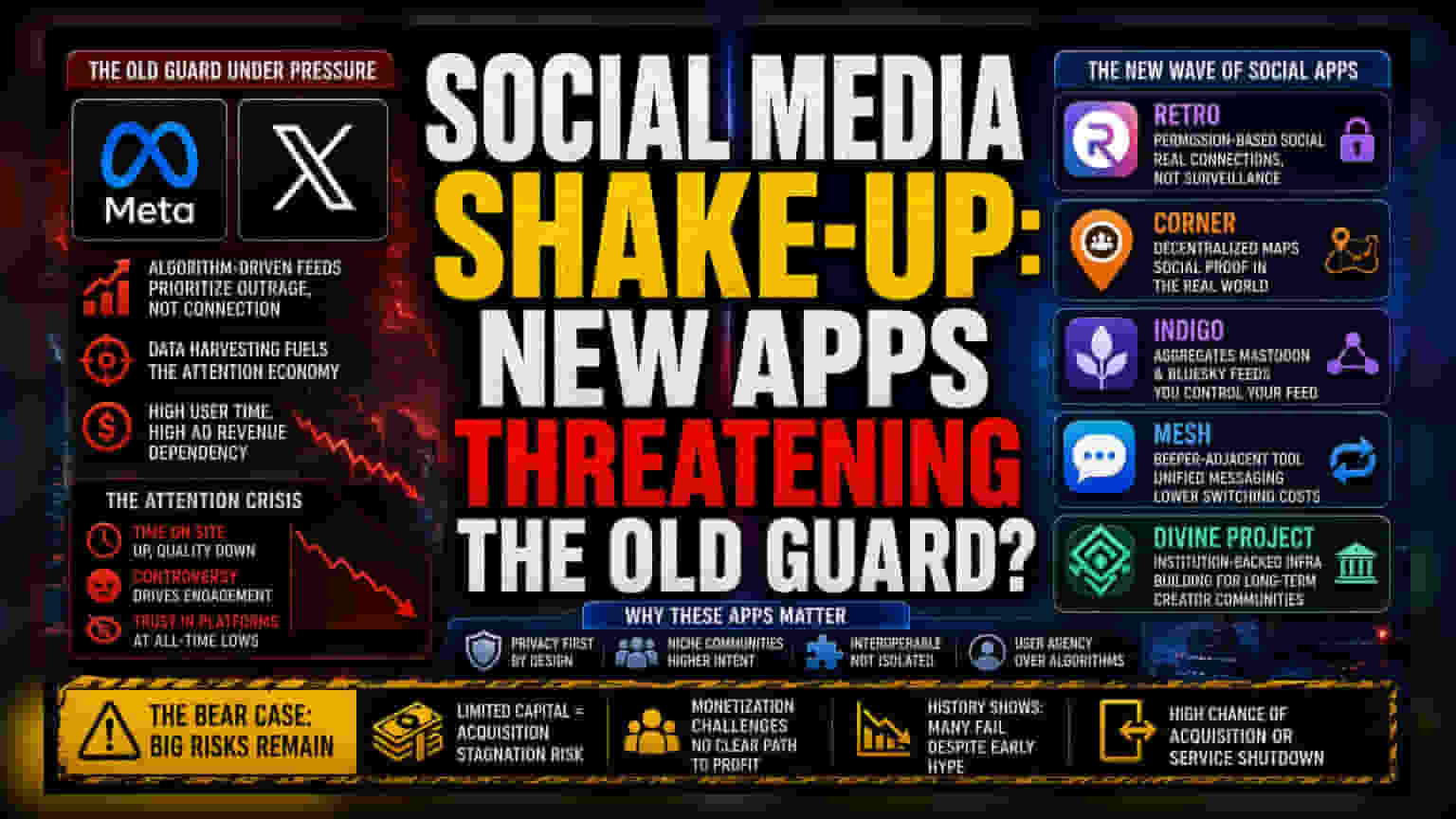


The Shift Toward Fragmented Engagement
The dominance of massive, centralized social networks is facing pressure not from a single competitor, but from a coordinated surge of specialized, micro-communities. These platforms are designed to solve the primary failure of modern social media: the degradation of genuine interpersonal connection caused by aggressive algorithmic curation. While Meta and X continue to optimize for maximum time-on-site through controversial content promotion, this new wave of applications thrives on lower volume and higher user intent.
Strategic Challenges to Advertising Models
Unlike the incumbent model that relies on selling broad audience segments, platforms like Retro and Corner are building value through specific user behaviors. Retro operates on a permission-based privacy model that limits the data-harvesting capabilities typical of Instagram, while Corner acts as a decentralized alternative to platform-integrated maps, creating a proprietary layer of social proof. For investors, the concern is not immediate revenue competition, but the erosion of the 'Attention Economy' that sustains high-margin advertising at Meta. These niche apps are effectively siloing user data, making it inaccessible to the advertising-driven tracking pixels that power the current digital marketing ecosystem.
The Decentralization Threat
Platforms like Indigo, which aggregate feeds from Mastodon and Bluesky, signal a growing structural preference for interoperability over walled gardens. This architecture mirrors the early web, where individual agency over feed composition replaces corporate control. By integrating tools like the Beeper-adjacent Mesh, these services are creating a utility-first layer that makes switching costs for users lower than ever. The influence of institutional backers, such as those supporting the Divine project, indicates that this trend is moving from speculative hobbyism toward professional-grade infrastructure intended to sustain long-term creator communities outside of the corporate hierarchy.
The Forensic Bear Case: Scale vs. Profitability
Despite the aesthetic appeal of these platforms, the path to commercial viability remains fraught with structural risk. Many of these startups lack the massive capital reserves required for sustainable user acquisition, making them vulnerable to stagnation once early-adopter enthusiasm wanes. Furthermore, Automattic and other parent entities absorbing these smaller tools face significant integration hurdles; past attempts to monetize niche social graphs often result in community backlash and user migration. The history of social media is littered with 'innovative' platforms that captured cultural zeitgeist but failed to build a defensible, cash-flow-positive business model. Without a clear transition to subscription or transaction-based revenue, these companies remain highly susceptible to acquisition-led exits or eventual service termination.