

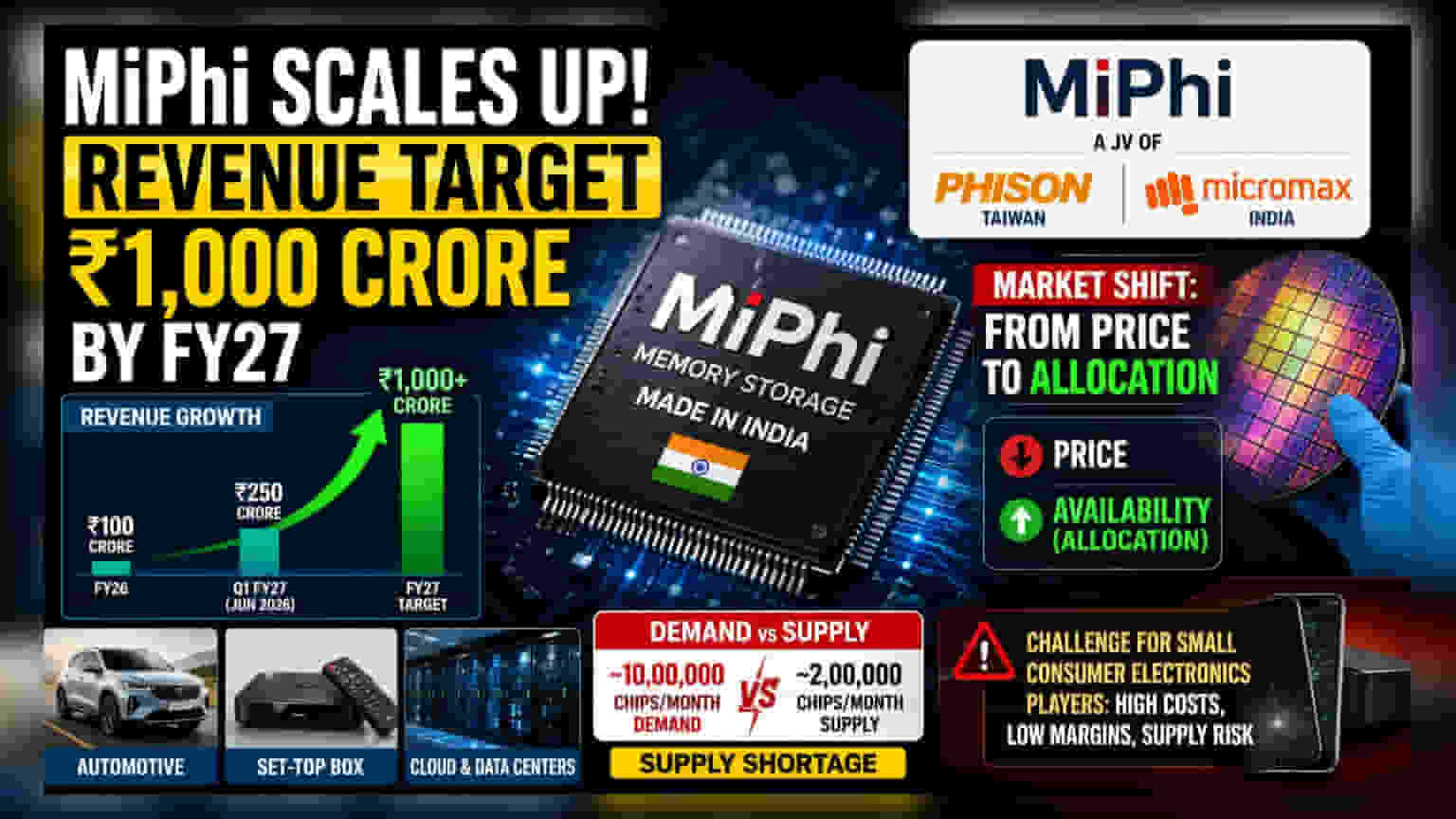
MiPhi, a joint venture between Phison and Micromax, plans to scale revenue to over ₹1,000 crore in FY27 as it prioritizes supply allocation for Indian manufacturers. Investors in the electronics and automotive sectors should note that global chip shortages and AI demand are reshaping supply chain dynamics, potentially pressuring smaller firms.
What Happened
MiPhi, a joint venture formed in 2024 between Taiwan-based Phison and India’s Micromax, is aggressively scaling its operations in the country. The Bengaluru-based memory storage manufacturer reported ₹250 crore in revenue for the quarter ending June 2026. Looking ahead, the company has set a goal to surpass ₹1,000 crore in revenue for the full fiscal year 2027, which would mark a tenfold increase from the ₹100 crore recorded in the previous fiscal year.
The company is positioning itself to capitalize on the current global supply scarcity of memory products. By utilizing micro-controllers from its parent company, Phison, MiPhi is focusing on providing domestically manufactured memory solutions to local automotive manufacturers, set-top box makers, and cloud service providers.
The Shift From Price To Allocation
The most significant change in the current memory market is the priority shift from product pricing to product availability, or 'allocation.' Industry trends indicate that global chip manufacturers are increasingly prioritizing advanced memory production to satisfy the high demand from AI data centers, which are currently consuming roughly 40% of global memory wafer production.
For businesses, this means the ability to secure inventory is now more valuable than the cost of the chips themselves. MiPhi executives have noted that while customers previously shopped around for better prices, they are now focused on securing supply. The company is currently seeing demand for one million chips per month against a secured supply capacity of roughly 200,000 units, highlighting the severity of the shortage.
Impact On Manufacturers
The impact of this shortage is not uniform across all industries. Companies with higher profit margins, such as automotive manufacturers, are generally better positioned to absorb the increased costs associated with scarce supply. However, the scenario is different for smaller manufacturers, particularly those producing consumer electronics like smartphones and set-top boxes.
These smaller players operate on tighter margins and are more vulnerable to supply chain disruptions. If memory prices remain high and supplies remain limited, these manufacturers face the risk of operational shutdowns or the inability to meet production targets, as they may be deprioritized in favor of higher-value enterprise AI projects.
What Investors Should Track
Since MiPhi is a private joint venture, it is not publicly listed, meaning investors cannot directly invest in the company. However, the developments underscore a critical risk factor for listed Indian automotive and consumer electronics companies.
Investors should monitor the following areas:
- Supply chain stability for companies in the electronics and auto sectors.
- Potential margin pressure for smaller consumer electronics firms that may struggle to pass on high component costs to customers.
- Updates from major electronics manufacturers regarding inventory levels and production guidance.
- Continued volatility in memory prices, which remains a key variable for operational costs in the electronics industry.