

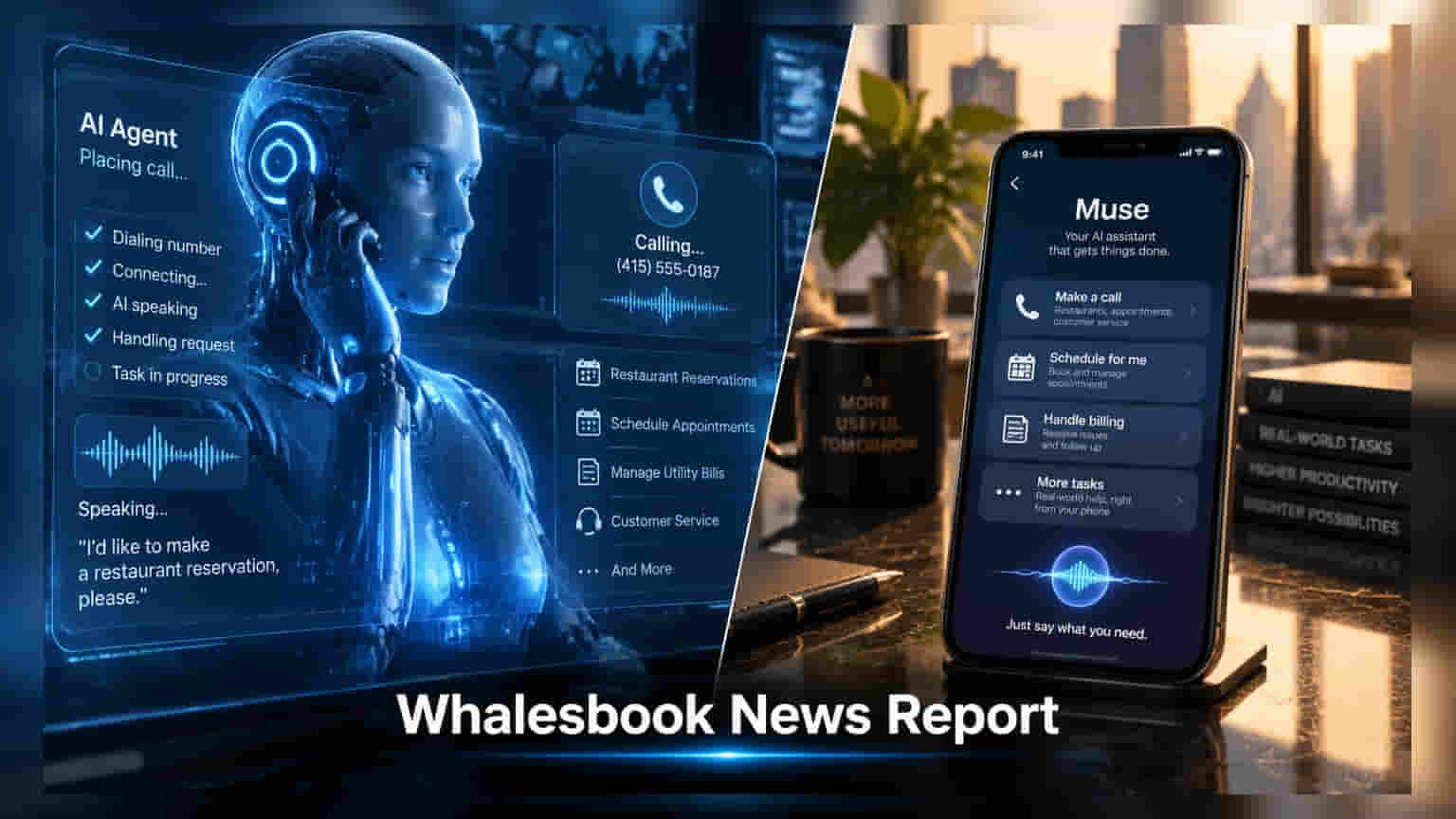
US-based tech firms Meta and Instinct are rolling out automated voice-calling capabilities for their AI agents, enabling real-world task execution like business bookings. This shift from simple text interaction to active agents marks a new phase in the AI competitive landscape, with potential implications for platform user engagement and operational efficiency.
Meta Platforms and the San Francisco-based startup Instinct have introduced automated voice-calling capabilities to their respective AI agents, Muse and Instinct Concierge. These updates mark a significant shift in the generative AI market, moving from chatbots that provide information to active agents capable of executing real-world commercial tasks. Instead of limiting interactions to text, these tools can now dial phone numbers to handle administrative duties such as restaurant reservations, scheduling appointments, and managing utility billing disputes.
For investors monitoring the sector, the integration of such features is a strategic move to increase user utility and platform stickiness. Meta, which is publicly traded, is leveraging its massive user base to integrate AI directly into its ecosystem. Following the launch of its Muse assistant, the platform reported 730,000 U.S. downloads within the first five days. Market analysts often watch such adoption metrics to gauge how quickly a new technology can transition from a novelty to a daily utility for users, which in turn influences future revenue potential.
Instinct, a private entity, is currently positioning itself as a challenger in the autonomous agent space. The company recently secured $350 million in funding at a $2.5 billion valuation, with reports indicating it is now seeking a $10 billion valuation. Its current strategy focuses on deploying the 'Instinct Concierge' service, which aims to handle high-touch tasks that traditionally required human intervention, such as navigating medical waitlists or resolving complex customer service issues.
However, the move into automated calling introduces significant risks that shareholders and market observers should consider. The primary challenge is regulatory and privacy-related. Automated AI calls are subject to increasing scrutiny from authorities regarding spam, fraud prevention, and data privacy. Furthermore, generative AI models are still prone to errors or 'hallucinations.' If an AI agent provides incorrect information during a real-world business call or mishandles a billing dispute, it could lead to operational liabilities or reputational damage for the company involved.
The next major monitorables for investors will be the actual adoption rate of these features beyond the initial launch phase, the ability of these companies to minimize error rates in live interactions, and any regulatory policy changes regarding the use of AI in automated telephony. Success in this segment will likely depend on whether these agents can offer reliable, error-free execution of real-world tasks at scale.