

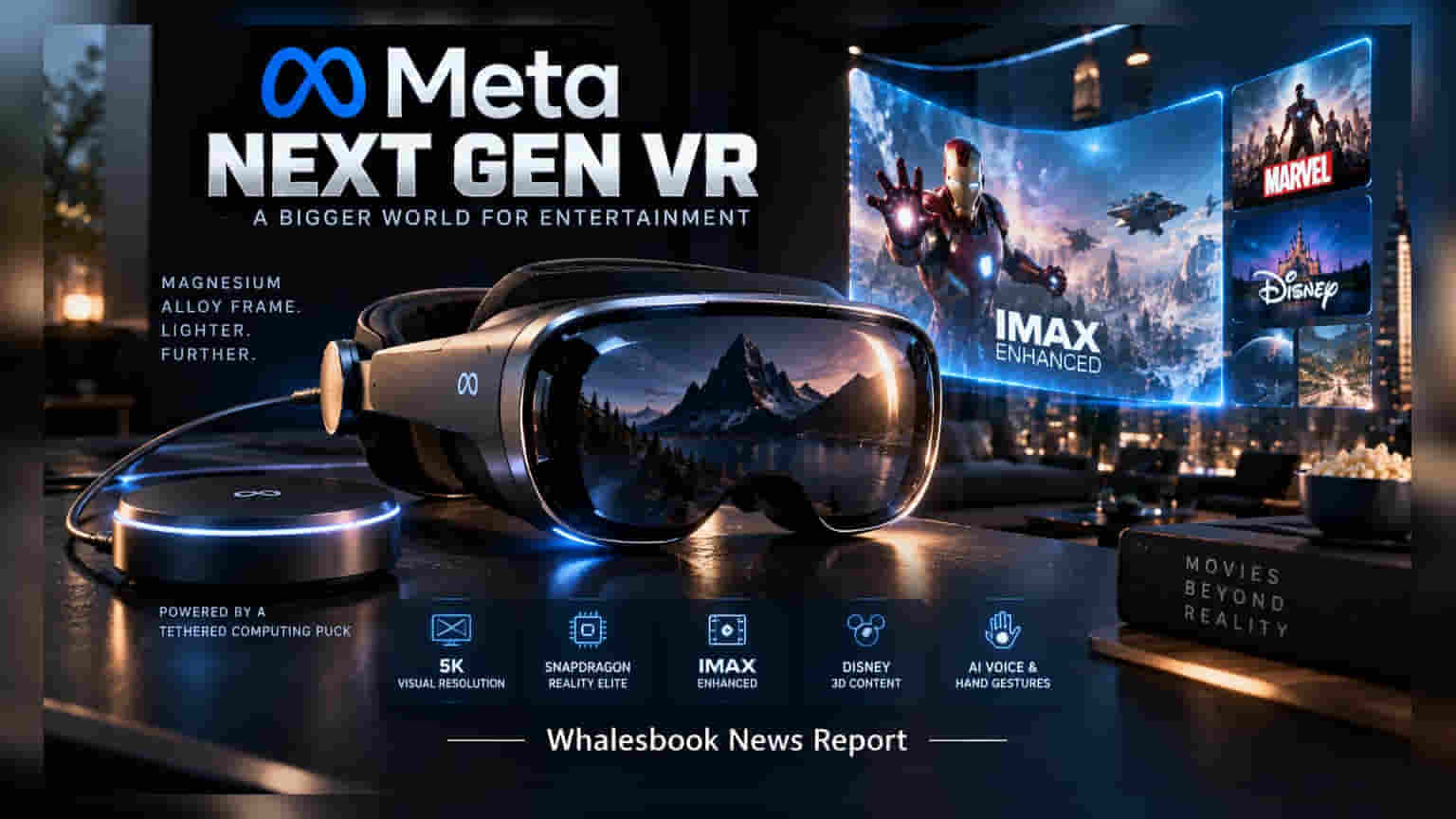
Meta Platforms has announced new high-end VR glasses priced at $1,299.99, featuring IMAX Enhanced certification and lightweight magnesium alloy construction. The device signals a strategic pivot toward cinematic entertainment. Investors may track how this expensive hardware impacts the profitability of Meta's Reality Labs division, which has consistently reported substantial losses while investing in new hardware technologies.
Meta Platforms has unveiled its latest virtual reality hardware, aiming to capture the high-end entertainment market. The new VR glasses, scheduled for a spring release, are priced at $1,299.99. The device features a significant design shift, using a magnesium alloy frame and a tethered computing puck to move the battery and processor off the user's face, making the headset significantly lighter than previous models like the Quest 3.
Technical Specs and Cinematic Focus
The device uses Qualcomm’s Snapdragon Reality Elite processor and dual micro-OLED panels to provide a 5K visual resolution. To differentiate this product from earlier gaming-focused headsets, Meta has entered a strategic partnership with IMAX to receive 'IMAX Enhanced' certification. This branding suggests the product is optimized for large-format movies. Additionally, a collaboration with Disney will allow users to stream Marvel titles in 3D, starting this November. The device also integrates AI for voice navigation and hand gestures to control the interface without needing external controllers.
Investor Perspective on Reality Labs
While the hardware features are advanced, the move to a premium price point of $1,299.99 is a significant strategy shift for Meta. For investors, the most critical area to monitor remains the Reality Labs division, which houses the company’s metaverse and VR/AR hardware initiatives. Historically, this division has been a major cost center for Meta, often reporting multibillion-dollar quarterly operating losses. The company has justified these high expenses as long-term investments in future computing platforms.
By introducing a premium-priced device, Meta is attempting to see if there is a market for high-end VR beyond professional enterprise use. However, the success of this product will depend on consumer willingness to spend over $1,200 on entertainment hardware in a competitive market that includes rivals like Apple’s Vision Pro. If demand for this high-end device remains limited, the pressure on the Reality Labs division to justify its heavy capital spending will likely continue.
Sector Context and Next Steps
The VR and AR hardware sector is currently in a phase of experimentation, with companies trying to balance the cost of expensive technology with mass-market appeal. High manufacturing costs for micro-OLED displays and advanced processors often result in high retail prices, which can limit user adoption. Investors will likely look for updates in upcoming quarterly filings regarding the unit sales of this device and whether it helps narrow the operating losses within the Reality Labs segment. Future monitorables include the actual consumer adoption rate following the spring launch and any management commentary on whether the company plans to release cheaper, mass-market versions in the future.