

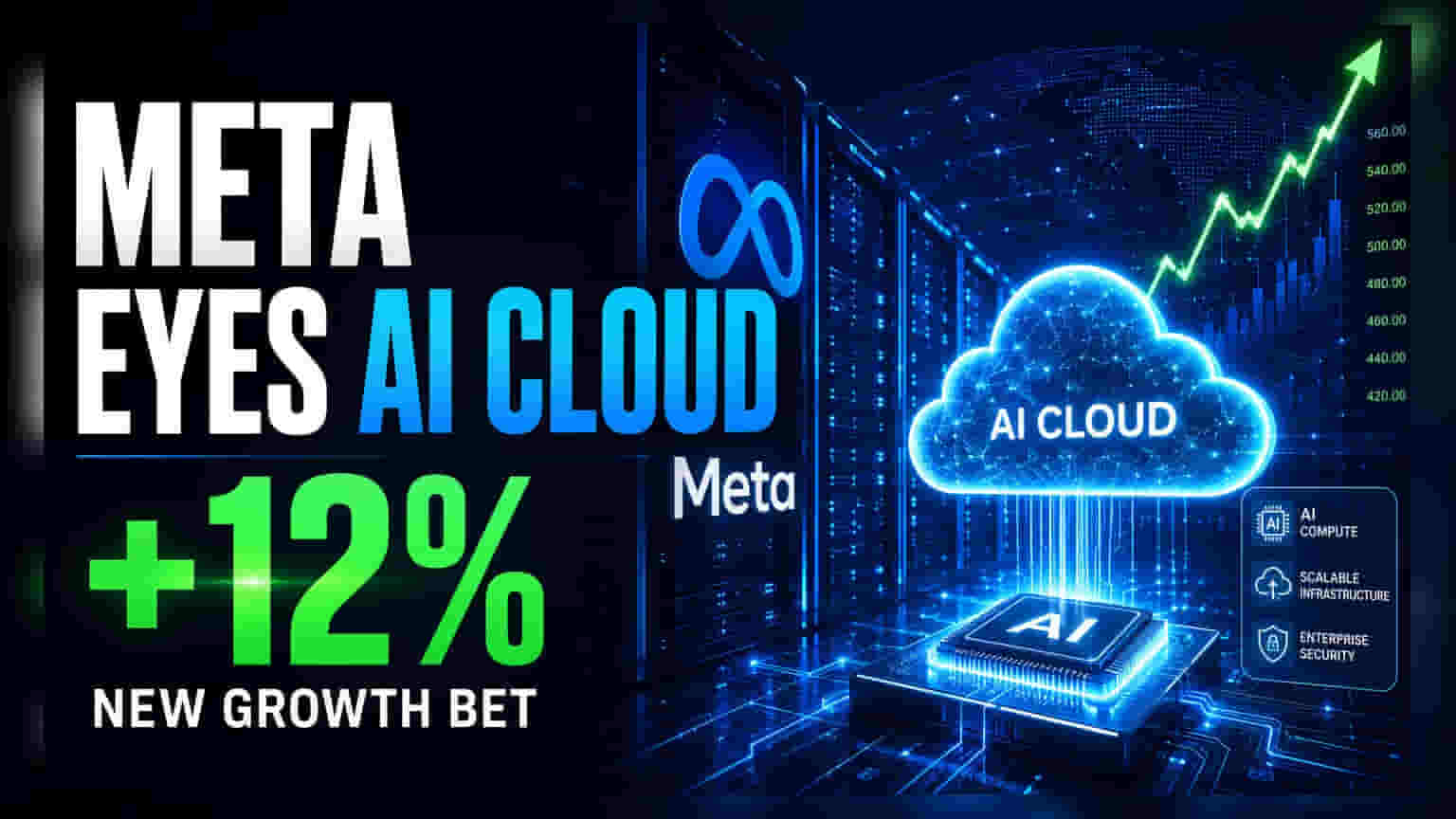
Meta Platforms shares rallied nearly 12% following reports of plans to rent out its AI computing power to external developers. The move signals a major strategic shift to compete with cloud giants like Amazon and Microsoft, potentially turning the company's massive AI infrastructure into a new source of revenue beyond digital advertising.
What Happened
Meta Platforms (META) shares experienced a strong rally on Wednesday, July 1, 2026, climbing nearly 12% to trade at approximately $628. This surge follows reports indicating that the social media giant is preparing to enter the cloud computing sector. The company is reportedly planning to offer its internal artificial intelligence computing power to external clients, allowing developers to build and run AI applications on Meta's infrastructure. This move would position the company as a direct challenger to established cloud service providers.
Why This Matters For Investors
For years, Meta has focused primarily on social media and digital advertising. While it has invested billions in AI research and hardware, these costs have mostly been viewed as internal expenses to improve its own apps and ad targeting. By opening its infrastructure to the public, Meta could transform these massive expenses into a new revenue stream. This shifts the narrative from Meta being purely an advertising-driven company to a potential provider of core AI cloud services, similar to how Amazon Web Services (AWS) or Microsoft Azure operate.
The Competitive Landscape
The cloud computing market is currently dominated by Amazon (AWS), Microsoft (Azure), and Google (Google Cloud Platform). These companies have spent years building the global infrastructure, customer support, and developer tools necessary to run enterprise-level cloud businesses. Entering this space is complex; Meta would need to convince companies to trust their data and critical applications to its platform. While Meta possesses significant computing power, it lacks the decades of experience in enterprise sales and B2B customer support that its primary competitors have refined.
The Execution Risk
Moving from a consumer-facing business to a business-to-business (B2B) cloud provider carries significant risks. Success in the cloud market depends on reliability, security, and developer-friendly tools. If Meta proceeds, investors will watch whether the company can execute this transition without losing focus on its core advertising business, which remains its primary money maker. Additionally, building and maintaining data centers requires heavy and continuous money spent on expansion, which could impact the company’s cash flow if the cloud division does not generate significant returns quickly.
What Investors Should Track Next
The next important steps will be official confirmation from the company regarding its entry into the cloud space. Investors should look for details on the pricing model, the target audience for these services, and the timeline for a rollout. Furthermore, tracking management commentary on how this potential expansion fits into the company's long-term budget and plans for infrastructure spending will be crucial to understanding the impact on profit margins.