 Whalesbook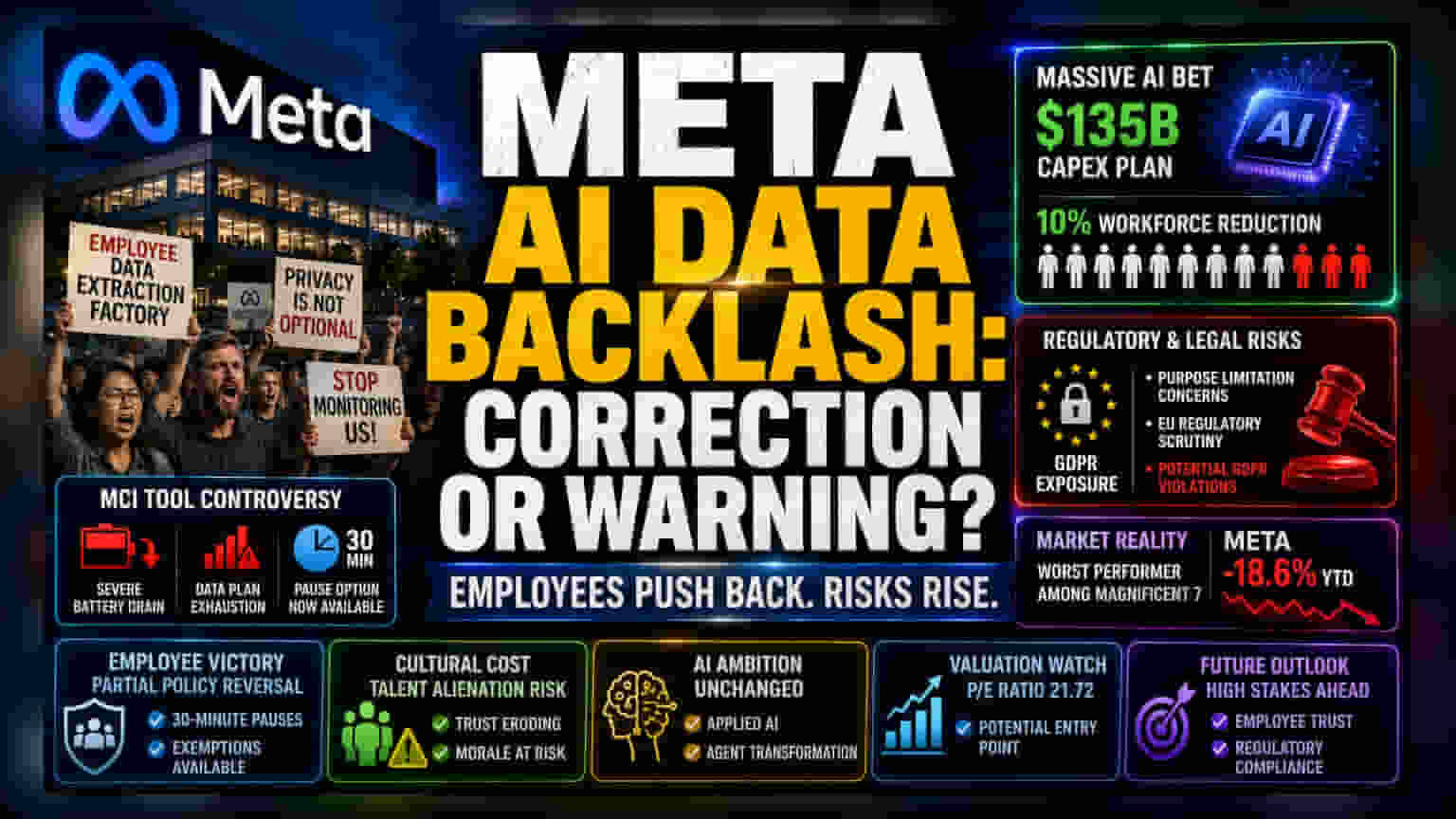


The Friction of AI-Native Restructuring
Meta Platforms’ recent modification of its Model Capability Initiative (MCI) signals a delicate correction in the company’s aggressive, AI-first organizational overhaul. Following widespread protests across U.S. offices, the company introduced new safeguards that allow employees to pause data collection for 30-minute intervals and request specific exemptions. This pivot represents a rare tactical retreat for a company currently engaged in a massive 10% workforce reduction and a $135 billion capital expenditure plan directed at AI infrastructure and agentic automation.
The Operational and Cultural Cost
The original monitoring tool, designed to generate high-fidelity training data by capturing human interaction with software, faced mounting resistance not just for its invasive nature but for its tangible impact on device stability. Reports from internal engineering teams indicated that the software caused severe battery drain and exhausted monthly internet data allowances, turning an AI-training ambition into a daily friction point for the very staff tasked with building the future of the company’s agentic systems. By labeling the initiative an "Employee Data Extraction Factory," employees have effectively cast a spotlight on the potential for algorithmic management to alienate the high-skilled technical talent Meta relies upon to maintain its AI edge.
Risk Factors and Regulatory Exposure
While the current adjustments are confined to the United States, the precedent of using internal employee workflows as raw training data creates a significant regulatory vulnerability in the European Union. Although management has informed Ireland’s Data Protection Commission that EU-based employee data is not the primary target, privacy advocates and legal experts continue to highlight the risk of indirect data ingestion violating the General Data Protection Regulation (GDPR). The core issue remains one of purpose limitation; repurposing data originally collected for employment contracts into training sets for generative AI models remains legally contentious. Furthermore, this internal tension coincides with a broader period of instability, including ongoing litigation regarding potential age bias in recent layoffs and general market skepticism, with META shares remaining the worst performer among the Magnificent Seven group year-to-date.
Future Outlook
Despite the operational pause, Meta’s strategic trajectory remains heavily tied to the success of its AI-focused "Applied AI" and "Agent Transformation" groups. Analysts remain broadly bullish with significant price targets, viewing the current 21.72 P/E valuation as a potential entry point for a company that is undeniably lean compared to its historical structure. However, the reliance on aggressive AI integration means that any further breakdown in employee trust or a direct collision with EU regulators could jeopardize the company’s ability to refine its next generation of agentic software.