

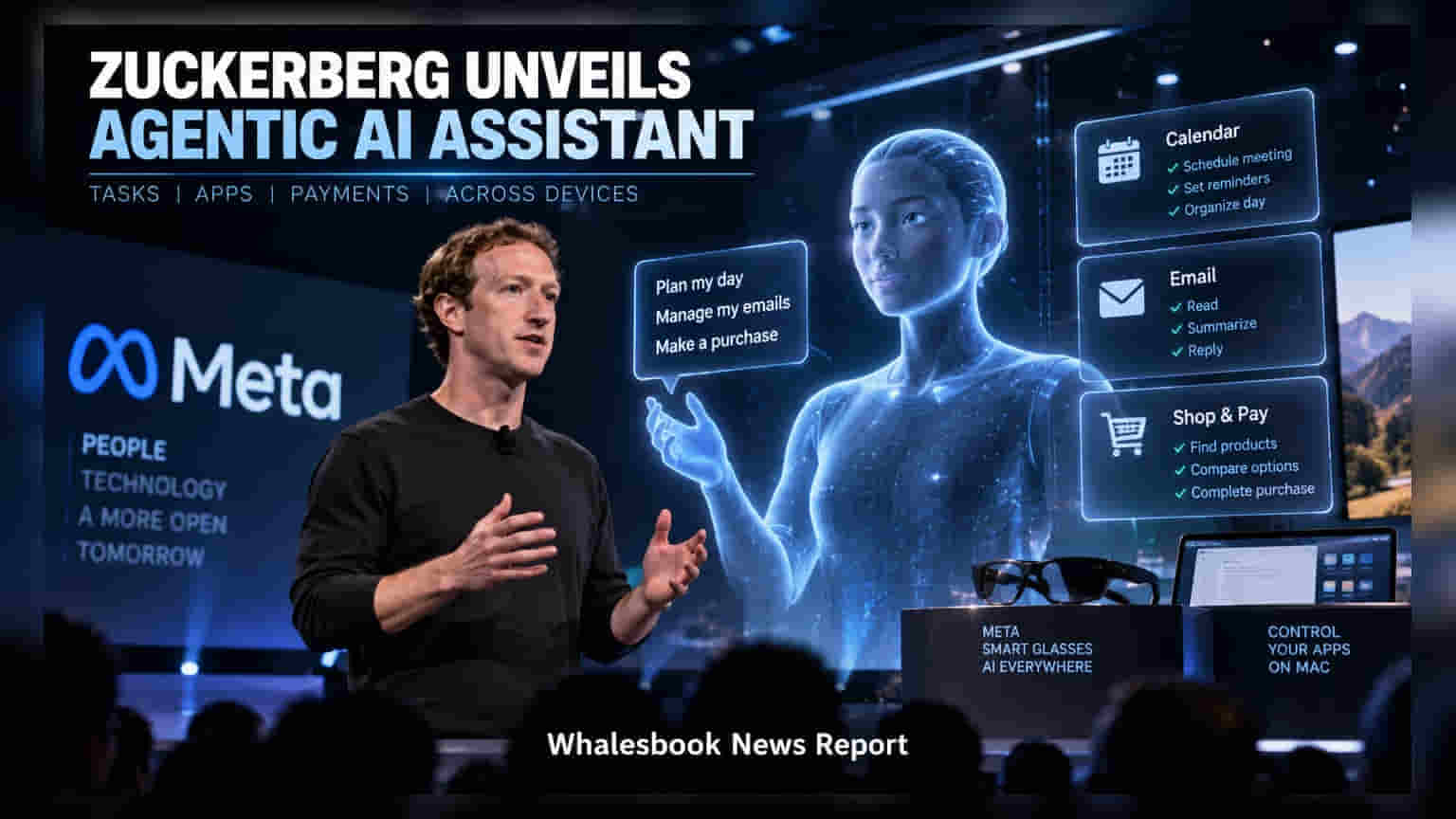
Meta Platforms is scaling its Muse AI agent, adding Mac desktop control and retail integration with partners like Shopify and Walmart. The strategy marks a shift toward transaction-based revenue, though the company faces high development costs and intense competition from Big Tech rivals.
Meta Platforms is evolving its Muse AI agent from a standard chatbot into an active assistant capable of executing real-world tasks. During its annual Connect event, the company announced that Muse will now feature real-time avatar interaction, direct control over Mac desktop applications, and integration with its smart glasses. This represents a strategic shift toward an 'agentic' model, where the software acts on behalf of the user to complete workflows—such as managing administrative tasks or making purchases—rather than simply answering questions.
The core business objective behind this move is to diversify Meta’s revenue streams beyond its traditional advertising model. By building direct integrations with major payment processors like Stripe and PayPal, and retail giants such as Walmart and Shopify, Meta aims to facilitate e-commerce transactions directly through the AI agent. The company reported receiving over 1,500 developer applications to create custom connectors within the first week of opening the platform, indicating strong interest in the ecosystem's potential for automation.
Meta is entering a highly competitive market. Tech giants including Microsoft, with its Copilot system, and Apple, with its own AI integration initiatives, are developing similar agentic tools. Meta is attempting to differentiate itself by leveraging its hardware ecosystem, particularly its smart glasses. By combining the glasses' ability to process visual and audio input with the new desktop control features, the company hopes to create a persistent assistant that follows the user across multiple devices.
Investors should weigh these potential growth drivers against significant operational risks. Developing this level of autonomous AI requires massive capital spending on data centers and advanced chips, which can impact profit margins. Furthermore, Meta faces ongoing regulatory scrutiny regarding data privacy and antitrust issues in several markets. Because an agent capable of controlling a desktop and making payments requires access to sensitive user data, any privacy or security lapse could result in severe regulatory backlash.
There is also an execution risk. While the technology is ambitious, creating an agent that can consistently and safely operate third-party applications without errors is technically difficult. If the system experiences bugs or security issues, it could struggle to gain user trust. The key monitorables for investors include the pace of adoption for these tools, the actual contribution of transaction-based fees to the bottom line, and how management balances the high costs of AI development with overall profitability. Future quarterly earnings reports will likely provide more clarity on the capital expenditure required to support this expansion and the timeline for widespread commercial viability.