

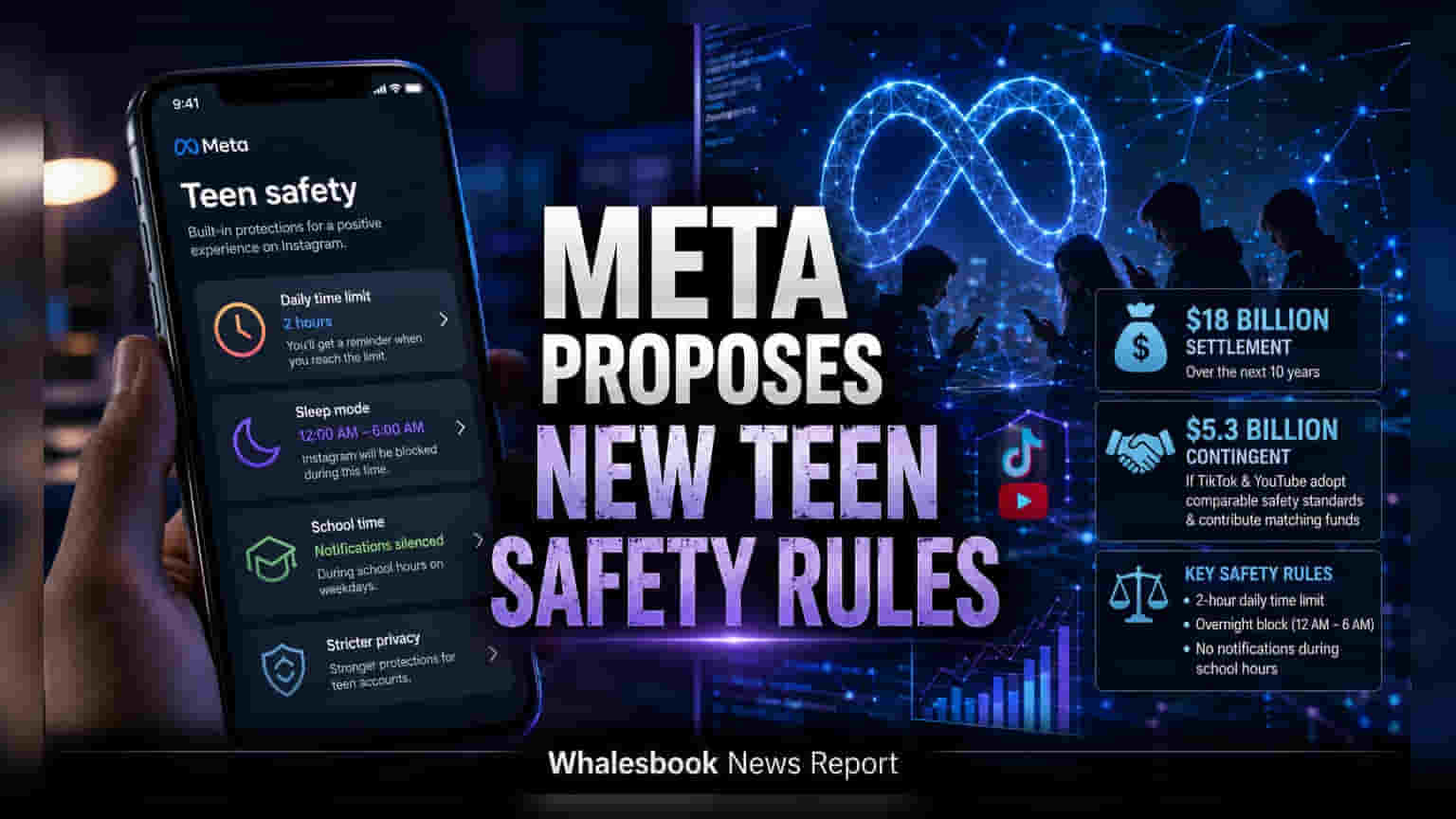
Meta has finalized a massive $18 billion settlement with 52 U.S. states over teen safety, but $5.3 billion of the payout depends on rivals like TikTok and YouTube adopting similar restrictions. Investors are monitoring whether competitors will agree, as Meta risks losing young users if it enforces usage limits while others do not.
Meta Platforms has reached a significant legal resolution, agreeing to pay up to $18 billion over the next decade to settle lawsuits filed by a coalition of 52 U.S. state and territorial attorneys general. The settlement concludes a major trial regarding allegations that the company's platforms, specifically Facebook and Instagram, were designed in ways that could be addictive and harmful to the mental health of teen users.
While the headline figure is $18 billion, a crucial financial detail for investors is that $5.3 billion of this amount is contingent. This specific portion will only be released if competitors, primarily TikTok and YouTube, agree to adopt comparable safety standards and contribute matching funds to youth safety initiatives. This structure reveals Meta’s strategic attempt to avoid a competitive disadvantage.
From a business perspective, the company is facing a delicate balancing act. By implementing mandatory default features—such as a two-hour daily time limit, an overnight access block between midnight and 6 a.m., and restricted notifications during school hours—Meta is directly limiting the time users can spend on its platforms. If TikTok and YouTube continue to operate without these restrictions, Meta risks a shift in teen user engagement toward those rival platforms.
Investors should view this as a potential long-term operational cost. The $18 billion settlement does not include an admission of liability or wrongdoing, but the compliance burden is significant. The company will need to invest in ongoing monitoring and technical safeguards over the next 10 years to adhere to the agreement. Furthermore, while this settlement resolves state-level claims, the company still faces litigation from individual plaintiffs and school districts, which may represent additional financial or legal uncertainty.
The industry-wide adoption of these rules remains uncertain. Competitors like TikTok and YouTube have different business models that prioritize high engagement and extended session times. Analysts are watching to see if these platforms will voluntarily adopt restrictive safety measures, as doing so would likely reduce their own metrics for time spent on app, which is a key driver of advertising revenue. Without a unified government mandate, these platforms have little legal incentive to match Meta’s new restrictions.
The most important upcoming monitorable is whether the contingent $5.3 billion is triggered by competitor participation or if Meta will eventually have to navigate the financial and competitive landscape without this matching. Additionally, investors will be looking for final judicial approval of the settlement, which is the final step before the payment terms formally commence.