

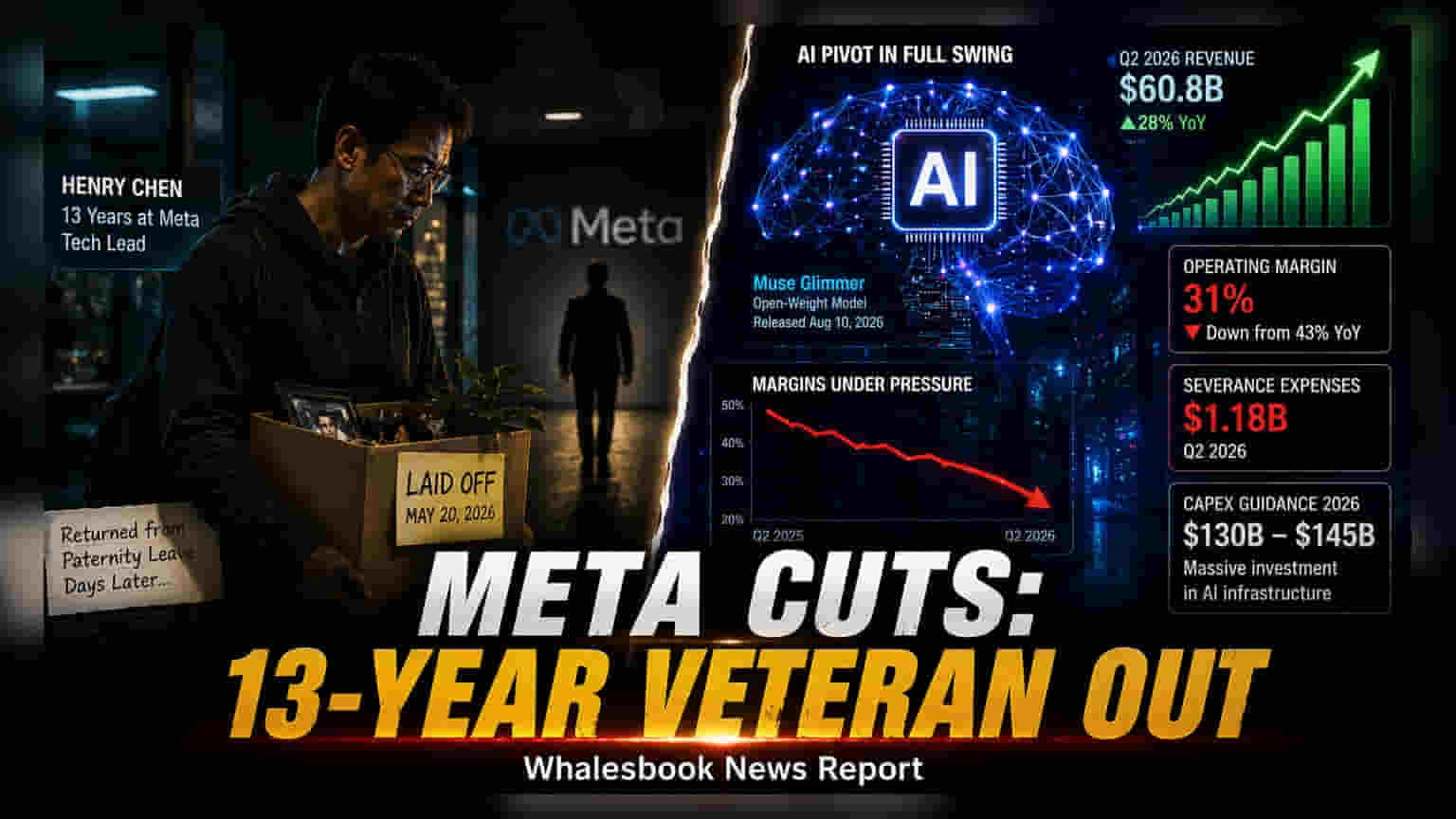
Henry Chen, a 13-year Meta tech lead, was laid off in May 2026, highlighting the company’s ongoing restructuring. This shift comes as Meta pivots heavily toward AI, contributing to $1.18 billion in severance costs for Q2 2026 and compressed operating margins. For investors, the story reflects the financial pressure caused by Meta's massive AI infrastructure spending.
The departure of Henry Chen, a tech lead who spent 13 years at Meta, serves as a recent example of the workforce restructuring currently unfolding at the tech giant. Chen was laid off on May 20, 2026, shortly after returning from paternity leave. While his personal experience highlights a shift in corporate culture toward an AI-centric model, it also mirrors the broader financial strategy Meta is pursuing as it attempts to balance massive development costs with profitability.
Financial Impact of Workforce Restructuring
For investors, the impact of these organizational changes is visible in Meta’s recent financial reports. In the second quarter of 2026, the company recorded $1.18 billion in severance expenses, a direct result of its restructuring efforts. These costs are part of a larger financial picture where the company is managing competing priorities. While Meta reported strong Q2 2026 revenue of $60.8 billion—a 28% increase year-over-year—its operating margins fell to 31%, down from 43% a year earlier. This margin compression is largely attributed to the company's aggressive spending on AI infrastructure and one-time charges, including $2.4 billion in legal settlements.
The Cost of the AI Pivot
Meta’s strategic pivot toward artificial intelligence is driving significant capital allocation, with the company guiding for total capital spending between $130 billion and $145 billion for 2026. This level of spending is intended to secure a lead in the AI race, as evidenced by the recent release of the 'Muse Glimmer' open-weight model on August 10, 2026. However, this heavy investment places pressure on free cash flow. Investors are closely monitoring whether this spending will lead to scalable returns or continue to weigh on the company's bottom line in the coming quarters.
Operational and Regulatory Risks
Beyond the cost of development, Meta continues to navigate a challenging environment. The company faces ongoing regulatory and legal scrutiny, including youth-safety litigation, which adds uncertainty to its financial outlook. Furthermore, the internal culture has faced instability due to recurring layoffs and a shift toward a 'do more with less' operational mentality. For shareholders, the key monitorables moving forward include the company’s ability to stabilize margins, the success of AI monetization strategies, and the impact of continued legal charges on overall profitability. As the company continues to evolve its team structure to support its AI ambitions, market focus will remain on whether these structural changes translate into improved operational efficiency.