

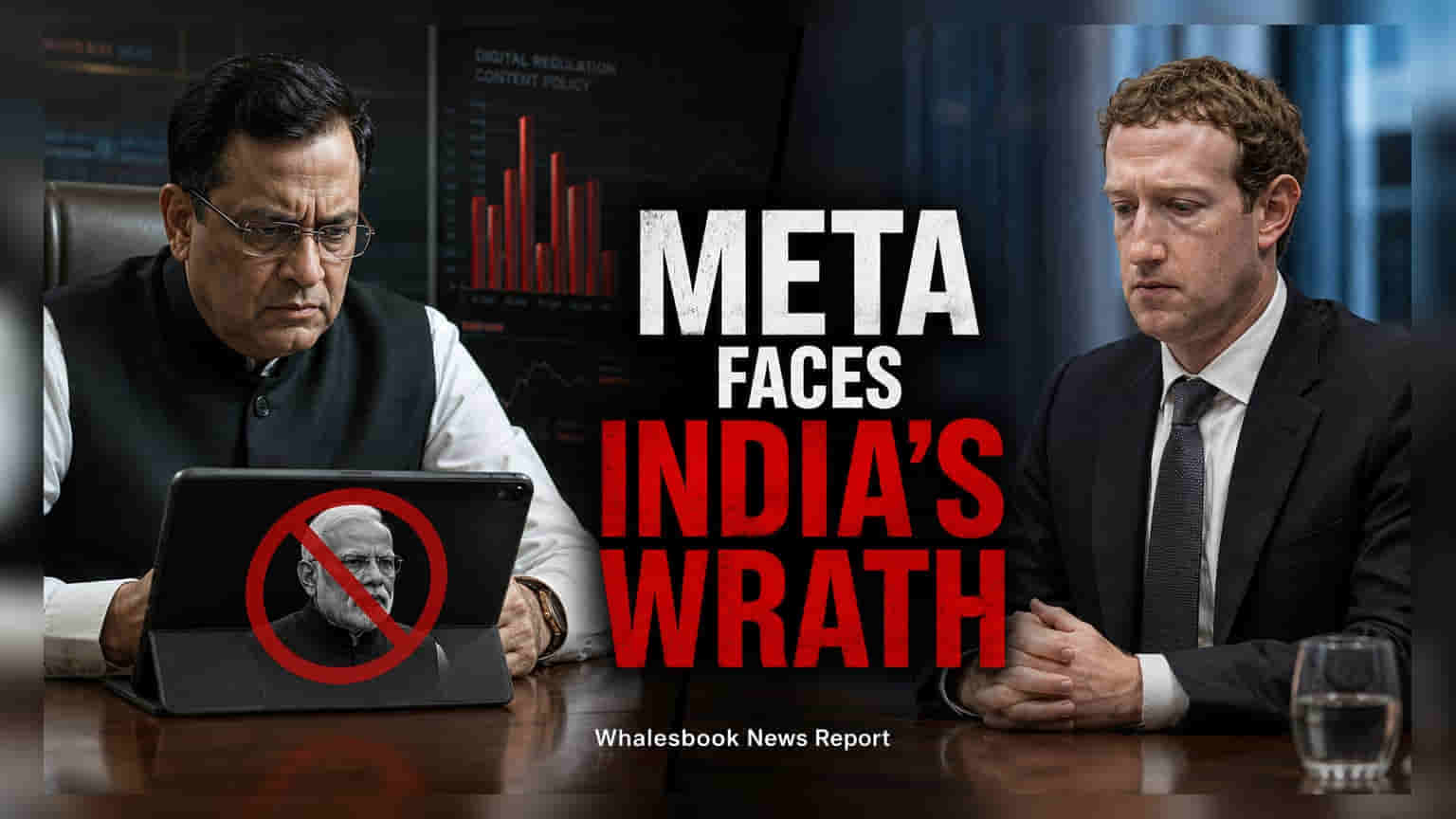
Meta’s global leadership met with Indian IT Ministry officials on Wednesday to address the temporary restriction of a Facebook post by Prime Minister Narendra Modi. The government rejected Meta's "technical glitch" explanation, while a Parliamentary committee has issued a three-day ultimatum for an apology from Mark Zuckerberg. This regulatory friction puts Meta's "safe harbour" legal protections in India at risk, adding to concerns over operational compliance in the company's largest user market.
Meta’s global leadership engaged in high-level discussions with India’s Ministry of Electronics and Information Technology (MeitY) on Wednesday, following a summons related to the temporary removal of a Facebook post by Prime Minister Narendra Modi. The meeting, which included Global Affairs officer Joel Kaplan, took place after the government termed Meta’s initial explanation—a "technical glitch"—as unsatisfactory. The government emphasized that the matter involves significant concerns regarding national security and public order, rather than a mere software error.
The regulatory pressure on Meta has intensified following the incident. A Parliamentary standing committee has issued an ultimatum demanding an apology from Meta CEO Mark Zuckerberg within three days. The committee has warned that failure to comply could result in the withdrawal of "safe harbour" protections under Section 79 of India’s Information Technology Act. In simple terms, this protection ensures that social media companies are not held legally liable for content posted by their users. If this protection is revoked, the company would face significantly higher legal liability for all content on its platforms in India.
Beyond the specific incident involving the Prime Minister's post, the discussion covered broader compliance issues, including the presence of child sexual abuse material (CSAM) on Meta's platforms and concerns regarding algorithmic bias. The Hyderabad Cyber Crime Police has also initiated cases against the Meta India head regarding allegations of AI-generated content targeting the Prime Minister. These developments highlight the mounting regulatory scrutiny Meta faces in its largest market by user count.
From a financial perspective, this regulatory friction comes at a time when Meta is managing substantial costs. In its second-quarter 2026 earnings, Meta reported revenue of $60.8 billion, a 28% increase year-on-year. However, the company’s net income fell by 14% to $15.85 billion. This decline in profitability was driven by increased spending on artificial intelligence infrastructure and rising legal and severance costs. For investors, the ability of the company to maintain its profit margins while navigating global regulatory challenges is a critical monitorable.
The company has responded by implementing enhanced oversight and multi-layer review protocols for verified high-profile accounts, including that of the Prime Minister. Moving forward, the most important updates for investors and market observers will include the outcome of the Parliamentary committee's ultimatum, any potential regulatory changes to platform liability in India, and Meta’s management commentary on operational costs related to compliance and legal matters.