

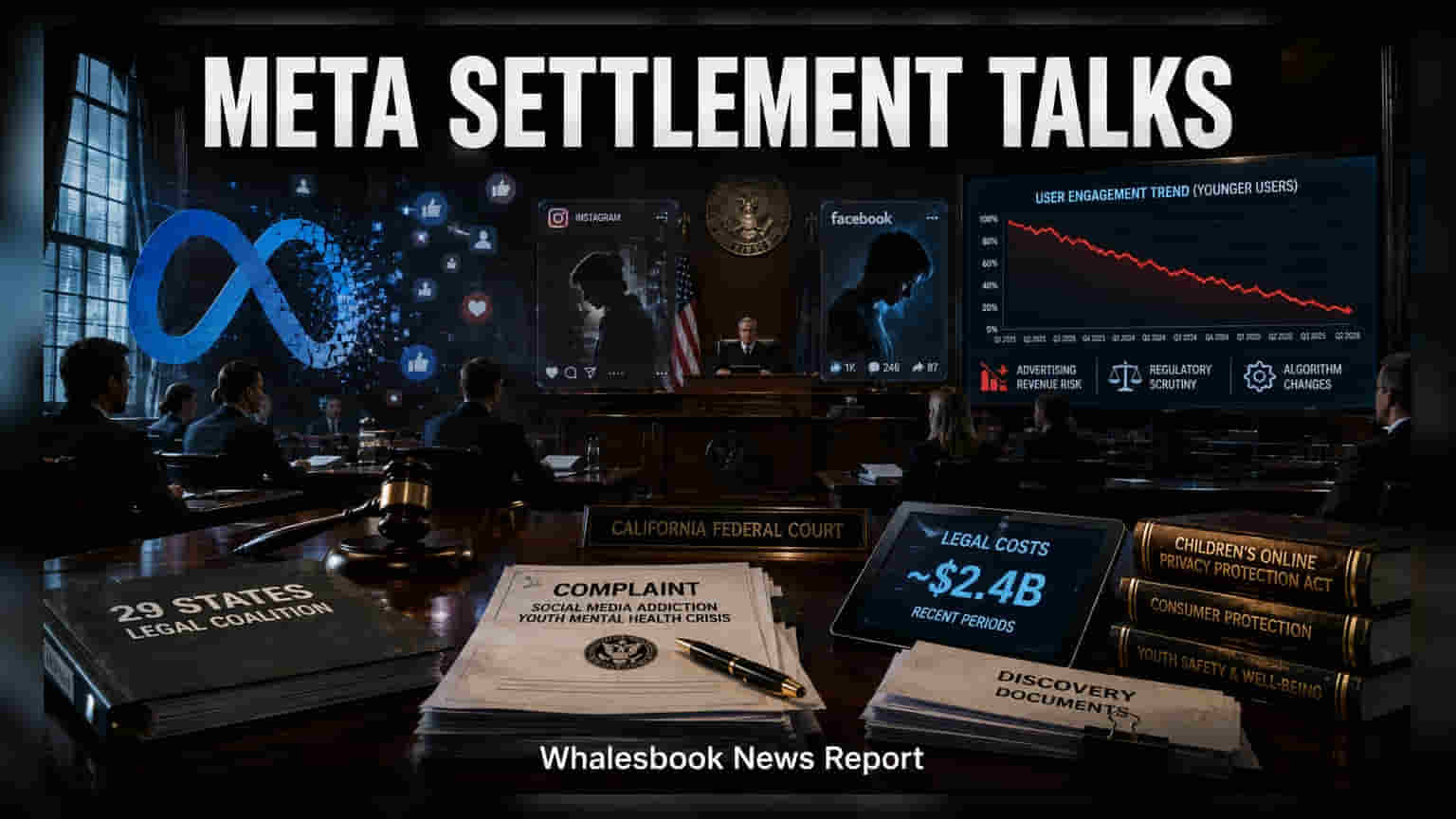
Meta Platforms is negotiating a settlement with 29 US states over allegations that Facebook and Instagram are designed to be addictive to minors. While the company denies wrongdoing, legal expenses and the risk of forced changes to platform algorithms remain a point of concern. Investors are monitoring how these regulatory outcomes could impact future operating costs and advertising revenue.
Meta Platforms is moving toward a potential settlement with a coalition of 29 US states to resolve ongoing legal challenges. The case revolves around accusations that the company intentionally designed Facebook and Instagram to encourage addictive behavior among younger users, creating a mental health crisis. As the federal trial in California reaches a pivotal stage, state officials have indicated that a resolution may be imminent.
Impact of Legal Costs on Financials
For investors, the legal battle has already carried a visible financial cost. Meta has reported significant legal expenses, which reached approximately $2.4 billion in recent periods, contributing to pressure on its profitability. The company has a history of facing severe legal challenges, including a notable $1 billion judgment in New Mexico regarding similar issues. These recurring costs highlight how regulatory and legal environments can directly impact the company's bottom line and cash reserves.
Operational Risks and Revenue Concerns
The most significant long-term risk for Meta lies in the operational changes that may result from this litigation. If the settlement requires the company to overhaul its core algorithms or modify how it engages younger demographics, it could impact user time spent on the platforms. Because Meta’s business model relies heavily on advertising revenue derived from user engagement, any forced reduction in platform activity could hurt future earnings.
Beyond addictive design features, the lawsuits also allege violations of the Children’s Online Privacy Protection Act. Prosecutors claim Meta collected personal data from children without parental consent, using this information to improve its artificial intelligence and machine learning models. This raises questions about how the company manages data privacy and the potential for future regulatory restrictions on its data-gathering practices.
Meta's Defensive Strategy
Throughout the court proceedings, Meta has consistently denied any wrongdoing. The company rejects the characterization of its platforms as harmful and has contested the medical validity of the states' claims, arguing that social media addiction is not a recognized psychiatric condition. Meta maintains that it has implemented various safety tools for younger users. Despite this defensive posture, the shift toward a settlement suggests a desire to end the courtroom uncertainty.
Investors should track the specific terms of any potential settlement. Important monitorables include whether the company is required to make binding changes to its platform design or algorithms, and how such changes might affect user engagement metrics in future quarters. Additionally, while this settlement could resolve the issue with these 29 states, Meta still faces thousands of other pending personal injury and school district lawsuits that will remain on the radar.