

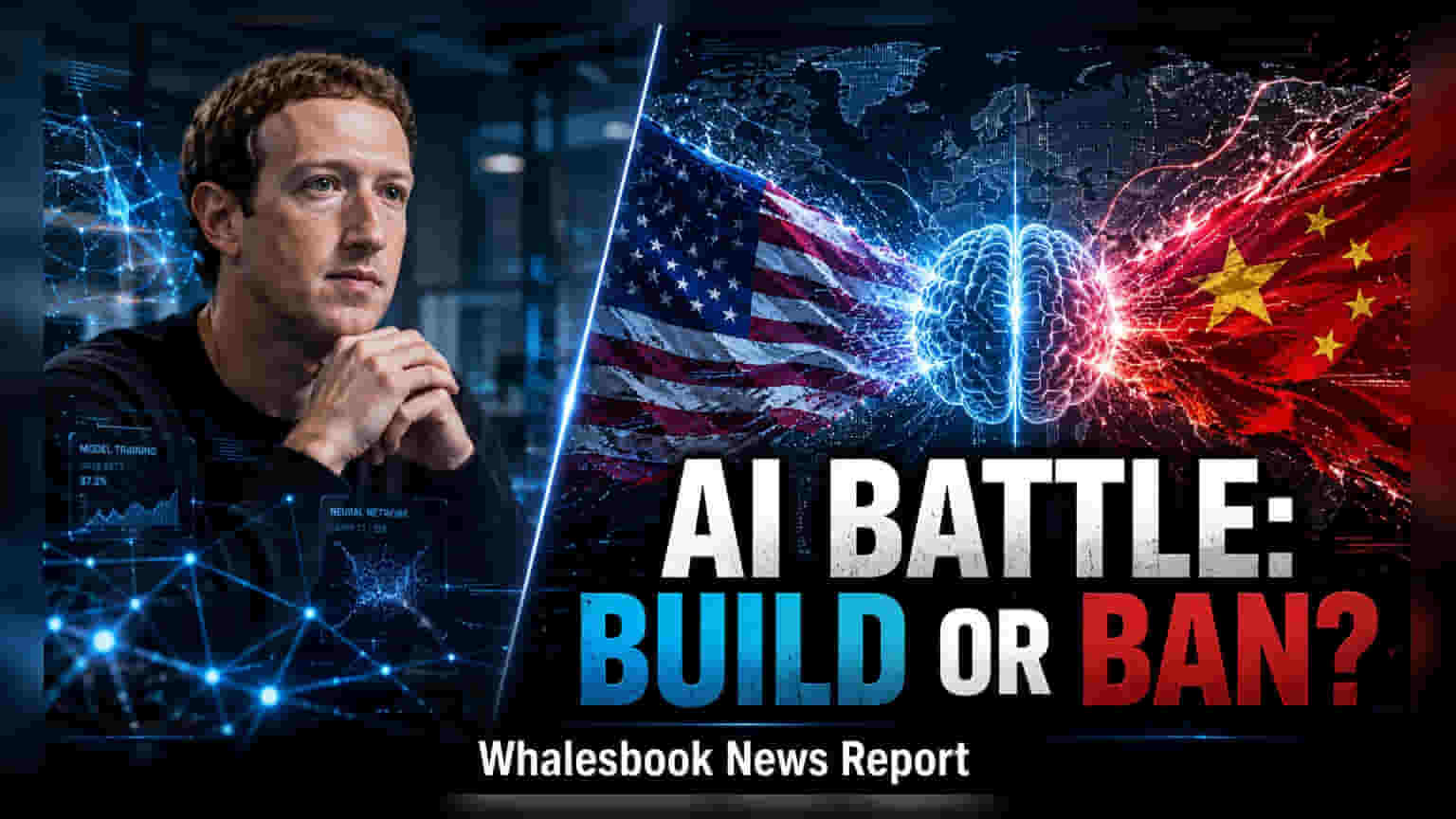
Meta Platforms CEO Mark Zuckerberg has advised the US government against banning Chinese artificial intelligence models. He argues that fostering technological superiority is a more effective strategy than restrictive sanctions, even as Washington considers measures against firms like Moonshot AI over security concerns.
Meta Platforms Chief Executive Mark Zuckerberg has publicly opposed proposals for the United States to block Chinese artificial intelligence models. Speaking on the evolving global technology environment, Zuckerberg suggested that restrictive policies are unlikely to secure a long-term competitive advantage for American companies. Instead, he emphasized that the US should focus on accelerating its own domestic research and the development of more advanced AI systems.
Evolving Regulatory Scrutiny on Chinese AI
The discussion arrives as the U.S. government evaluates potential sanctions against several Chinese AI laboratories. These deliberations are driven by concerns regarding national security and allegations of intellectual property theft. A key point of focus for US regulators is the practice of distillation, where smaller AI models are allegedly trained on data derived from larger, more sophisticated Western models. Recently, the Beijing-based company Moonshot AI gained attention for its Kimi K3 model, which industry observers claim performs at a level competitive with systems developed by top US entities like OpenAI and Anthropic.
The Open-Source AI Debate
Zuckerberg continues to be a vocal proponent of open-source AI, arguing that it prevents the concentration of power among a few large corporations. His stance contrasts with the current US administration's exploration of a regulatory framework that could require companies to submit new models for safety evaluations before public release. While the White House has already restricted access to some advanced models, such as those from Anthropic, citing risks related to cyberattacks, Zuckerberg contends that these same powerful AI tools can be instrumental in identifying and fixing critical security vulnerabilities. He pointed to instances where startups have used open-source AI alternatives to patch security gaps that proprietary systems failed to address.
Investor Context and Market Monitoring
For investors, this debate highlights the growing tension between open-source development and national security-led regulation in the tech sector. While Meta continues to integrate AI across its platforms to drive engagement and advertising efficiency, the company faces potential headwinds from shifting regulatory landscapes regarding data access and model deployment. The next important update for market participants will be the outcome of any potential US-China AI sanctions, which could impact the global technology supply chain and the competitive positioning of major American software and hardware firms. Investors should also monitor how the company balances its open-source strategy with evolving safety standards mandated by international governments.