

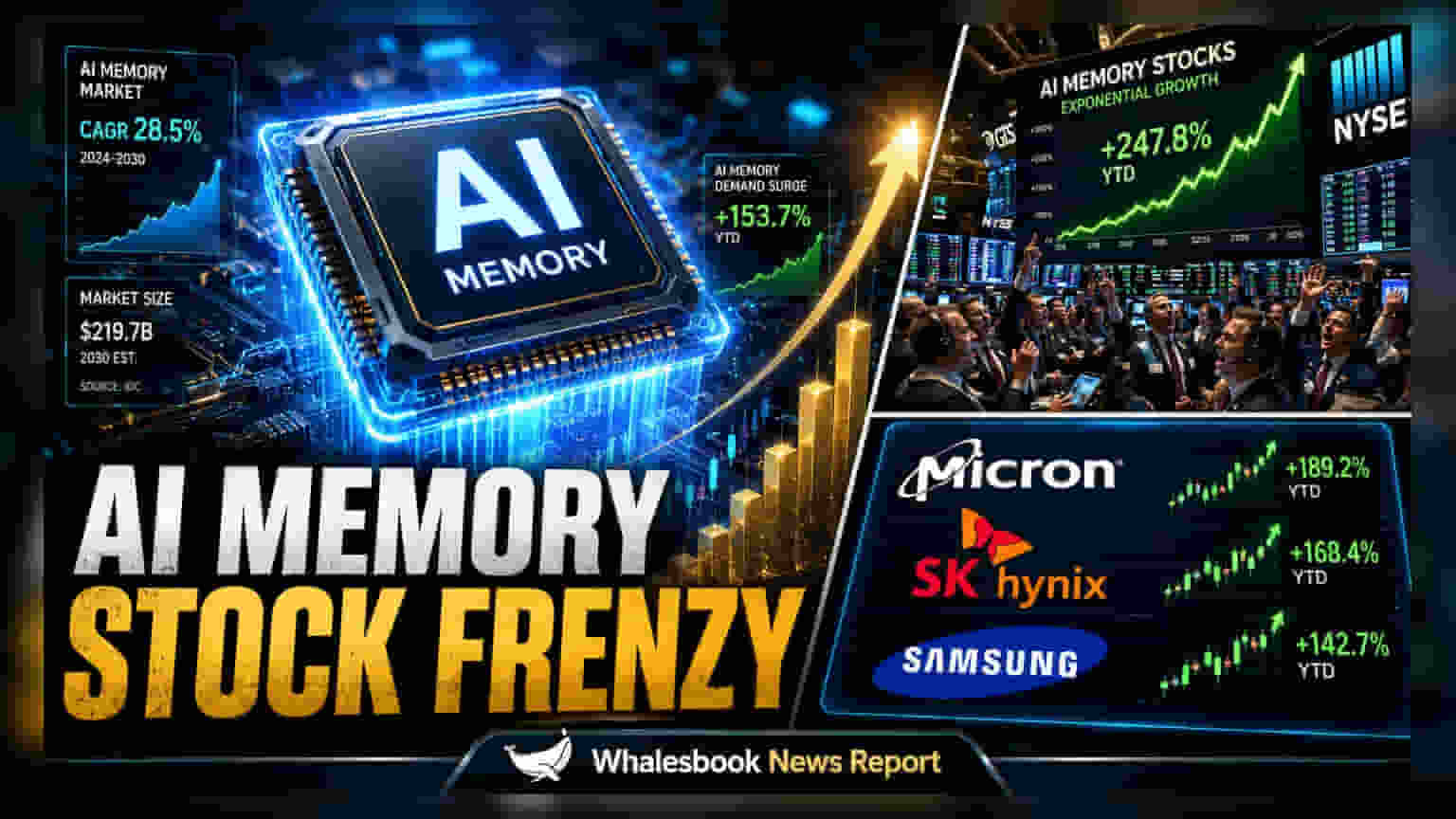
Global memory chip companies are seeing historic gains as the artificial intelligence boom creates massive demand for High Bandwidth Memory (HBM). This shift is moving the industry away from its traditional cycle of boom and bust toward a structural period of supply tightness. Investors are now focusing on how this capacity constraint affects long-term profitability and pricing for major semiconductor manufacturers.
The global memory chip sector is undergoing a major transformation, moving from a business known for predictable cycles of ups and downs to one defined by intense, structural demand. Driven by the need for specialized chips in artificial intelligence, companies that once operated in the background of the semiconductor industry are now seeing significant growth in valuation and market influence.
The Shift to High Bandwidth Memory
At the center of this change is High Bandwidth Memory, or HBM. Unlike standard memory chips found in everyday laptops or consumer devices, HBM is stacked directly onto processors to handle the complex, data-heavy tasks required by AI training and inference. This technology is much more complex to manufacture, requiring more space on silicon wafers. Consequently, production lines that previously churned out high volumes of standard DRAM are being reconfigured to prioritize HBM and high-capacity DDR5 server memory. These specialized products generally offer better profit margins, which has improved the financial outlook for the major players controlling nearly all of the global market.
Impact on Market Dynamics
Historically, the memory industry struggled when manufacturers built too much factory capacity during good times, leading to a surplus and falling prices. However, the current situation is different. Data centers have become the primary consumers of memory, moving from using a fraction of global production to consuming an estimated 70% by 2026. Because building new fabrication plants takes several years, the industry is facing a shortage that is not expected to ease until at least 2027 or 2028. This supply pressure led to significant jumps in contract prices during the early part of 2026, forcing a rethink of the industry’s long-term growth expectations.
Performance of Major Global Players
Large memory manufacturers like Micron Technology, SK Hynix, and Samsung Electronics have become the primary beneficiaries of this shift. SK Hynix has maintained a leading position in the HBM market, while companies like SanDisk, following its spin-off, and storage firms like Western Digital and Seagate are benefiting from the surging need for cost-effective, high-capacity enterprise storage. These companies have secured multi-year contracts with major hyperscale data center operators, providing a layer of revenue visibility that was previously rare in this sector.
Risks for Investors
While the current environment is defined by growth, investors often track the inherent risks of the semiconductor sector. The most significant monitorable remains the industry’s historical tendency toward oversupply. If companies rush to add too much production capacity and demand for AI applications slows, the market could revert to its older, more volatile cycle. Additionally, the high cost of developing HBM means that any delay in technology upgrades or a shift in AI hardware architecture could impact company margins. Future updates on fabrication plant commissioning dates, contract pricing trends, and the sustainability of data center demand will be essential for understanding the long-term path for these stocks.