

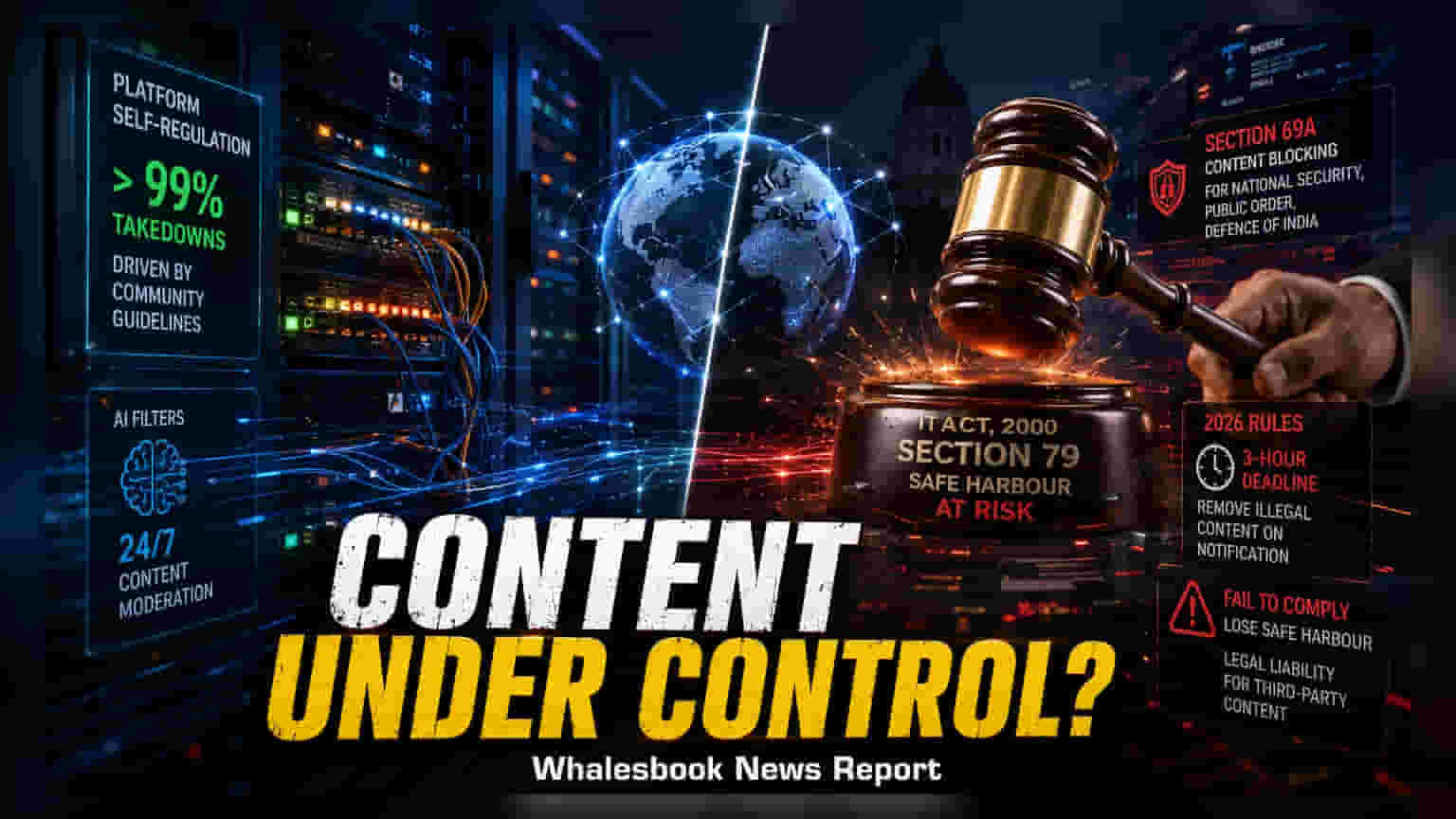
MeitY Secretary S. Krishnan stated that social media platforms handle over 99% of content removals through their own community guidelines, rather than government orders. For investors, this highlights the high operational burden on platforms to maintain 24/7 moderation teams and technology to meet stricter regulatory requirements, such as the mandatory 3-hour takedown window for illegal content.
S. Krishnan, Secretary at the Ministry of Electronics and Information Technology (MeitY), clarified on Friday that the vast majority of content removal on social media platforms in India is driven by the companies' own community guidelines. Speaking at the Business Today India@100 event, Krishnan stated that over 99% of takedowns are self-regulatory actions rather than outcomes of government directives.
This distinction is important for understanding how tech companies manage their digital presence in India. While the government retains the power to order content blocking under Section 69A of the IT Act—typically for issues concerning national security, public order, and the defense of India—Krishnan noted that these powers are used with significant restraint and are not for general content moderation.
For investors, the heavy reliance on self-regulation reflects the significant compliance pressure global and domestic intermediaries face. Under the IT (Intermediary Guidelines and Digital Media Ethics Code) Amendment Rules, 2026, which came into effect earlier this year, platforms are required to adhere to much tighter operational timelines. A key component of these rules is a mandatory 3-hour window for removing specific illegal content once notified. Meeting this strict deadline forces companies to invest heavily in automated artificial intelligence systems and large teams of human moderators working around the clock.
The cost of missing these regulatory targets is high. Section 79 of the IT Act provides 'safe harbour' protection to intermediaries, shielding them from legal liability for third-party content. However, this protection is conditional. If a company fails to comply with the legal conditions, including the timely removal of content as mandated by the 2026 rules, they risk losing this immunity. Losing safe harbour status would expose the companies and their executives to direct legal prosecution for the content posted by their users, representing a major business and legal risk.
Krishnan also highlighted that companies must deepen their understanding of India’s cultural and linguistic nuances. Content that may seem neutral in one context can be highly sensitive or harmful in another. As these platforms continue to refine their moderation practices to balance internal policies with stringent Indian regulations, the ongoing focus for investors remains on the companies' ability to maintain compliance without incurring excessive operational costs or disrupting user engagement.