 Whalesbook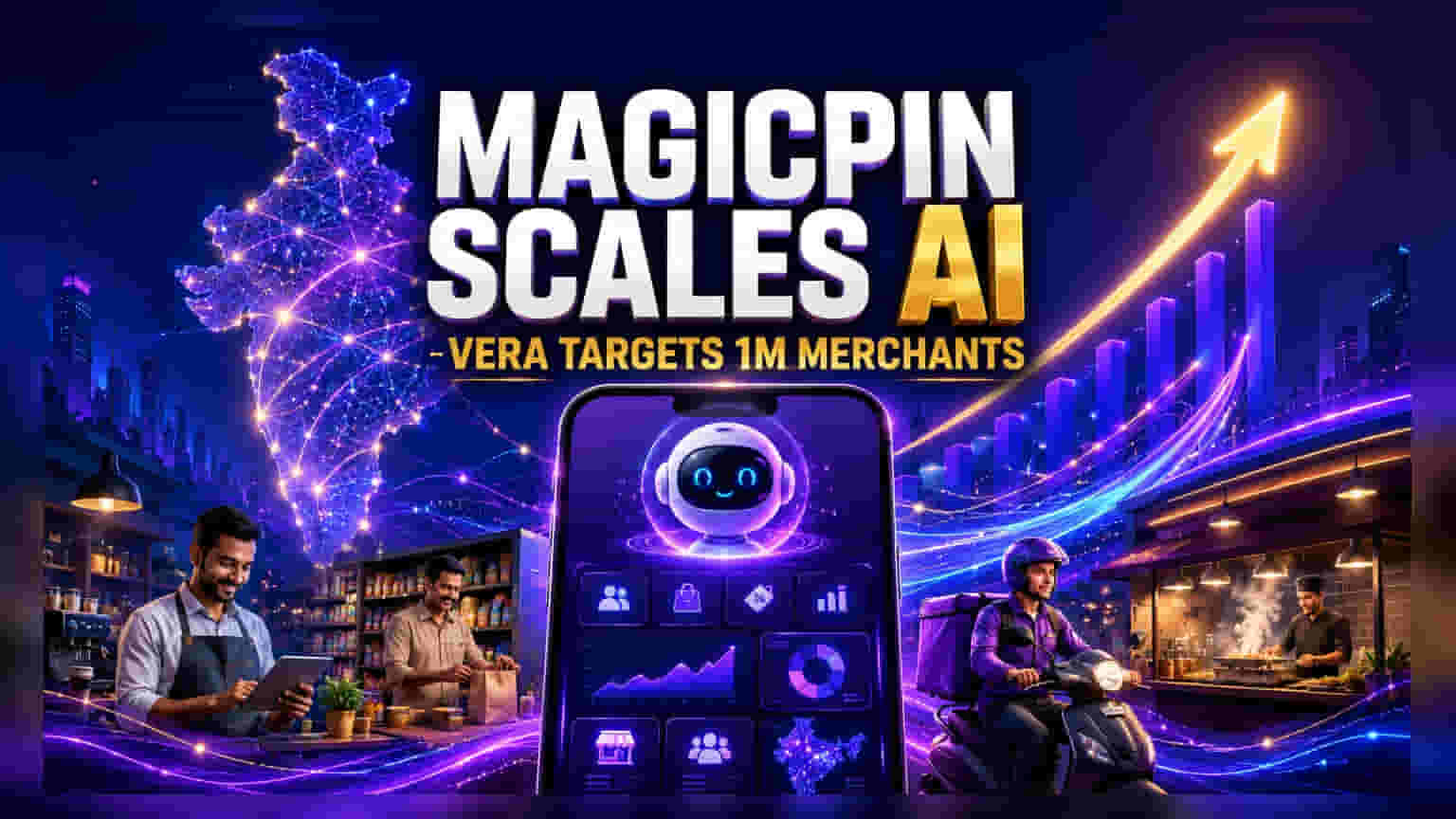


Magicpin (Samast Technologies) aims to onboard 1 million merchants onto its AI-powered assistant, Vera, by 2026. The private hyperlocal platform has already recorded 500,000 sign-ups in three months. While Magicpin is not a publicly listed company, its aggressive AI push highlights the growing role of automation in India's hyperlocal commerce and restaurant delivery sector.
What Happened
Magicpin, a Gurugram-based hyperlocal discovery and delivery platform, is scaling up its AI-driven assistant, Vera, with a target to reach 1 million merchant partners by the end of 2026. The company reported a significant adoption rate, with over 5 lakh restaurants and local retailers signing up for the service within three months of its launch. Vera is designed to provide real-time operational insights, such as order volume tracking and demand management, to help small businesses optimize their daily workflows. Magicpin has invested USD 1 million into its AI infrastructure to support this rollout, which is already live across more than 300 cities in India.
Why This Matters for the Business
For an unlisted company like Magicpin, the push toward AI is a strategic move to improve unit economics and operational efficiency in a high-burn sector. The hyperlocal delivery and retail discovery space—where Magicpin competes with major players like Zomato and Swiggy—is notoriously cost-intensive. By automating merchant interactions and offering data-driven insights through Vera, Magicpin is attempting to reduce the manual effort required for customer service and operational support.
The adoption of Vera across diverse business verticals, from food outlets to fashion retailers, signals the company's effort to move beyond a simple rewards-based model. By integrating AI deeper into the merchant workflow, Magicpin aims to create stickier relationships with local business owners, potentially reducing churn and improving the quality of its delivery and discovery ecosystem.
The Hyperlocal Sector Context
Magicpin operates at the intersection of online discovery and offline fulfillment. Unlike larger rivals that primarily utilize an in-house fleet model, Magicpin has historically emphasized its role as a marketplace aggregator, notably becoming a major participant in the Open Network for Digital Commerce (ONDC). The integration of AI tools like Vera is intended to bridge the technology gap for smaller merchants who may lack the digital infrastructure of larger chains. This strategy helps the company maintain its value proposition as a partner to small businesses rather than a competitor.
Risks and Execution Challenges
While the adoption numbers are notable, scaling AI tools across a highly fragmented Indian market carries inherent risks. The primary challenge remains the technical literacy and connectivity constraints of small, local merchants. Previous feedback regarding delivery logistics and payout issues highlights the complexity of managing a large-scale network of offline partners.
Furthermore, the hyperlocal sector is intensely competitive. Profitability in this space often depends on high transaction volumes to offset logistics costs. If the AI tool does not lead to a measurable improvement in transaction frequency or reduced operational costs, the USD 1 million investment may face questions regarding its return on capital. Additionally, Magicpin’s reliance on third-party fleet partners and its ONDC-heavy strategy means it is sensitive to broader regulatory changes and pricing pressures within the digital commerce ecosystem.
What Investors and Industry Observers Should Track
As Magicpin continues to operate as a private entity, observers should focus on the following monitorables to gauge the success of this AI strategy:
- Monetization of AI Features: Whether the company can turn Vera from a support tool into a revenue-generating service through premium features or improved transaction commissions.
- Merchant Retention: Whether the 5 lakh sign-ups translate into long-term active usage, or if adoption peaks early and tapers off.
- Unit Economics: Any update on the company’s path to profitability and how technology-led efficiencies impact their overall burn rate.
- Competitive Differentiation: How Magicpin maintains its unique positioning against larger delivery giants that are also aggressively deploying AI and data analytics in their merchant-facing apps.